Entree: Argentina – Northwest Argentina – Chivito al Asador (Whole young goat roasted on a wood-fired grill until crisp and smoky)
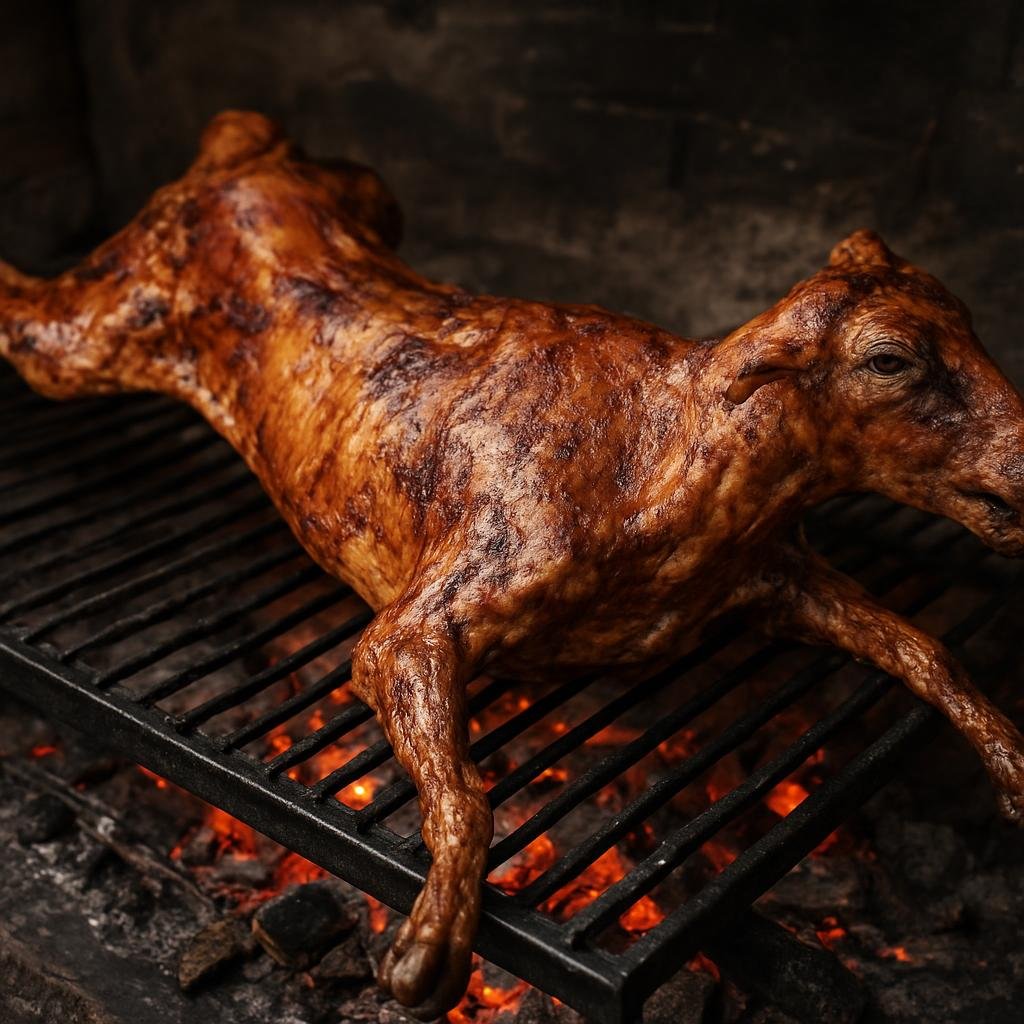
Serving Size: 6
Approximate Time
Prep
20 min
Cook
3 hrs
Additional
30 min
Total
3 hrs 45 min
Ingredients
- 1 whole young goat (chivito), butterflied or split and opened flat, approx. 8 lb (3.6 kg)
- 4 tbsp (60 g) coarse sea salt
- 2 tsp (4 g) freshly ground black pepper
- 4 cloves garlic, crushed (about 12 g)
- 2 tbsp (30 ml) fresh lemon juice
- 1/4 cup (60 ml) extra-virgin olive oil
- 2 tbsp (10 g) dried oregano
- 1/2 cup (120 ml) beef tallow or rendered pork fat (for basting) or melted butter
- 2 cups (480 ml) hardwood charcoal or 10–12 lb (4.5–5.4 kg) seasoned wood for an open-fire asado, plus embers
- For chimichurri:
  - 1 cup (25 g) fresh flat-leaf parsley, packed and finely chopped
  - 1/3 cup (80 ml) extra-virgin olive oil
  - 3 tbsp (45 ml) red wine vinegar
  - 3 cloves garlic, minced (about 9 g)
  - 1 tsp (2 g) crushed red pepper flakes
  - 1 tsp (5 g) dried oregano
  - 1/2 tsp (3 g) coarse salt
  - 1/4 tsp (1 g) black pepper
#### Short Description
A regional Argentine specialty: a whole young goat, butterflied and seasoned, slow-roasted over embers and served with vibrant chimichurri.
Instructions
1. Prepare the goat: If not already butterflied, ask your butcher to split and open the chivito flat (spatchcock-style) for even cooking. Pat dry with paper towels.
2. Season and marinate: Mix coarse salt, black pepper, crushed garlic, lemon juice, olive oil, and dried oregano to form a rub. Rub all over the inside and outside of the goat. Cover and refrigerate for at least 2 hours or preferably overnight to let flavors penetrate; remove from fridge 1 hour before cooking to come toward room temperature.
3. Prepare the fire: Build a wood/charcoal fire to produce a bed of hot embers and moderate heat (not intense flame). For an asador, arrange a grate or vertical cross to hold the butterflied goat at a distance where heat is strong but not directly flaming. You want steady embers producing radiating heat.
4. Mount the goat: Secure the goat on the asador spit or on a metal cross/grate with the skin side toward the heat. Position it about 18–24 inches (45–60 cm) from the embers to start; you can adjust distance as cooking progresses.
5. Slow-roast and baste: Roast slowly for 2–3 hours depending on size and heat, turning periodically for even cooking. Every 20–30 minutes, baste the exposed meat with melted tallow or fat to encourage browning and keep meat moist. Move the asador closer to embers briefly to crisp skin toward the end.
6. Check doneness: The goat is done when the skin is deeply browned and crisp and the meat near the shoulder and thigh is tender and pulls easily, about 2–3 hours total. If using a thermometer, aim for an internal temperature of about 145–155°F (63–68°C) in the thickest parts, then allow to rest.
7. Make chimichurri: While the goat rests, combine chopped parsley, olive oil, red wine vinegar, minced garlic, red pepper flakes, dried oregano, salt, and pepper in a bowl. Let rest 10–15 minutes to meld flavors.
8. Rest and carve: Remove the goat from the asador and let rest 10–15 minutes. Carve into portions and serve with generous spoonfuls of chimichurri and traditional sides such as roasted potatoes or a simple salad.