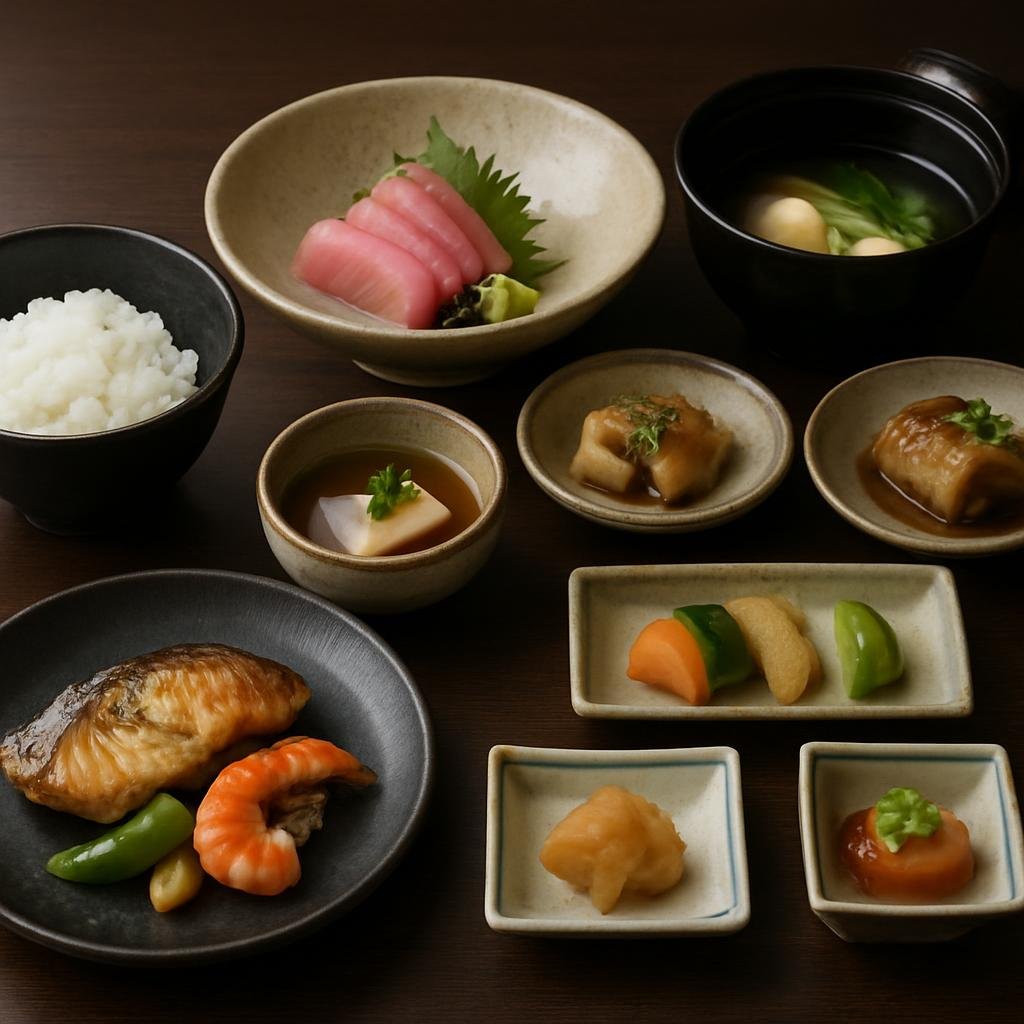
Entree: Japan – Kanto / Tokyo – 懐石 ➤ Kaiseki (Traditional seasonal multi-course Japanese dinner emphasizing balance and presentation)
Serving Size: 2
Approximate Time
Prep
45 min
Cook
45 min
Total
1 hr 30 min
Ingredients
- Rice
  - 1 cup (200 g) Japanese short-grain rice, rinsed and drained
  - 1 1/4 cups (300 ml) water for cooking rice
- Dashi and seasonings
  - 4 cups (960 ml) dashi stock (kombu-katsuobushi dashi)
  - 3 tbsp (45 ml) soy sauce
  - 3 tbsp (45 ml) mirin
  - 2 tbsp (30 ml) sake
  - 1 tsp (5 g) sugar
- Sunomono (vinegared cucumber)
  - 1 small cucumber, thinly sliced, approx. 6 oz (170 g)
  - 2 tbsp (30 ml) rice vinegar
  - 1 tsp (5 g) sugar
  - 1 tsp (5 ml) soy sauce
  - 1 tsp (5 ml) sesame oil
  - 1 tbsp (9 g) toasted sesame seeds
- Nimono (simmered kabocha)
  - 8 oz (225 g) kabocha squash, peeled and cut into 1-inch wedges
  - 1 cup (240 ml) dashi
  - 1 tbsp (15 ml) soy sauce
  - 1 tbsp (15 ml) mirin
  - 1 tsp (5 ml) sake
  - 1 tsp (5 g) sugar
- Yakimono (grilled fish)
  - 2 sea bream fillets, approx. 4 oz (115 g) each, skin-on and patted dry
  - 1 tbsp (15 ml) sake for brushing
  - 1/2 tsp (3 g) sea salt
  - 1 tsp (5 ml) soy sauce for finishing
- Miso Soup
  - 2 cups (480 ml) dashi
  - 2 tbsp (36 g) white miso paste
  - 4 oz (115 g) soft tofu, cut into 1/2-inch cubes
  - 1 stalk (approx. 15 g) green onion, thinly sliced
- Garnishes and extras
  - 1 small umeboshi (pickled plum) or 1 tsp (1 g) yuzu zest for accent
  - 1 tsp (5 ml) toasted sesame oil (optional finishing)
Instructions
1. Rinse the rice under cold water until runoff is clear, drain, and cook with 1 1/4 cups (300 ml) water in a rice cooker or on the stove per package instructions; keep warm.
2. Prepare sunomono: combine rice vinegar, sugar, soy sauce, and sesame oil in a bowl until sugar dissolves. Add sliced cucumber and toss; let sit 10–15 minutes, then sprinkle with toasted sesame seeds. Chill until ready to serve.
3. Make dashi if not prepared: soak 4 cups (960 ml) cold water with a 4-inch piece (approx. 5 g) kombu 30 minutes, heat to near-boil, remove kombu, add 1/2 oz (15 g) katsuobushi, steep 2 minutes, then strain.
4. Nimono (simmered kabocha): bring 1 cup (240 ml) dashi, 1 tbsp (15 ml) soy sauce, 1 tbsp (15 ml) mirin, 1 tsp (5 ml) sake, and 1 tsp (5 g) sugar to a gentle simmer in a small pot. Add kabocha wedges skin-side up, cover with a piece of parchment or lid to keep submerged, simmer 10–12 minutes until tender but holding shape. Keep warm.
5. Yakimono (grilled fish): pat sea bream fillets dry, brush lightly with 1 tbsp (15 ml) sake and sprinkle 1/2 tsp (3 g) sea salt. Grill under broiler or in a hot skillet skin-side down until skin is crisp and fish is cooked through, about 3–4 minutes per side depending on thickness. Brush briefly with 1 tsp (5 ml) soy sauce just before removing from heat.
6. Miso soup: bring 2 cups (480 ml) dashi to a low simmer. Remove a small amount of hot dashi into a bowl, dissolve white miso paste, then whisk back into pot. Add tofu gently and warm for 1–2 minutes; do not boil. Ladle into bowls and top with sliced green onion.
7. Warm plating and sequence: Arrange courses in traditional order—small starter (sunomono), nimono (kabocha), yakimono (grilled fish) with a portion of rice, and miso soup served hot. Garnish fish or rice with umeboshi or a pinch of yuzu zest and finish sparingly with toasted sesame oil if desired.
8. Serve each course modestly to emphasize seasonal ingredients and balance; Kaiseki presentation values small, composed portions and temperature contrast between courses.