Entree: Philippines – Luzon – Laing (Slow-simmered taro leaves cooked in rich coconut milk with chili and pork or dried seafood)
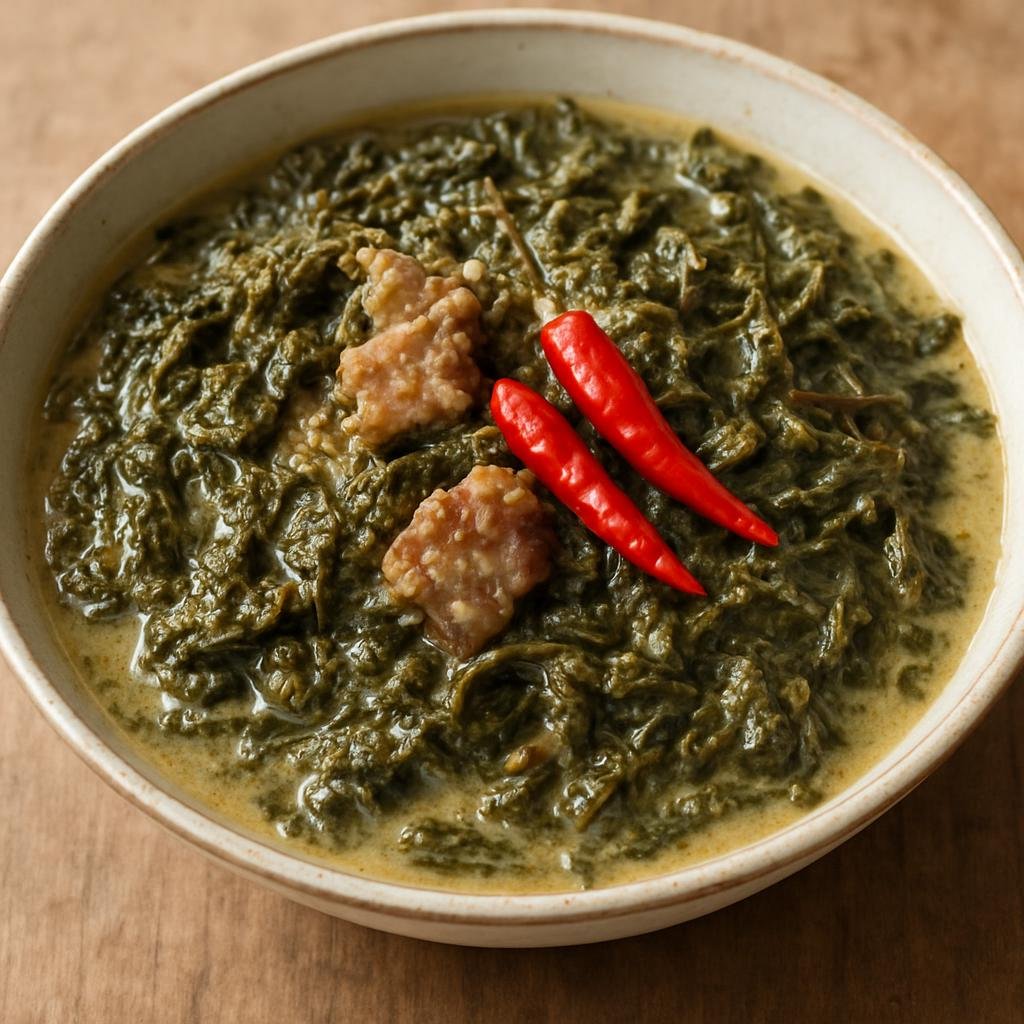
Serving Size: 4
Approximate Time
Prep
10 min
Cook
45 min
Total
55 min
Ingredients
- 8 oz (225 g) dried taro leaves (dahon ng gabi), loosely packed
- 4 cups (960 ml) coconut milk
- 1 cup (240 ml) coconut cream
- 8 oz (225 g) pork belly, cut into 1/2-inch (1.3 cm) cubes
- 2 tbsp (30 ml) vegetable oil
- 1 medium onion, chopped (about 1 cup / 150 g)
- 4 cloves garlic, minced (about 12 g)
- 1 thumb-size piece ginger, julienned (about 1 tbsp / 6 g)
- 4 long red chilies or 6–8 siling labuyo (bird’s eye), sliced (adjust to heat preference)
- 2 tbsp (30 ml) bagoong alamang (fermented shrimp paste) or fish sauce to taste
- 2 tbsp (12 g) dried shrimp (optional)
- 1/2 tsp (2 g) salt, or to taste
- 1/2 tsp (1 g) black pepper
- 2 green onions, sliced for garnish
Instructions
1. If using dried taro leaves, gently loosen and inspect them for any hard stems; keep leaves as intact as possible. If leaves are very dry, rehydrate briefly in warm water 5–10 minutes, then drain.
2. In a wide heavy pot, heat the vegetable oil over medium heat. Sear the pork belly cubes until they begin to brown and release fat, about 6–8 minutes.
3. Add chopped onion, minced garlic, and ginger to the pork. Sauté until the onion is soft and fragrant, about 4–5 minutes.
4. Stir in the bagoong alamang and dried shrimp (if using) and cook 1–2 minutes to bloom the flavors. Pour in the coconut milk and bring to a gentle simmer.
5. Layer the taro leaves into the pot in manageable bundles, pressing them down so they become submerged in coconut milk. Add sliced chilies, and reduce heat to low. Simmer gently, uncovered, stirring occasionally to prevent sticking, until leaves are tender and the sauce has thickened, about 30–40 minutes.
6. Pour in the coconut cream and simmer another 5–10 minutes until the mixture is creamy and slightly reduced. Season with salt and pepper and adjust bagoong or fish sauce to taste.
7. Remove from heat, garnish with sliced green onions, and serve hot with steamed rice.
Nutrition Information
To get nutritional information, press the Get Nutrition Info button below.