Entree: Nigeria – Igbo Southeast – Nkwobi (Warm, spicy palm-oil-based cow foot dish from Igbo cuisine thickened and seasoned for communal eating)
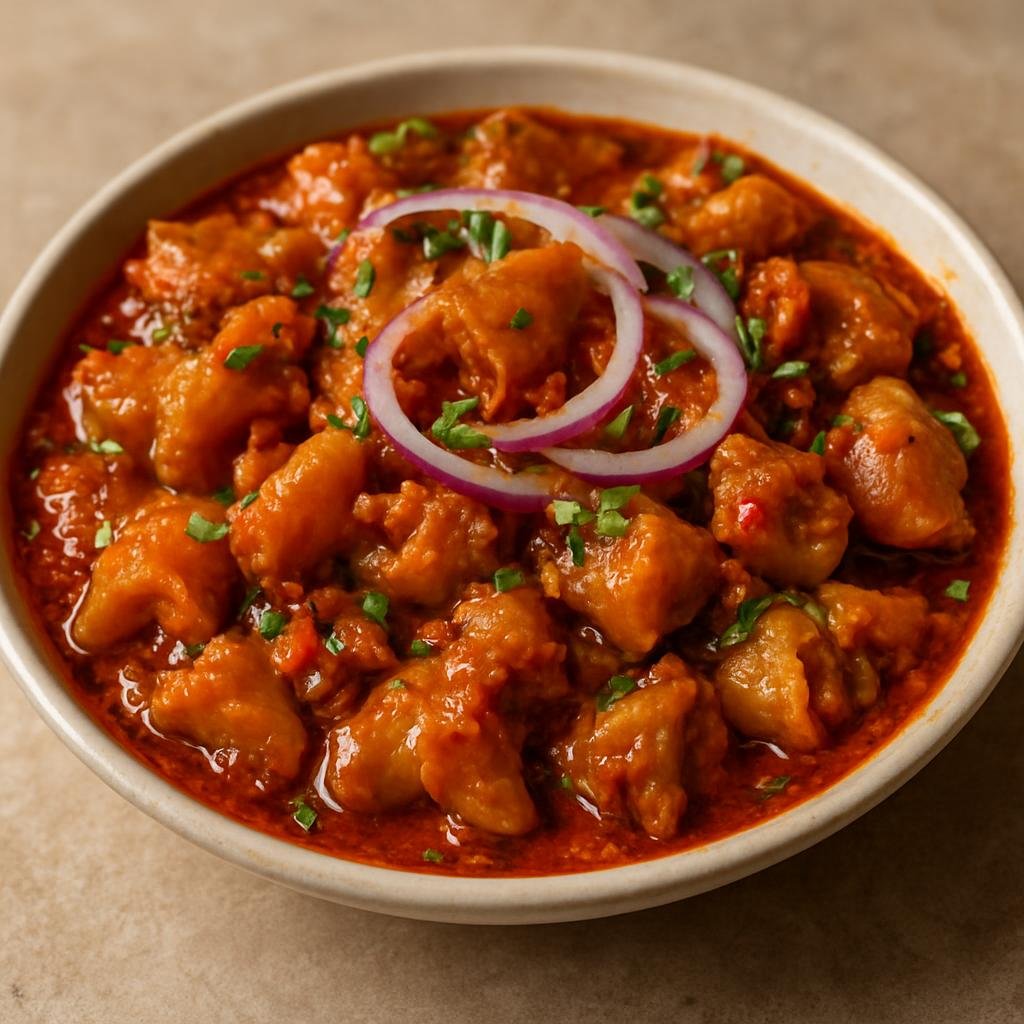
Serving Size: 4
Approximate Time
Prep
30 min
Cook
2 hrs 30 min
Total
3 hrs
Ingredients
- 2 lb (900 g) cow foot (trotters), cut into bite-size pieces
- 1 medium onion, chopped
- Salt to taste
- 2 seasoning cubes (e.g., Maggi)
- 1/2 cup (120 ml) red palm oil
- 1/4 tsp (approx. 1 g) potash (kanwa), dissolved in 2 tbsp (30 ml) warm water
- 2 tbsp (16 g) ground crayfish
- 2–3 scotch bonnet peppers (ata rodo), seeded and blended into a coarse paste
- 1 tsp (5 g) ground uziza seeds or 1/2 tsp (1 g) black pepper (optional)
- 1/4 cup (60 ml) warm water, as needed
- Utazi leaves for garnish (thinly sliced)
- Thinly sliced onion rings for garnish
Instructions
1. Place cow foot pieces in a large pot and cover with water. Add half the chopped onion and a pinch of salt. Bring to a boil, then reduce to a simmer and cook until the cow foot is very tender and gelatinous, about 2–3 hours (pressure cook for 45–60 minutes).
2. When tender, remove cow foot pieces and reserve about 1–2 cups (240–480 ml) of the cooking liquid. Trim excess fat if desired and set meat aside.
3. In a small bowl, dissolve 1/4 tsp (approx. 1 g) potash (kanwa) in 2 tbsp (30 ml) warm water, stirring until mostly dissolved. Set aside briefly until slightly bubbly.
4. In a heatproof mixing bowl, pour 1/2 cup (120 ml) red palm oil and slowly add the dissolved potash solution while whisking or stirring vigorously to emulsify; the oil should become glossy and slightly thickened and turn brighter in color.
5. Stir ground crayfish, blended scotch bonnet paste, seasoning cubes, and ground uziza seeds or black pepper into the emulsified oil. Add 2–4 tbsp (30–60 ml) reserved cooking liquid to loosen and integrate the sauce to a spoonable, glossy consistency.
6. Add the cooked cow foot pieces to the sauce and toss gently to coat, adding more reserved cooking liquid a tablespoon at a time if needed to achieve a cohesive sauce that clings to the meat. Taste and adjust salt or seasoning cubes.
7. Transfer to a shallow bowl or communal dish, garnish with thinly sliced utazi leaves and onion rings, and serve warm. Nkwobi is traditionally eaten with small fingers or shared on communal plates.
Nutrition Information
To get nutritional information, press the Get Nutrition Info button below.