Entree: Vietnam – Hoi An / Da Nang – Cao Lau (Hoi An–style thick rice noodles with roast pork, fresh herbs, bean sprouts, and a light savory broth)
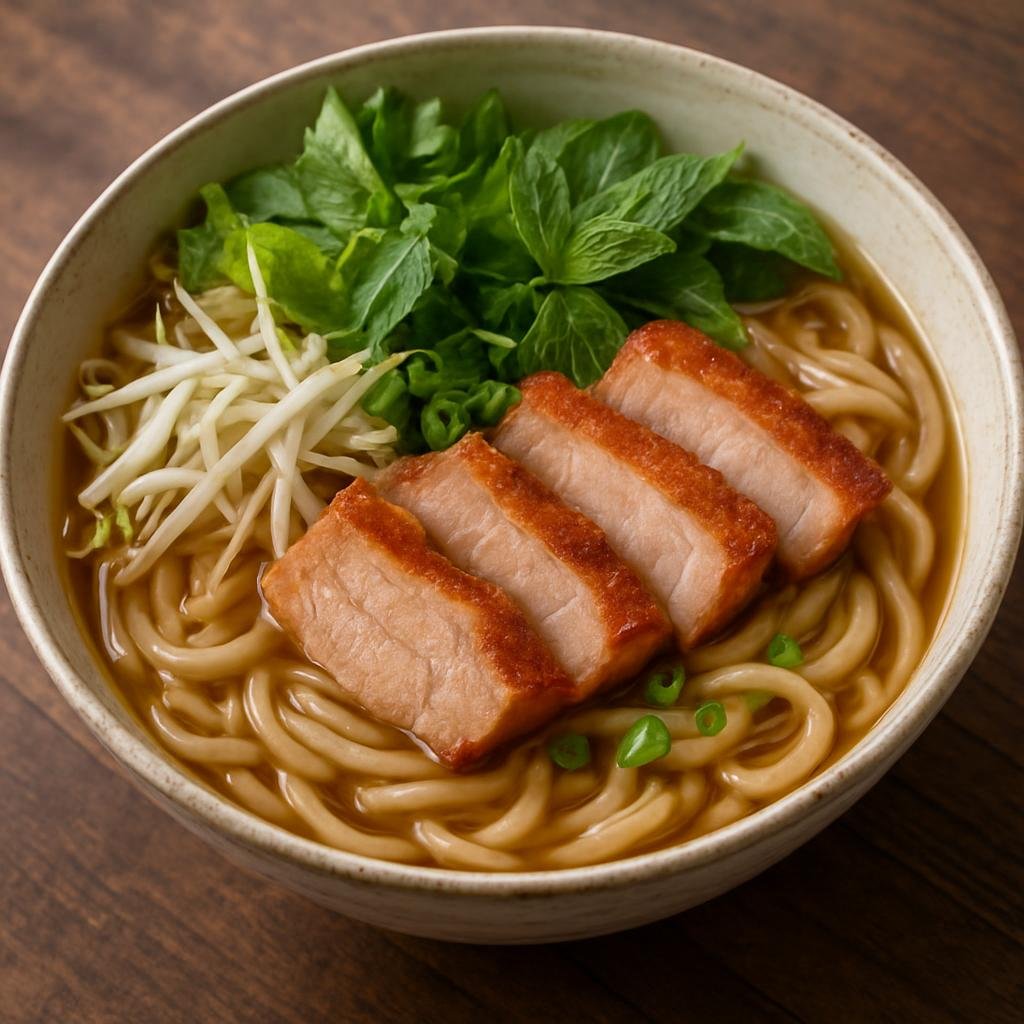
Serving Size: 4
Approximate Time
Prep
50 min
Cook
45 min
Additional
10 min
Total
1 hr 40 min
Ingredients
- 12 oz (340 g) thick rice noodles (cao lau-style or fresh thick rice noodles)
- 1 lb (454 g) boneless pork shoulder, trimmed
- 2 tbsp (30 ml) soy sauce
- 1 tbsp (15 ml) fish sauce
- 1 tbsp (12 g) granulated sugar
- 1 tsp (2 g) Chinese five-spice powder
- 2 cloves (6 g) garlic, minced
- 2 tbsp (30 ml) vegetable oil, divided
- 4 cups (950 ml) pork or chicken broth, low-sodium
- 1 tbsp (15 ml) dark soy sauce or kecap manis (optional, for color)
- 2 cups (80 g) bean sprouts, rinsed
- 1 cup (25 g) fresh cilantro leaves, packed
- 1 cup (25 g) fresh Thai basil leaves, packed
- 1 cup (25 g) fresh mint leaves, packed
- 4 scallions, thinly sliced
- 4 lime wedges
- 4 oz (115 g) rice crackers or toasted croutons (bánh đa or similar), broken into pieces
- Salt and black pepper to taste
Instructions
1. Marinate the pork: in a bowl combine soy sauce, fish sauce, sugar, five-spice, and minced garlic. Add pork shoulder and coat evenly; marinate 30 minutes to 2 hours in the refrigerator.
2. Roast the pork: preheat oven to 400°F (200°C). Heat 1 tbsp (15 ml) vegetable oil in a roasting pan or skillet, sear the pork on all sides until browned, then roast in the oven 25–35 minutes until internal temperature reaches 145°F (63°C). Let rest 10 minutes, then thinly slice.
3. Make the broth: while pork roasts, bring the pork or chicken broth to a simmer in a saucepan. Reduce gently 10–15 minutes to concentrate flavor; season with salt and dark soy sauce if using. Keep hot.
4. Prepare noodles and garnishes: cook the thick rice noodles in rapidly boiling water according to package instructions until tender but still chewy, 2–4 minutes for fresh, then drain and divide among 4 bowls. Rinse briefly with hot water if needed to remove excess starch.
5. Assemble bowls: place a portion of sliced roast pork over the noodles, add a small handful of bean sprouts, scatter scallions and herbs (cilantro, basil, mint), and break rice crackers over the top for crunch.
6. Finish with broth and lime: ladle 1/2 to 3/4 cup (120–180 ml) hot reduced broth over each bowl just before serving to moisten (Cao Lau is not a fully soupy noodle). Serve with lime wedges and extra fish sauce at the table.
Nutrition Information
To get nutritional information, press the Get Nutrition Info button below.