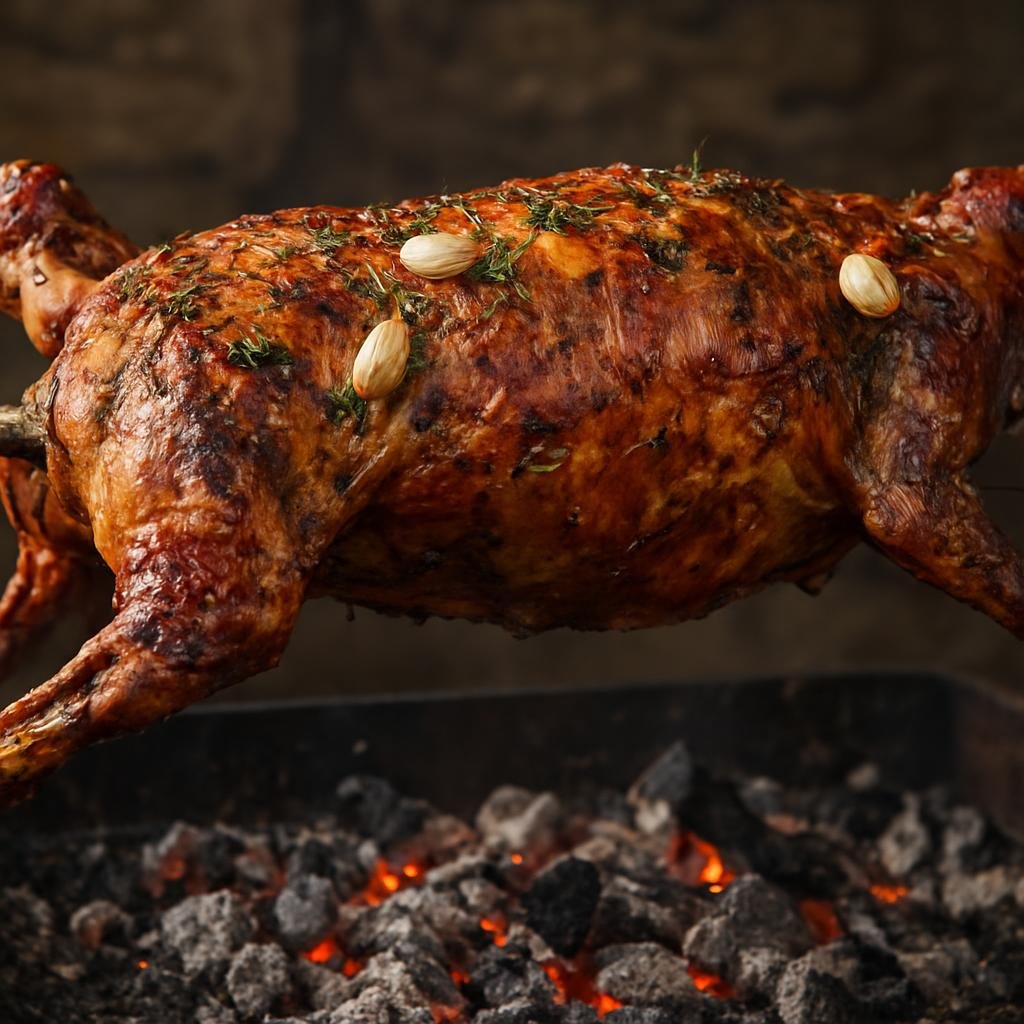
Entree: Romania – Dobrogea – Miel la Proțap (Young lamb roasted whole on a spit over coals with garlic and herbs)
Serving Size: 8
Approximate Time
Prep
30 min
Cook
3 hrs
Additional
2 hrs
Total
5 hrs 30 min
Ingredients
- 1 whole young lamb, butterflied for spit-roasting, approx. 18 lb (8 kg)
- 1/2 cup (120 ml) olive oil
- 1 cup (240 ml) dry white wine
- 6 garlic cloves, crushed
- 3 tbsp (45 ml) fresh lemon juice
- 2 tbsp (30 ml) coarse salt
- 2 tsp (10 g) freshly ground black pepper
- 3 tbsp (45 ml) fresh rosemary leaves, chopped
- 2 tbsp (30 ml) fresh thyme leaves, chopped
- 2 large onions, halved
- 2 bay leaves
- 1 cup (240 ml) water or more for basting
- 2 tbsp (30 ml) sunflower oil or lard for initial basting
- Fresh parsley, chopped, for garnish (no measurement)
Instructions
1. Prepare the lamb by splitting and butterflying it so it will sit flat on the spit; pat dry with paper towels and season the cavity and surface with 1 tbsp coarse salt and 1 tsp black pepper.
2. In a bowl, combine olive oil, white wine, crushed garlic, lemon juice, remaining salt and pepper, chopped rosemary and thyme. Rub this mixture all over the lamb, inside and out. Tuck onion halves and bay leaves into the cavity if using.
3. Thread the lamb securely onto the spit, trussing as needed so it rotates evenly. Let marinate at least 2 hours or overnight in the refrigerator for deeper flavor; bring to near room temperature before roasting.
4. Build a medium charcoal fire or set up a gas/wood spit with moderate heat. Start with coals that provide a steady, not-too-hot heat to avoid burning the exterior.
5. Begin spit-roasting, turning slowly and consistently. After the first 30 minutes, baste every 20–30 minutes with the remaining marinade mixed with 1 cup (240 ml) water and 2 tbsp (30 ml) sunflower oil; keep the meat moist and encourage even browning.
6. Roast until the meat is well browned and an instant-read thermometer inserted into the thickest part reads 135–145°F (57–63°C) for medium-rare to medium, typically 2.5–4 hours depending on size and heat. Adjust time to achieve desired doneness.
7. Remove the lamb from the spit and let it rest for 15–20 minutes before carving. Spoon pan juices over the slices, garnish with chopped parsley, and serve with roasted potatoes, polenta, or fresh salad typical of Dobrogea.
Nutrition Information
To get nutritional information, press the Get Nutrition Info button below.