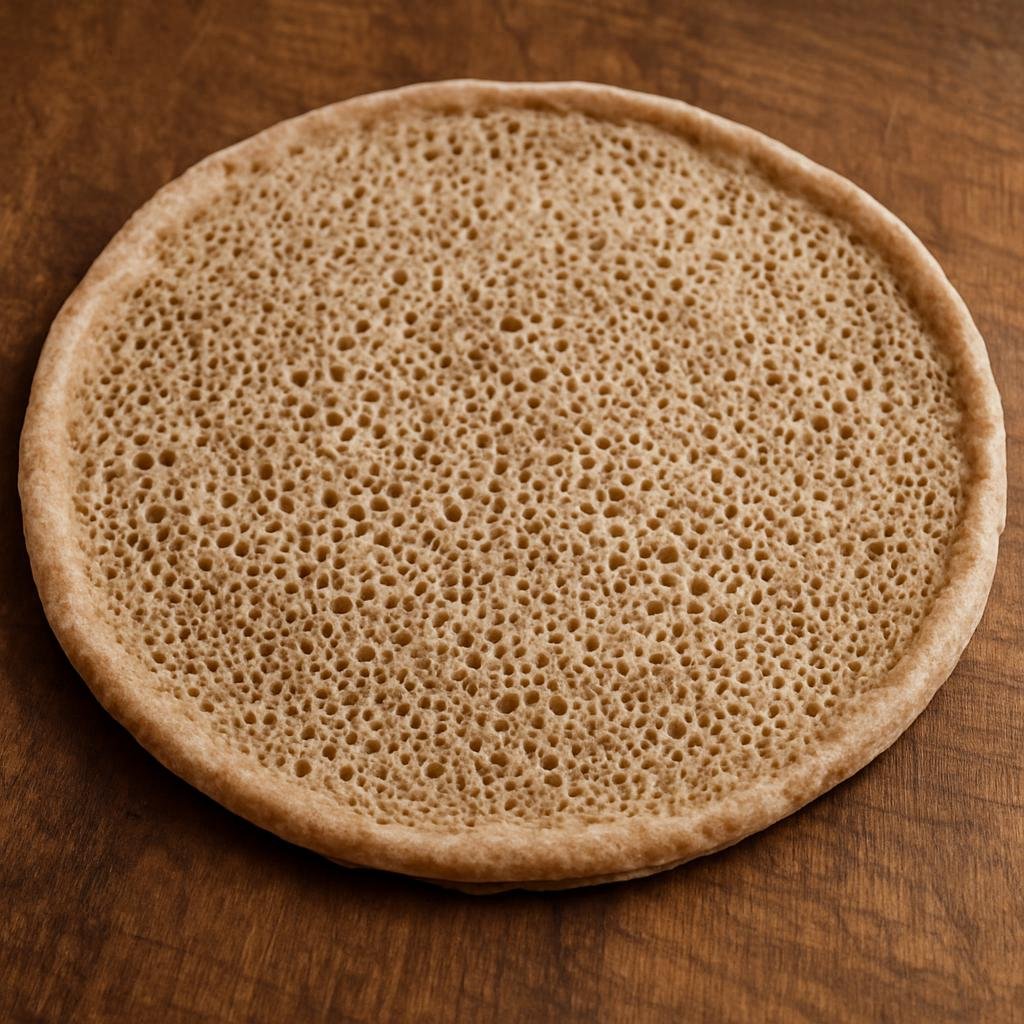
Entree: Chad – Central Culinary Region – كسرة ➤ Kisra (Thin fermented sorghum flatbread used as a staple accompaniment for stews and sauces)
Serving Size: 6
Approximate Time
Prep
10 min
Cook
0 min
Additional
8 hrs
Total
8 hrs 20 min
Ingredients
- 3 cups (360 g) sorghum flour
- 3 1/2 cups (840 ml) lukewarm water, plus more if needed to adjust batter
- 1/4 tsp (1.5 g) active dry yeast (optional for consistent fermentation)
- 1/2 tsp (3 g) fine salt
- 1 tbsp (15 ml) vegetable oil or neutral oil for the pan, plus extra for greasing
Instructions
1. In a large bowl, whisk together the sorghum flour and 3 cups (720 ml) of the water until smooth to form a thin batter. If using yeast, dissolve it in the remaining 1/2 cup (120 ml) lukewarm water and stir into the batter.
2. Cover the bowl with a clean cloth and leave at room temperature to ferment 8–24 hours, until bubbles form and the batter develops a mild tang; longer fermentation yields stronger sourness. Stir once mid-ferment.
3. After fermentation, stir in the salt and check consistency. The batter should be pourable like heavy cream; if too thick, add small amounts of water to reach about 3 1/2 to 4 cups (840–960 ml) total.
4. Heat a nonstick or well-seasoned cast-iron skillet over medium-high heat. Lightly grease with a little oil and wipe excess with a paper towel.
5. Pour or ladle about 1/3 cup (80 ml) of batter onto the hot pan and immediately tilt and swirl the pan to spread batter thinly into a crepe about 8–9 inches (20–23 cm) across. Alternatively, use the back of a spoon to spread.
6. Cook until the surface sets and tiny holes appear, about 1–2 minutes; kisra is traditionally only cooked on one side and remains soft and pliable. If a second side cooks slightly, it should not become crisp.
7. Transfer cooked kisra to a clean cloth-lined plate and cover to keep warm and pliable. Repeat with remaining batter, greasing the pan lightly between crepes as needed.
8. Serve warm, torn into pieces to scoop sauces, stews or sautéed vegetables typical of Chadian cuisine. Leftover kisra can be wrapped and stored at room temperature for a day or refrigerated for a couple of days.
Nutrition Information
To get nutritional information, press the Get Nutrition Info button below.