Entree: Armenia – Armenian Diaspora Classics – Բաստուրմա ➤ Basturma (Dry‑cured, heavily spiced beef coated with a fenugreek‑garlic paste and thinly sliced to serve)
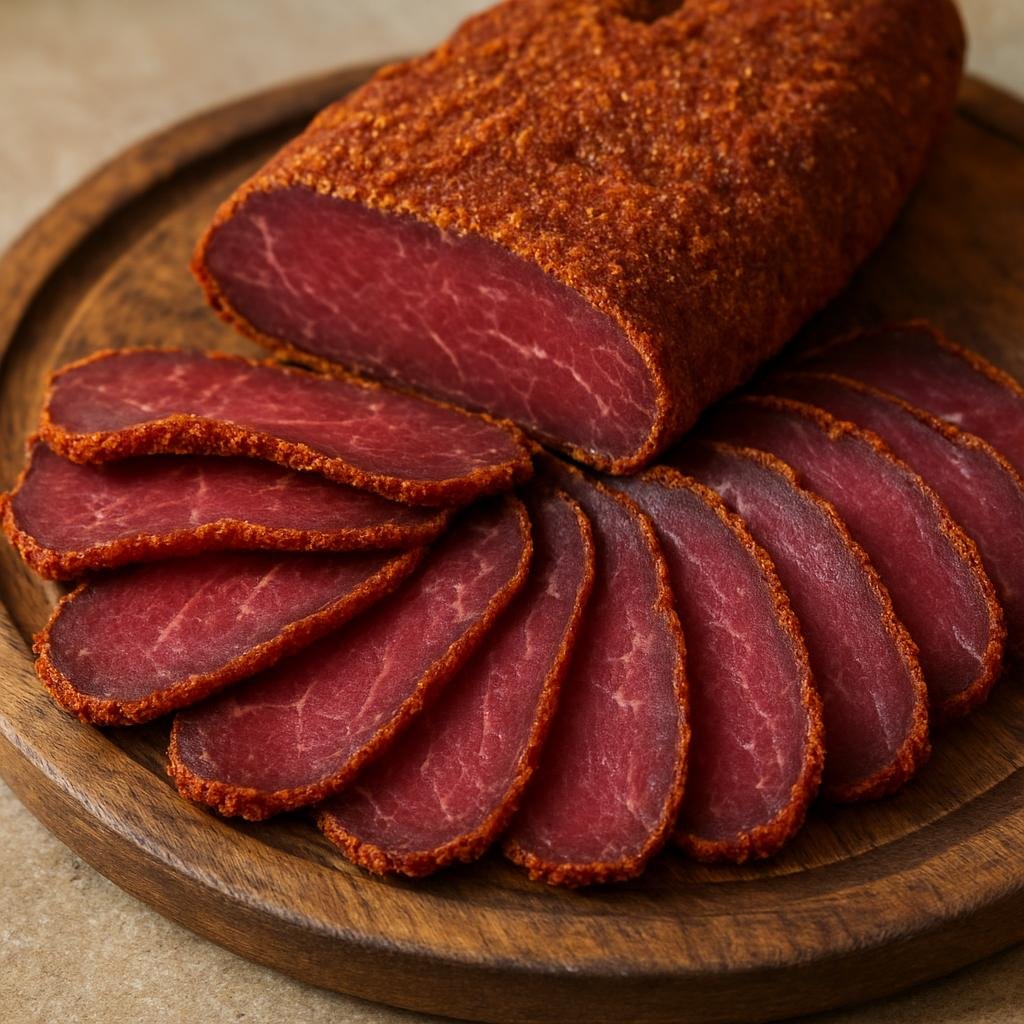
Serving Size: 6
Approximate Time
Prep
30 min
Cook
0 min
Additional
336 hrs
Total
336 hrs 30 min
Ingredients
- 1 whole beef eye round, about 3 lb (1.36 kg), trimmed of excess fat
- 3 tbsp (45 g) kosher salt
- 1 tsp (5 g) freshly ground black pepper
- 1 tsp (3 g) ground cumin
- 1/4 cup (30 g) roasted fenugreek powder (ground roasted fenugreek seeds) for cemen paste
- 1/3 cup (45 g) sweet paprika or mild Aleppo pepper
- 4 cloves garlic, minced (about 12 g)
- 2 tbsp (30 ml) olive oil, plus extra for rubbing
- 2–3 tbsp (30–45 ml) cold water to loosen paste as needed
- 1–2 tbsp (15–30 ml) red wine vinegar (optional, to balance paste)
- Cheesecloth and kitchen twine for wrapping and hanging
Instructions
1. Trim the eye round of large exterior fat and weigh it. In a small bowl combine the kosher salt, 1/2 tsp of the black pepper and the ground cumin. Rub the salt mixture thoroughly over the entire surface of the beef, pressing it into any crevices.
2. Place the salted beef in a nonreactive container or tray, cover tightly, and refrigerate for 4–6 days, turning and re‑positioning once daily so the cure distributes evenly and excess liquid can be drained. After curing, rinse the beef briefly under cold water to remove excess salt, pat very dry with paper towels, and press lightly in a clean cloth to remove surface moisture.
3. Prepare the cemen paste by mixing the roasted fenugreek powder, paprika, remaining 1/2 tsp black pepper, minced garlic, olive oil, and vinegar if using. Add cold water a tablespoon at a time until the mixture forms a thick, spreadable paste.
4. Using clean hands, spread a generous, even layer of the cemen paste over the entire surface of the dried beef. Wrap the coated beef tightly in a double layer of cheesecloth and tie securely with kitchen twine so the meat is compact and the paste stays in contact with the surface.
5. Hang the wrapped beef in a cool, well‑ventilated place (ideally 50–60°F / 10–15°C with low humidity) or place on a rack in the refrigerator for 2–3 weeks until firm and dry to the touch. Check weekly and discard if any off‑odors or excessive spoilage occur.
6. When firm, unwrap, scrape off excess loose cemen (a thin stained surface is normal), and slice very thin across the grain to serve. Basturma is best enjoyed thinly sliced on its own, with flatbread, or as part of a meze platter.
Nutrition Information
To get nutritional information, press the Get Nutrition Info button below.