Entree: Angola – Chikuanga (Steamed or boiled fermented cassava loaf wrapped in banana leaves)
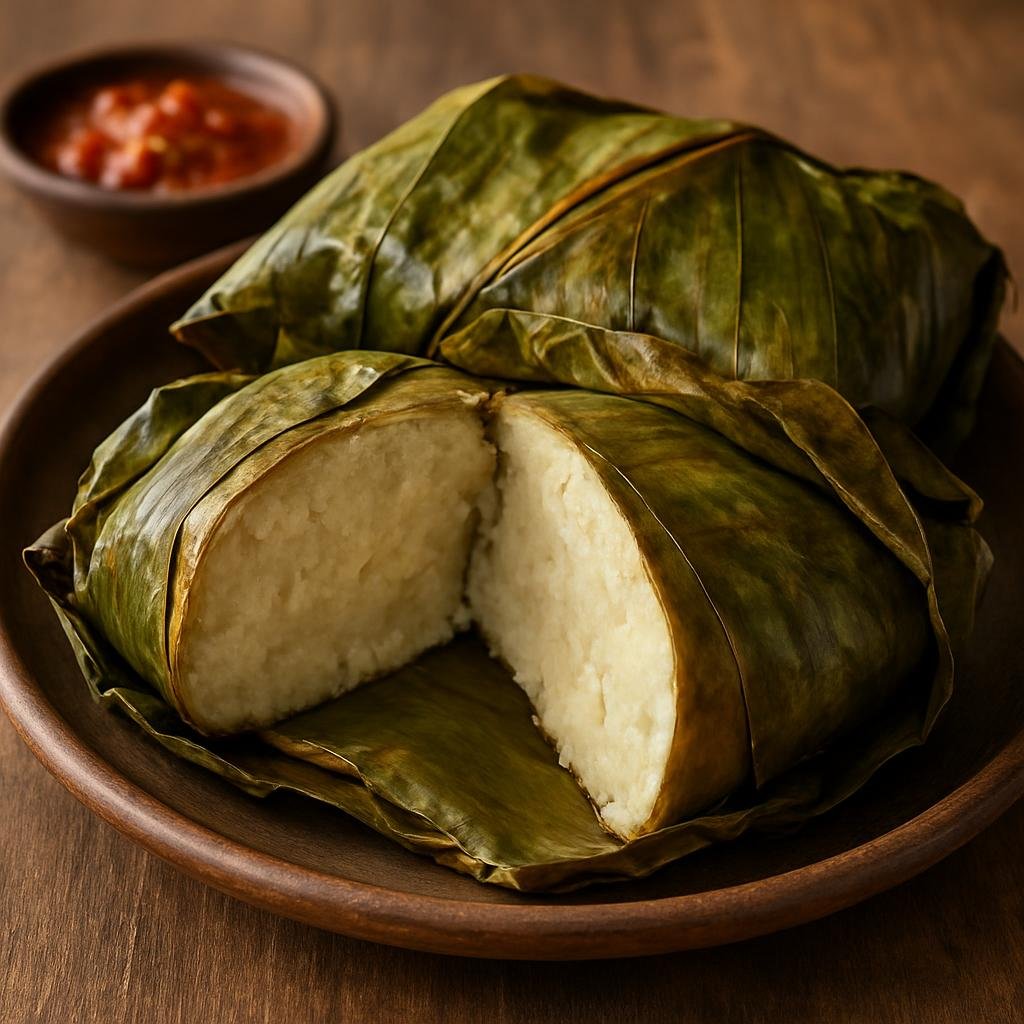
Serving Size: 6
Approximate Time
Prep
30 min
Cook
2 hrs
Additional
48 hrs
Total
50 hrs
Ingredients
- 3 lb (1.4 kg) fresh cassava (yuca), peeled and grated
- 2 tsp (10 g) kosher salt, or to taste
- 6 large banana leaves, approx. 12 x 18 in (30 x 45 cm) each, softened by brief passing over flame or steaming
- Kitchen twine or butchers' string for tying (no measurement required)
- Water for boiling, about 8 cups (2 L)
- 1 tbsp (15 ml) neutral oil (optional, to rub leaves)
- Optional (if fermentation is not desired for time): 4 cups (400 g) cassava flour (puba), see note in instructions
Instructions
1. Prepare the cassava: peel and grate the cassava roots finely. Place grated cassava into a clean cloth or fine sieve and press firmly to extract liquid. Collect and discard the liquid; repeat pressing until the grated cassava is relatively dry. For safety, do not use cassava liquid.
2. Transfer the pressed cassava to a bowl, sprinkle with the salt, and knead briefly to combine. To ferment (traditional method): cover and leave at room temperature for 24–48 hours to develop a mild sourness, stirring once; longer fermentation yields stronger flavor. If you prefer a quicker version, skip fermentation.
3. Lay a softened banana leaf on a work surface, shiny side down. If using, lightly brush the leaf with oil to prevent sticking. Spoon about 1 cup (approximately 160 g) of the cassava mixture onto the leaf and shape into a tight log about 3 in (7–8 cm) wide. Fold the leaf over the mixture, forming a neat packet, and tie securely with kitchen twine. Repeat to make 6 logs.
4. Place the wrapped chikuanga logs seam-side down in a large pot. Add enough water to cover the logs by about 1–2 in (2.5–5 cm). Bring to a gentle boil, then reduce heat to maintain a simmer. Cover and simmer for 1 1/2–2 hours, turning once halfway through, until the loaves are firm and cooked through.
5. Remove the logs from the pot and let cool slightly. To serve, unwrap the banana leaves and slice the firm cassava loaf. Chikuanga is traditionally served alongside stewed meats, fish, or sauces.
6. If using cassava flour (puba) as a shortcut: mix 4 cups (400 g) puba with 1 1/4–1 1/2 cups (300–360 ml) boiling water and 2 tsp (10 g) salt until a thick paste forms, then proceed with wrapping and boiling as above.
Nutrition Information
To get nutritional information, press the Get Nutrition Info button below.