Entree: New Zealand – Auckland & North Island – Hāngi (Earth oven)
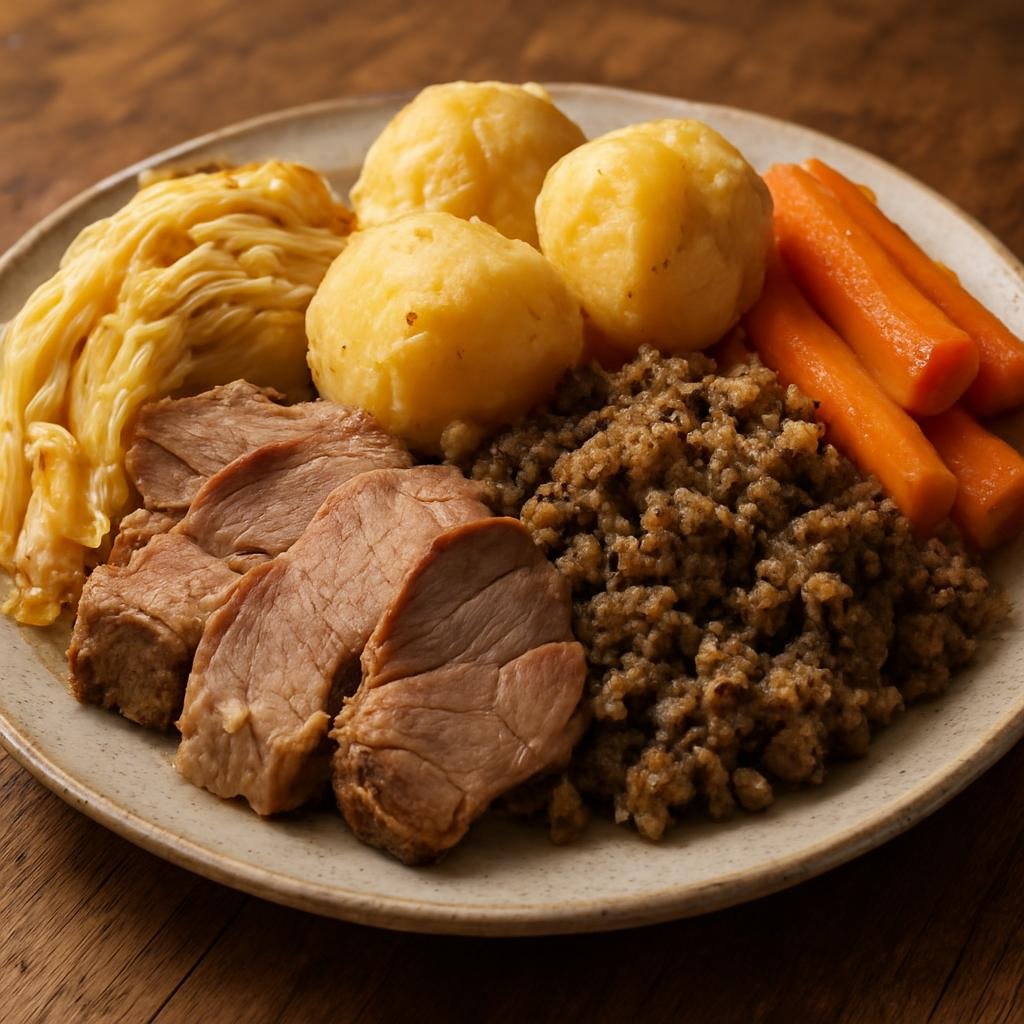
Serving Size: 8
Approximate Time
Prep
45 min
Cook
3 hrs
Total
3 hrs 45 min
Ingredients
- 3 lb (1.4 kg) lamb shoulder, bone-in or boneless
- 2 lb (900 g) pork shoulder, bone-in or boneless
- 8 bone-in chicken thighs, approx. 6 oz (170 g) each
- 6 medium kumara (New Zealand sweet potatoes), about 4 lb (1.8 kg)
- 4 medium potatoes, about 2 lb (900 g)
- 1 small pumpkin or butternut squash, peeled and cut into large wedges, about 3 lb (1.4 kg)
- 1 large cabbage, quartered
- 2 large onions, halved
- 4 tbsp (60 ml) coarse salt
- 2 tbsp (30 ml) black pepper
- 4 bay leaves
- 1/2 cup (120 ml) water (for moistening baskets/cloth)
- Burlap sacks or clean baking cloths (dampened)
- Banana leaves or cabbage leaves (optional, for layering)
- Hot stones (river stones or similar, enough to fill the pit)
- Firewood or charcoal to heat stones
Instructions
1. Season meats: rub lamb, pork and chicken with salt and pepper; tuck bay leaves under skins or between cuts. Let sit at room temperature while you prepare pit and vegetables.
2. Prepare vegetables and packing: wash and leave kumara and potatoes whole or halved depending on size; cut pumpkin into large wedges; keep cabbage quarters and onion halves whole. Arrange vegetables into metal wire baskets or wrap in damp baking cloths/burlap—layer with banana or cabbage leaves if using. Sprinkle a little water over cloths to maintain moisture during cooking.
3. Heat stones and pit: dig a suitable pit and build a large fire directly on top of the stones. When the fire has burned down and the stones are glowing hot (this can take 2–3 hours), rake out the embers and position the hot stones evenly in the base of the pit.
4. Layer for cooking: place the meat directly on the hot stones (on racks if available), then add the vegetable baskets/cloth-wrapped vegetables above the meats. Cover the whole pile with more leaves or damp cloths, then with a layer of soil to seal the pit completely and trap the heat and steam.
5. Cook: allow the hāngi to cook for 3–4 hours (larger hāngi may take longer) without disturbing. The meats should be falling-apart tender and vegetables soft when ready.
6. Uncover and plate: carefully remove the soil and coverings, lift out the bundled contents—caution, very hot—and transfer meats and vegetables to platters. Break the meat into portions and serve hot with traditional relishes such as pickled vegetables, kōwhaiwhai-style salad or chutneys.
7. Alternative backyard method: if no pit is available, replicate by stacking hot stones in a large covered metal container or using a well-sealed charcoal grill with stones and baskets; steam/roast for similar times, ensuring good insulation and moisture for tender results.
Nutrition Information
To get nutritional information, press the Get Nutrition Info button below.