Entrée: Laos – ລາບເນື້ອ ▶ Laab Neua (Minced Beef Salad)
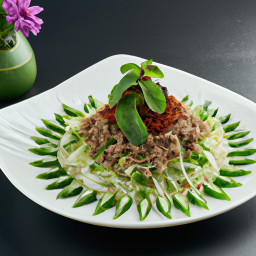
Serving Size: 4
Approximate Time
Prep
15 min
Cook
5 min
Additional
5 min
Total
25 min
Ingredients
14 oz / 400 g minced beef (preferably lean chuck or sirloin)
1 tbsp (15 ml) neutral oil (vegetable or canola)
2 tbsp (30 ml) uncooked glutinous (sticky) rice or jasmine rice (for toasted rice powder)
1 small shallot, thinly sliced
2–3 small fresh bird's-eye chiles or 1–2 serranos, finely chopped (adjust to taste)
2–3 stalks green onion, thinly sliced on the bias
1 / 2 cup (15 g) fresh cilantro leaves and tender stems, roughly chopped
1 / 2 cup (15 g) fresh mint leaves, roughly chopped (or 4–6 shiso leaves for a Japanese twist)
2 tbsp (30 ml) fish sauce
2 tbsp (30 ml) fresh lime juice (about 1–2 limes)
1–2 tsp palm sugar or light brown sugar (to taste)
1–2 tsp toasted rice powder (see instructions to make)
Optional Japanese twist: 1 tsp (5 ml) light soy sauce and 1 / 2–1 tsp (2.5–5 ml) toasted sesame oil (for a subtle umami note)
Lettuce leaves, cucumber slices, and steamed sticky rice or plain steamed rice for serving
Salt and freshly ground black pepper to taste
Instructions
Make toasted rice powder (khao khua): Heat a dry skillet over medium heat. Add 2 tbsp uncooked glutinous rice (or jasmine rice) and dry-toast, stirring constantly, until the grains are golden brown and fragrant, 4–6 minutes. Transfer to a mortar and pestle or spice grinder and pulse to a coarse powder. Set aside.
Prep aromatics and herbs: Thinly slice the shallot and chill briefly in cold water for 5 minutes if you prefer milder flavor, then drain. Finely chop the chiles and green onions. Roughly chop cilantro and mint (or shiso if using).
Sear the beef: Heat 1 tbsp neutral oil in a heavy skillet over high heat until shimmering. Add the minced beef and spread it into an even layer. Let it sear without disturbing for 30–45 seconds, then break up with a spatula and continue to cook until just browned but still juicy, about 2–3 minutes total. Avoid overcooking; laab is best with tender, slightly moist meat. Drain any excess fat if necessary. (If you prefer traditional raw laab, do not sear; use only beef from a trusted source and follow safe raw‑meat handling practices—this recipe uses searing for safety.)
Make the dressing: In a large mixing bowl whisk together 2 tbsp fish sauce, 2 tbsp fresh lime juice, 1–2 tsp palm sugar, and the optional 1 tsp light soy sauce and 1/2–1 tsp toasted sesame oil if using the Japanese twist. Taste and adjust balance—laab should be salty, sour, slightly sweet and spicy.
Combine warm beef with dressing: Transfer the hot cooked beef directly into the dressing and toss to combine. The heat from the beef will slightly wilt the shallots and herbs and help absorb flavors.
Add aromatics, herbs and rice powder: Immediately stir in the sliced shallot, chopped chiles, green onion, cilantro and mint (or shiso). Sprinkle 1–2 tsp toasted rice powder over the mixture and toss gently to combine. Season with freshly ground black pepper and more lime or fish sauce if needed. Taste and adjust seasoning—add more chili for heat, more lime for acidity or more toasted rice powder for nuttiness and texture.
Rest briefly and serve: Let the laab rest 5 minutes so flavors marry. Serve warm or at room temperature with lettuce leaves for wrapping, cucumber slices and steamed sticky rice (or plain rice). Garnish with extra herbs and a wedge of lime.
Notes and variations: For a closer Lao/Isan version, omit soy and sesame, use only fish sauce and fresh herbs, and use glutinous rice for the toasted powder. For a Japanese-inspired variation (suggested by the title), replace some mint with shiso leaves and add the small amount of soy sauce and toasted sesame oil listed above. Leftovers: keep refrigerated up to 24 hours; best eaten the same day. Do not freeze due to herb texture changes.