Entrée: Philippines – Nasi Lemak (Coconut Rice)
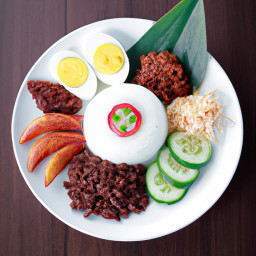
Serving Size: 4
Approximate Time
Prep
25 min
Cook
30 min
Additional
20 min
Total
1 hr 15 min
Ingredients
2 cups (360 g) jasmine rice, rinsed until water runs clear
1 1 / 2 cups (360 ml) canned coconut milk
1 cup (240 ml) water (adjust slightly as needed)
1 tsp salt
2 pandan leaves, tied in a knot (optional) or 1-2 slices ginger
12–15 dried red chilies, seeds removed and soaked in hot water 15–20 minutes (or 6–8 fresh red chilies for less heat)
6 shallots, peeled
3 cloves garlic, peeled
1 tbsp belacan (shrimp paste) or 1 tbsp Filipino bagoong alamang (adjust to taste), about 0.6 oz (18 g)
1–2 tbsp tamarind paste (or 1 tbsp lime juice)
2 tbsp palm sugar or dark brown sugar (adjust to taste)
2 tbsp neutral oil (vegetable or sunflower) plus more as needed
1 / 2 cup (120 ml) water or stock to loosen the sauce
Salt to taste
150 g (about 1 1 / 2 cups) dried anchovies (ikan bilis or Filipino dilis), rinsed and drained
1 / 2 cup (70 g) raw peanuts
4 large eggs
1 medium cucumber, thinly sliced
Optional: fried chicken, grilled tuna, or salted fish (for serving)
Lime or calamansi wedges, extra sliced chilies, or fried shallots (optional garnish)
Instructions
Prepare the rice: Rinse the jasmine rice well under cold water until the water runs clear. Drain.
Combine the rinsed rice, coconut milk, water, and salt in a rice cooker or a medium pot. Add the pandan leaves if using.
Cook the rice: If using a rice cooker, cook on the normal setting until done. If using a pot, bring to a gentle boil over medium heat, then reduce to low, cover, and simmer 15–18 minutes until liquid is absorbed. Let rest covered 10 minutes, then remove pandan leaves and fluff with a fork.
Soak chilies for sambal: While the rice cooks, soak the dried chilies in hot water for 15–20 minutes until softened. Drain and reserve a little soaking liquid if needed.
Make the chili paste: In a blender or mortar and pestle, combine the softened chilies (or fresh chiles), shallots, and garlic. Add a splash of the soaking liquid or water and blitz/pound to a coarse paste.
Cook the sambal base: Heat 2 tablespoons oil in a medium skillet over medium heat. Add the belacan/shrimp paste and fry for 30–60 seconds, stirring, until fragrant to temper the paste.
Add the chili-shallot-garlic paste to the skillet and sauté over medium-low heat for 6–8 minutes, stirring frequently, until the raw smell dissipates and the oil separates slightly.
Add sugar and tamarind (or lime juice) and 1/2 cup water (or stock). Simmer gently for 8–12 minutes, stirring occasionally, until the mixture reduces to a thick, glossy sambal. Season with salt and adjust sugar or acidity to taste. If it gets too dry, add a splash of water.
Crisp the anchovies: Heat about 1/2 inch of oil in a small skillet over medium-high heat. When hot, add the drained dried anchovies in a single layer. Fry, stirring or tossing, for 2–4 minutes until crisp and golden. Transfer to a paper towel-lined plate and drain. (To reduce splatter, fry in batches if needed.)
Roast the peanuts: In a dry skillet over medium heat, toast the raw peanuts, stirring frequently until golden and fragrant, about 4–6 minutes. Alternatively, fry peanuts in a tablespoon of oil until golden. Drain on paper towels.
Cook the eggs: Place eggs in a saucepan and cover with cold water. Bring to a gentle boil, then simmer 7–8 minutes for slightly soft-centered hard-boiled eggs or 9–10 minutes for fully hard-cooked yolks. Transfer to an ice bath, peel, and halve.
Slice the cucumber: Thinly slice the cucumber and set aside chilled.
Optional protein: If serving with fried chicken or grilled fish, prepare and cook to desired doneness while other components finish.
Assemble the nasi lemak: On individual plates or a communal platter, mound a serving of coconut rice. Arrange a spoonful of sambal on the side, a handful of crispy anchovies, a portion of roasted peanuts, cucumber slices, and a halved egg. Add optional protein if using. Garnish with lime or calamansi wedges and fried shallots or extra sliced chilies if desired.
Serve immediately: Nasi lemak is best served warm with the sambal freshly made and the anchovies still crisp. Leftover sambal keeps well refrigerated for several days and intensifies in flavor.
Nutrition Information
To get nutritional information, press the Get Nutrition Info button below.