Entrée: China – 北京烤鸭 ▶ Běijīng Kǎoyā (Peking Duck)
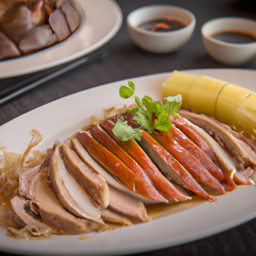
Serving Size: 6
Approximate Time
Prep
1 hr 30 min
Cook
1 hr 20 min
Additional
10 hrs
Total
12 hrs
Ingredients
1 whole duck (about 4.5–5.5 lb / 2–2.5 kg), giblets removed, neck trimmed
2 tbsp kosher salt
1 tbsp sugar or palm sugar
1 tbsp Chinese five-spice powder
4 cups water (960 ml)
2 tbsp rice vinegar or white vinegar
4 tbsp maltose or honey, warmed to thin
3 tbsp kecap manis (Indonesian sweet soy sauce)
2 tbsp light soy sauce
2 tbsp Shaoxing wine, dry sherry, or dry white wine
1 thumb (2–3 cm) fresh ginger, sliced
3 scallions (green onions), halved
2 star anise
1 cinnamon stick
3 garlic cloves, crushed
1 tsp white or black pepper
1 tbsp sesame oil
Optional: 1 tsp tamarind paste or 1 tbsp lime juice
Vegetable oil for brushing and initial steaming or scalding (or hot water pour)
To serve: 20–24 Mandarin pancakes or thin crepes (or steamed mantou)
To serve: hoisin sauce and/or extra kecap manis
To serve: cucumber, julienned; scallions, julienned; fresh cilantro; sambal or sliced chiles (optional)
Instructions
Clean and dry the duck: Rinse the duck inside and out and pat thoroughly dry with paper towels. Trim excess fat from the cavity and neck. Let the duck sit uncovered in the refrigerator for 1–2 hours or up to overnight to dry the skin further (helps crispiness).
Prepare a basic flavor rinse (optional but recommended): In a saucepan combine 4 cups water, sliced ginger, halved scallions, star anise, cinnamon stick, crushed garlic and 1 tbsp salt. Bring to a simmer for 5 minutes, then remove from heat and let cool slightly.
Scald or pour hot liquid over the duck: Using tongs, hold the duck over a sink and slowly pour the hot aromatic liquid (or very hot water if preferred) evenly over the skin until it tightens. Alternatively, you can briefly dip the duck in simmering liquid. Pat dry immediately and thoroughly inside and out.
Loosen the skin from the meat: Insert your hand gently between the skin and breast meat (or use a folded towel) to separate the skin from the breast as much as possible without tearing. This helps render fat and crisps the skin.
Season the cavity and rub under the skin: Mix 1 tbsp salt, 1 tbsp sugar (or palm sugar), and 1 tbsp five-spice. Rub a small amount inside the cavity and a thin layer under the skin over the breast meat. Brush the outside skin lightly with sesame oil.
Make the Indonesian-style glaze: In a small bowl combine warmed maltose or honey, 3 tbsp kecap manis, 2 tbsp light soy sauce, 2 tbsp Shaoxing wine, 2 tbsp rice vinegar, 1 tsp tamarind (or lime juice) if using, and 1/2 tsp pepper. Whisk until smooth. Reserve most for basting; set aside about 1–2 tbsp for a finishing brush if desired.
Air-dry the duck: Suspend or place the duck on a rack on a sheet pan and brush the entire skin with the glaze mixture (thin even coat). If possible, hang the duck in a cool, well-ventilated place for 4–12 hours, or refrigerate uncovered on a rack overnight. The skin should feel tacky to the touch and slightly dry to form a pellicle.
Preheat the oven: Position a rack in the middle of the oven. Preheat to 230°C / 450°F for the initial roast.
Roast at high heat (start): Place the duck breast-side up on a rack in a roasting pan (catch drippings). Roast at 230°C / 450°F for 15–20 minutes to start the crisping of the skin. Watch to ensure skin browns evenly; rotate pan if needed.
Lower heat to finish roasting: Reduce oven temperature to 180°C / 350°F and continue roasting for 40–55 minutes (depending on duck size). Every 15–20 minutes, brush the duck lightly with more of the glaze to deepen color and flavor. If the skin is browning too quickly, tent loosely with foil.
Check doneness and render fat: The duck is done when an instant-read thermometer inserted into the thickest part of the thigh (not touching bone) reads at least 74°C / 165°F and the skin is evenly deep golden–brown and crisp. Total roast time typically 55–80 minutes. If you like crisper skin, you can finish under a very hot broiler for 2–3 minutes, watching constantly.
Rest the duck: Remove from oven and let rest on a cutting board for 15–20 minutes. This helps the juices redistribute and makes carving easier.
Crisp and carve like Peking duck: Separate the skin from the meat with a sharp knife and slice the skin into thin strips. Slice the breast meat thinly across the grain. Traditional service combines crispy skin and sliced meat in pancakes with condiments.
Warm the pancakes or buns: Steam pancakes briefly or warm per package instructions. If using mantou, steam or pan-fry until warm.
Serve assembly: Spread a little hoisin and/or extra kecap manis on a pancake, add a few slices of crispy skin and duck meat, top with julienned cucumber, scallions and cilantro. Add sambal or sliced fresh chiles for an Indonesian heat kick if desired. Roll and eat.
Sauce and drippings: Optional — skim and save drippings for making a dipping sauce or to stir into fried rice or noodles. Leftover duck meat can be shredded and used in salads, fried rice, or sambal-stirred noodles for an Indonesian twist.