Entree: United States – Southwestern United States — Nevada – Nevada Desert Quail
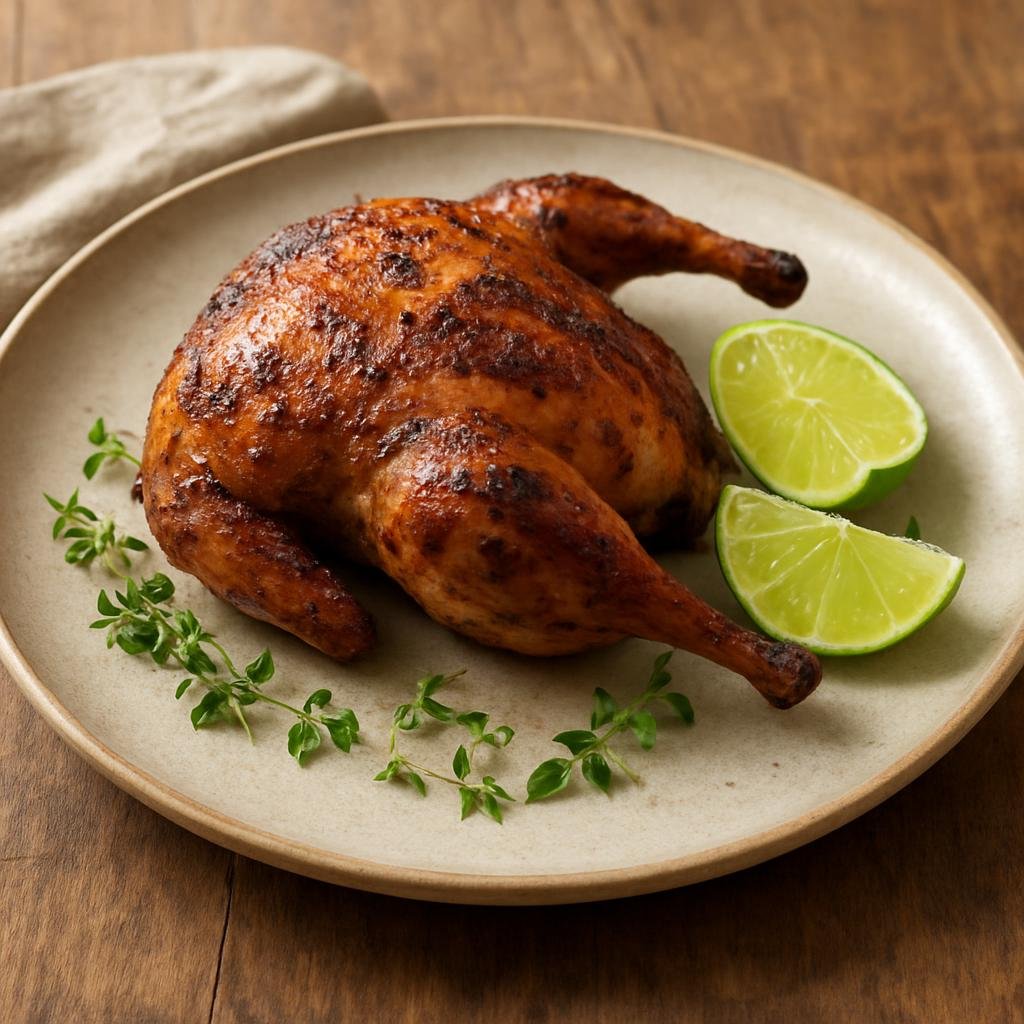
Serving Size: 6
Approximate Time
Prep
35 min
Cook
30 min
Additional
30 min
Total
1 hr 30 min
Ingredients
- 8 whole quail, approx. 6 oz (170 g) each
- 3 tbsp (45 ml) olive oil
- 2 tbsp (15 g) mesquite powder or 2 tbsp (30 ml) mesquite syrup (use powder for dry rub, syrup if available)
- 1 tsp (5 g) smoked paprika
- 1 tsp (2 g) ground cumin
- 1 tsp (1 g) dried oregano
- 1 tsp (1 g) dried thyme
- 1 tsp (6 g) kosher salt
- 1/2 tsp (2.5 g) ground black pepper
- 2 cloves garlic, minced (about 6 g)
- Zest and juice of 1 large lime (zest about 1 tsp/5 g, juice about 2 tbsp/30 ml)
- 2 tbsp (30 ml) honey
- 2 tbsp (30 ml) unsalted butter, melted (about 28 g)
- 1/2 cup (120 ml) low-sodium chicken stock (for pan sauce)
- 1 tbsp (14 g) unsalted butter (to finish pan sauce)

Mesquite Wild Rice Pilaf
- 2 cups (370 g) wild rice blend, uncooked
- 4 cups (950 ml) low-sodium chicken or vegetable stock
- 2 tbsp (30 ml) olive oil
- 1 small yellow onion, finely chopped (about 120 g)
- 2 cloves garlic, minced (about 6 g)
- 1/2 tsp (2.5 g) mesquite powder (optional, to echo quail rub)
- 1/2 tsp (2 g) kosher salt, or to taste
- 2 tbsp (8 g) chopped fresh cilantro
- 1 tsp (5 ml) fresh lime juice

Charred Corn–Black Bean Succotash
- 3 cups (approx. 400 g) fresh or frozen corn kernels
- 1 (15 oz / 425 g) can black beans, drained and rinsed (approx. 1 1/2 cups / 255 g drained)
- 1 medium red bell pepper, diced (about 150 g)
- 1 small red onion, finely chopped (about 100 g)
- 1 jalapeño, seeded and minced (optional) (about 15 g)
- 2 tbsp (30 ml) olive oil
- 1 tbsp (15 ml) fresh lime juice
- 2 tbsp (8 g) chopped fresh cilantro
- 1/2 tsp (2.5 g) kosher salt
- 1/4 tsp (1 g) ground cumin

Garnish
- Fresh cilantro leaves
- Lime wedges
Instructions
Short Description:
Whole quail rubbed with mesquite and desert herbs, grilled or roasted and glazed with a honey-lime baste, served with a mesquite-scented wild rice pilaf and a charred corn–black bean succotash for a complete Southwestern Nevada main course.

Regional Notes:
This Nevada version emphasizes desert flavors: mesquite (powder or smoke), bright lime, and sparse desert herbs (oregano, thyme) rather than heavy barbecue sauces. The preparation leans to quick high-heat roasting or grilling to mimic campfire cooking common to the Great Basin and Mojave regions.

1. Make the rub: In a small bowl whisk together 3 tbsp (45 ml) olive oil, mesquite powder (or syrup), smoked paprika, cumin, oregano, thyme, kosher salt, black pepper, minced garlic, lime zest, and 1 tbsp (15 ml) honey until a paste forms.
2. Prepare the quail: Pat quail dry with paper towels. If desired, butterfly (spatchcock) each quail by removing backbone or halve at the breast for faster, even cooking. Place quail in a shallow dish or zip-top bag and rub all over with the mesquite-lime paste. Cover and refrigerate 30 minutes to overnight (at least 30 minutes for surface flavor).
3. Preheat grill or oven: For grilling, set up for two-zone heat and preheat to medium-high (about 400–450°F / 200–230°C). For oven roasting, preheat oven to 425°F (220°C) and place a rack in a shallow roasting pan.
4. While the quail rests, start the wild rice pilaf: In a medium saucepan, heat 2 tbsp (30 ml) olive oil over medium heat. Add the finely chopped onion and sauté until translucent, 4–5 minutes. Add 2 cloves (6 g) minced garlic and cook 30 seconds. Add 2 cups (370 g) wild rice blend, stir to coat, then add 4 cups (950 ml) stock, 1/2 tsp (2.5 g) mesquite powder (if using), and 1/2 tsp (2 g) kosher salt. Bring to a boil, reduce heat to low, cover, and simmer until rice is tender and liquid absorbed, about 40–50 minutes. Remove from heat, fluff with fork, stir in chopped cilantro and 1 tsp (5 ml) lime juice, cover to keep warm.
5. Make the charred corn succotash: Heat a large skillet or grill pan over high heat. Add 1 tbsp (15 ml) olive oil and the corn kernels; cook without stirring until charred in spots, 4–6 minutes; stir and char a few more minutes. Transfer charred corn to a bowl. In the same skillet heat remaining 1 tbsp (15 ml) olive oil over medium heat, add red onion and red bell pepper and sauté until softened, 4–5 minutes. Add jalapeño (if using), black beans, charred corn, 1/4 tsp (1 g) cumin, 1/2 tsp (2.5 g) salt, and 1 tbsp (15 ml) lime juice. Cook until heated through, 2–3 minutes. Stir in 2 tbsp (8 g) chopped cilantro and keep warm.
6. Prepare glaze/baste: In a small bowl whisk together remaining 1 tbsp (15 ml) honey, 2 tbsp (30 ml) melted butter, and juice of the lime (about 2 tbsp / 30 ml) reserved from earlier.
7. Grill or roast the quail — grill method: Oil the grill grates. Place quail skin-side down over direct heat and sear 2–3 minutes until browned. Move quail to indirect heat, skin-side up, and cook covered 8–12 minutes, basting once with honey-lime butter during the last 5 minutes, until an instant-read thermometer inserted into the thickest part of breast reads 165°F (74°C). Finish with 1–2 minutes over direct heat if you want extra crisping.
8. Grill or roast the quail — oven method (alternative): Arrange quail skin-side up on a rack in the roasting pan. Roast at 425°F (220°C) for 15–20 minutes, basting with honey-lime butter once halfway through, until internal temperature reaches 165°F (74°C) and skin is golden. If desired, broil 1–2 minutes to crisp skin—watch carefully.
9. Rest and make pan sauce: Transfer cooked quail to a platter and tent loosely with foil; rest 5 minutes. If you roasted in a pan or used a cast-iron skillet, place pan over medium heat, add 1/2 cup (120 ml) chicken stock to deglaze, scraping browned bits, and reduce by half, about 3–4 minutes. Stir in 1 tbsp (14 g) butter to finish and whisk to a glossy sauce. Spoon pan sauce over quail before serving.
10. Plate: On each plate place 1/2 cup to 3/4 cup (120–180 g) mesquite wild rice pilaf, 1/2 cup (120 g) charred corn–black bean succotash, and 1–2 quail (depending on appetite). Drizzle with pan sauce, garnish with fresh cilantro leaves and a lime wedge.
11. Serve immediately with extra lime wedges at the table.
Nutrition Information
To get nutritional information, press the Get Nutrition Info button below.