Entree: Canada – Prince Edward Island, Atlantic Canada – Malpeque Oyster Platter
Serving Size: 4
Approximate Time
Prep
40 min
Cook
15 min
Additional
45 min
Total
1 hr 10 min
Ingredients
- 24 Malpeque oysters in shell, approx. 2 lb (900 g) total oyster meat
- Crushed ice, for serving
- Coarse sea salt or rock salt, enough to cover serving platter
- 2 lemons, quartered
- 1/2 cup (120 ml) red wine vinegar
- 2 tbsp (30 ml) finely minced shallot (about 1 small shallot)
- 1 tsp (5 ml) freshly ground black pepper
- 1/2 tsp (2.5 ml) fine sea salt
- 1 tbsp (15 ml) minced fresh chives (plus extra for garnish)
- 1.5 lb (680 g) small new potatoes, halved if large
- 3 tbsp (45 g) unsalted butter
- 2 tbsp (30 ml) chopped fresh chives
- Salt and freshly ground black pepper, to taste
- 4 oz (115 g) mixed baby salad greens
- 1 small fennel bulb, thinly sliced, approx. 6 oz (170 g)
- 1 small cucumber, thinly sliced, approx. 6 oz (170 g)
- 2 tbsp (30 ml) extra-virgin olive oil
- 1 tbsp (15 ml) fresh lemon juice
- 1 tsp (5 ml) honey
- 8 slices (approx. 225 g) brown bread or sourdough, toasted
- 2 tbsp (30 g) unsalted butter, softened, for bread
- Hot sauce (such as Tabasco), optional, to taste
Instructions
Short Description:
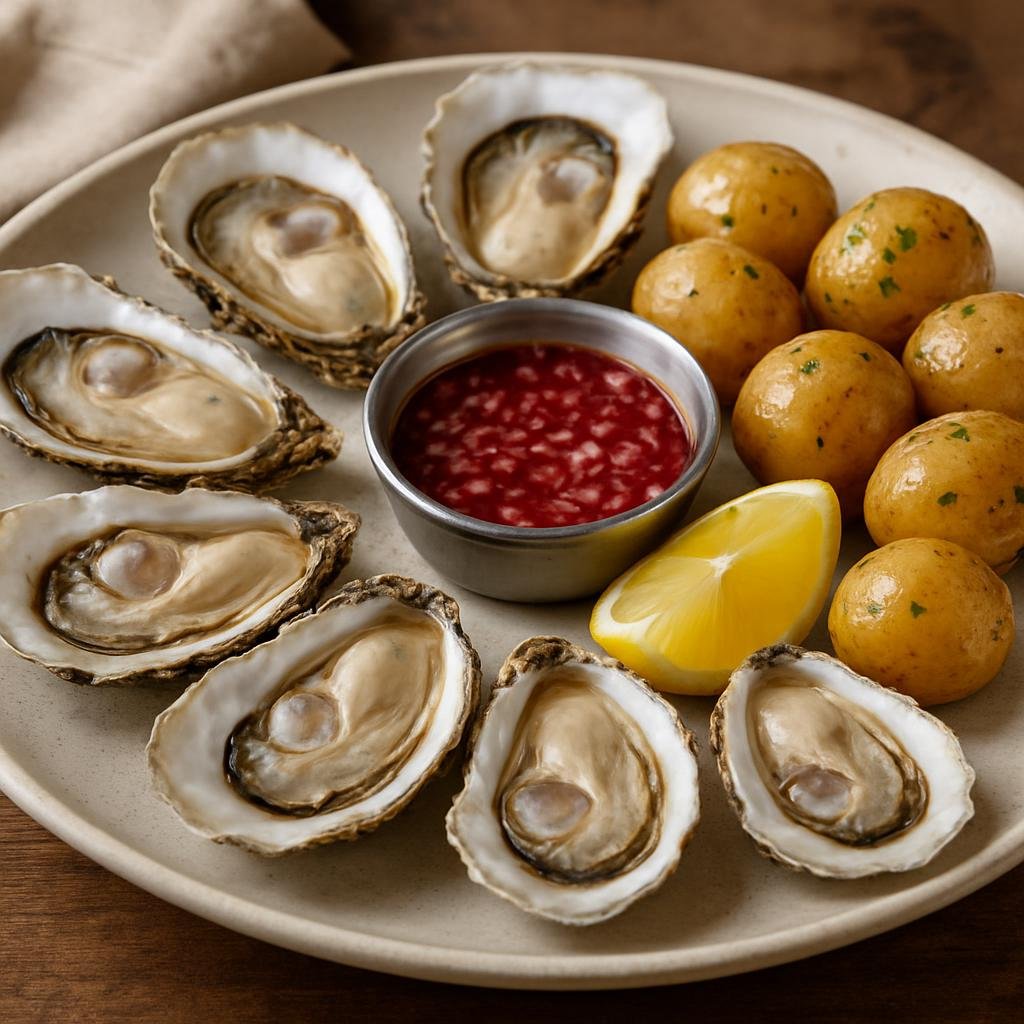
A chilled platter of premium Malpeque oysters served raw on the half shell with classic red-wine mignonette and lemon, accompanied by buttered new potatoes, a crisp fennel-cucumber salad, and toasted brown bread to make a full Atlantic Canada main course.

Regional Notes:
This Prince Edward Island version highlights Malpeque oysters celebrated for their clean, slightly sweet brine and firm texture; they are presented raw on the half shell with a traditional red-wine mignonette or lemon. The plate is completed with regional staples—PEI new potatoes and hearty brown bread—so the oyster course becomes a satisfying entree rather than a small appetizer.

1. Make the mignonette: In a small bowl combine red wine vinegar, minced shallot, freshly ground black pepper, fine sea salt, and 1 tbsp (15 ml) minced chives. Stir, cover, and chill in the refrigerator for at least 30 minutes to let flavors meld.
2. Cook the new potatoes: Place potatoes in a pot, cover with cold salted water, bring to a boil, and simmer until tender when pierced, about 12–15 minutes depending on size. Drain and return to the pot.
3. Finish the potatoes: Add 3 tbsp (45 g) unsalted butter and 2 tbsp (30 ml) chopped chives to the hot potatoes, season with salt and pepper, and gently toss to coat. Keep warm.
4. Prepare the fennel-cucumber salad: In a bowl whisk together 2 tbsp (30 ml) olive oil, 1 tbsp (15 ml) lemon juice, 1 tsp (5 ml) honey, and a pinch of salt and pepper. Add thinly sliced fennel, cucumber, and mixed baby greens; toss lightly and chill until serving.
5. Toast the bread and butter: Toast brown bread slices, spread with softened butter, and keep warm in a low oven (about 200°F / 95°C) for a few minutes if desired.
6. Shuck and chill the oysters: If you are shucking yourself, scrub shells under cold water and use an oyster knife to open each oyster carefully, preserving liquor in the shell; transfer the oysters to a tray and immediately cover with crushed ice. (Alternatively, have the fishmonger shuck them.) Keep oysters refrigerated until just before serving.
7. Arrange the platter: On a large serving tray or shallow bowl, spread a layer of coarse sea salt or rock salt and a bed of crushed ice to stabilize shells. Arrange the chilled oysters on the half shell over the ice.
8. Plate accompaniments: Place a small bowl of mignonette and a bowl of lemon wedges on the platter. Arrange the buttered new potatoes, fennel-cucumber salad, and toasted brown bread on separate serving boards or plates alongside the oyster platter so guests can build bites.
9. Serve: Garnish oysters and potatoes with extra chopped chives, provide hot sauce if desired, and instruct diners to eat oysters directly from the shell with a squeeze of lemon or a spoon of mignonette. Enjoy the platter immediately while oysters are cold and fresh.
Nutrition Information
To get nutritional information, press the Get Nutrition Info button below.