Entree: United States – Alaska – Moose Stew
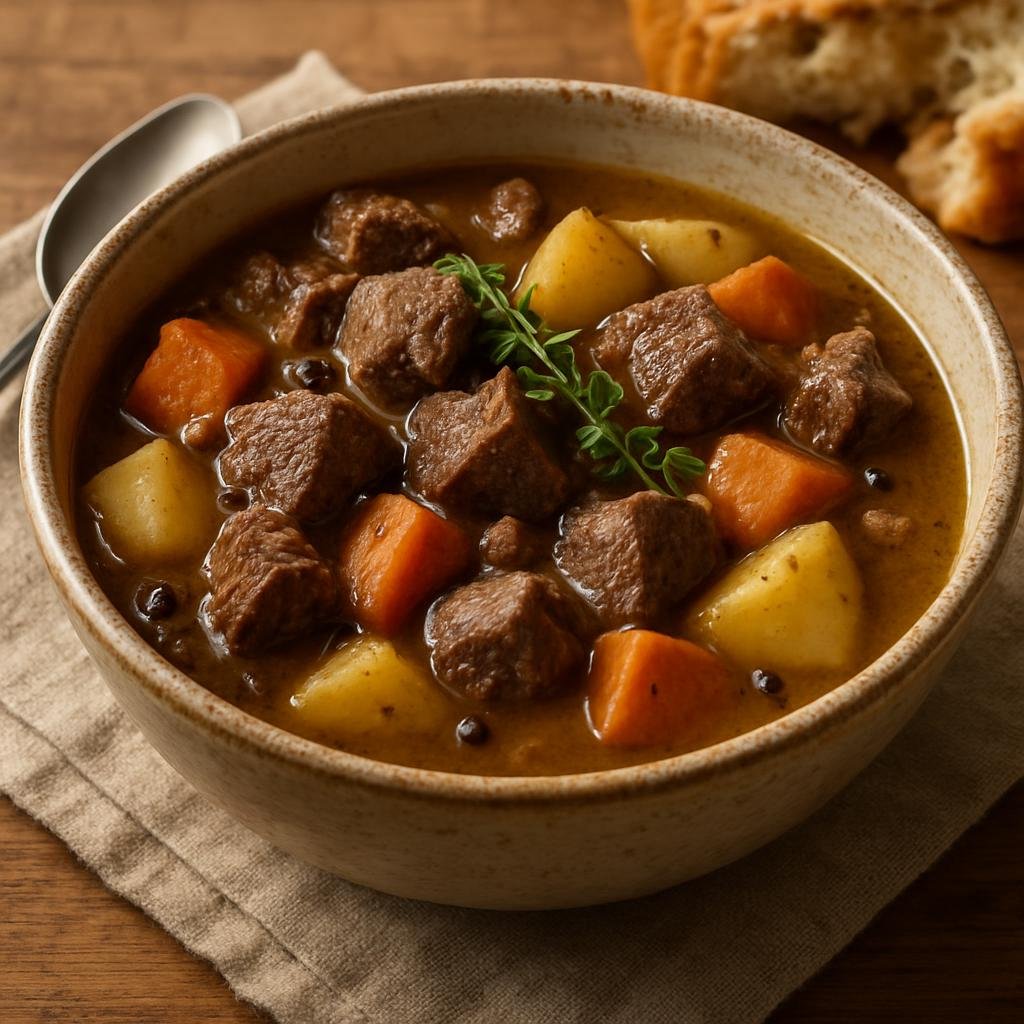
Serving Size: 6
Approximate Time
Prep
25 min
Cook
2 hrs 30 min
Total
2 hrs 55 min
Ingredients
- 2.5 lb (1.13 kg) moose stew meat, trimmed and cut into 1 to 1.5-inch (2.5–4 cm) cubes
- 1 tsp (5 g) kosher salt, plus more to taste
- 1 tsp (2 g) freshly ground black pepper
- 1/4 cup (32 g) all-purpose flour, for dredging
- 3 tbsp (45 ml) vegetable oil or canola oil
- 1 large yellow onion, about 10 oz (280 g), chopped
- 3 cloves garlic, minced (about 1 tbsp / 15 g)
- 3 medium carrots, about 12 oz (340 g), cut into 1-inch (2.5 cm) pieces
- 1.5 lb (680 g) Yukon Gold or russet potatoes, peeled and cut into 1-inch (2.5 cm) pieces
- 2 celery stalks, about 3 oz (85 g), sliced
- 8 oz (225 g) mushrooms (button or wild), sliced (optional)
- 4 cups (960 ml) beef broth (or moose/bison stock if available)
- 1 cup (240 ml) dry red wine (optional; substitute equal broth if omitted)
- 1 cup (240 ml) water (adjust as needed)
- 2 tbsp (30 ml) tomato paste
- 2 bay leaves
- 1 tsp (1 g) dried thyme (or 1 tbsp / 3 g fresh thyme)
- 6 juniper berries, lightly crushed (optional; imparts classic wild flavor)
- 2 tbsp (30 ml) Worcestershire sauce
- 1 tbsp (15 ml) maple syrup or brown sugar (optional, to balance flavor)
- 2 tbsp (30 ml) chopped fresh parsley, for garnish
- 1–2 tbsp (8–16 g) cornstarch mixed with 2–4 tbsp (30–60 ml) cold water, for thickening if needed
Instructions
Short Description:
A hearty slow-simmered stew of tender moose meat with potatoes, carrots, onions, and savory broth — a warming main course well suited to Alaskan seasons. It is made to be cooked low and long so the wild game becomes meltingly tender.

Regional Notes:
This Alaska version centers on moose meat as the primary protein, reflecting local hunting traditions; juniper berries or a touch of maple are optional regional accents. Compared with generic beef stews, the recipe calls for longer, gentler cooking and simple root vegetables to highlight the lean, gamey flavor of moose.

1. Season the moose cubes with 1 tsp salt and 1 tsp pepper, then toss with 1/4 cup (32 g) flour to lightly coat, shaking off excess.
2. In a large heavy pot or Dutch oven over medium-high heat, warm 3 tbsp (45 ml) oil. Working in batches so the meat browns rather than steams, sear the moose cubes 2–3 minutes per side until well browned. Transfer browned meat to a plate and set aside.
3. Reduce heat to medium and add the chopped onion and sliced celery to the pot. Cook, stirring, until softened and beginning to brown, about 6–8 minutes. Add the garlic and cook 30 seconds until fragrant.
4. If using mushrooms, add them now and cook until they release liquid and begin to brown, 4–5 minutes. Stir in 2 tbsp (30 ml) tomato paste and cook 1–2 minutes to remove raw flavor.
5. Pour in the red wine (if using) to deglaze the pot, scraping up browned bits from the bottom. Let the wine reduce by half, about 2–3 minutes. If not using wine, add a splash of broth and scrape the pan.
6. Return the seared moose and any accumulated juices to the pot. Add 4 cups (960 ml) beef broth, 1 cup (240 ml) water, bay leaves, thyme, juniper berries (if using), Worcestershire sauce, and maple syrup (if using). Stir to combine and bring to a gentle simmer.
7. Reduce heat to low, cover partially, and simmer gently for 75 minutes to 2 hours, stirring occasionally, until the meat begins to become tender.
8. Add the carrots and potatoes to the pot, nestling them among the meat and liquid. Continue to simmer, covered, for another 45–60 minutes, until the meat and vegetables are fork-tender. If the stew reduces too much, add up to 1/2 cup (120 ml) more water or broth.
9. Taste and adjust seasoning with additional salt and pepper as needed. If you prefer a thicker gravy, stir the cornstarch slurry (1–2 tbsp cornstarch mixed with cold water) and slowly whisk into the simmering stew; cook 3–5 minutes until thickened.
10. Remove and discard bay leaves (and juniper berry fragments if desired). Stir in chopped fresh parsley and serve hot with crusty bread or bannock to soak up the broth.
11. Make-ahead/slow-cooker option: after step 6 transfer everything (except potatoes) to a slow cooker and cook on low 6–8 hours or high 3–4 hours; add potatoes in the last 1–1.5 hours.
Nutrition Information
To get nutritional information, press the Get Nutrition Info button below.