Entree: United States – Connecticut, New England – Connecticut River Shad Bake
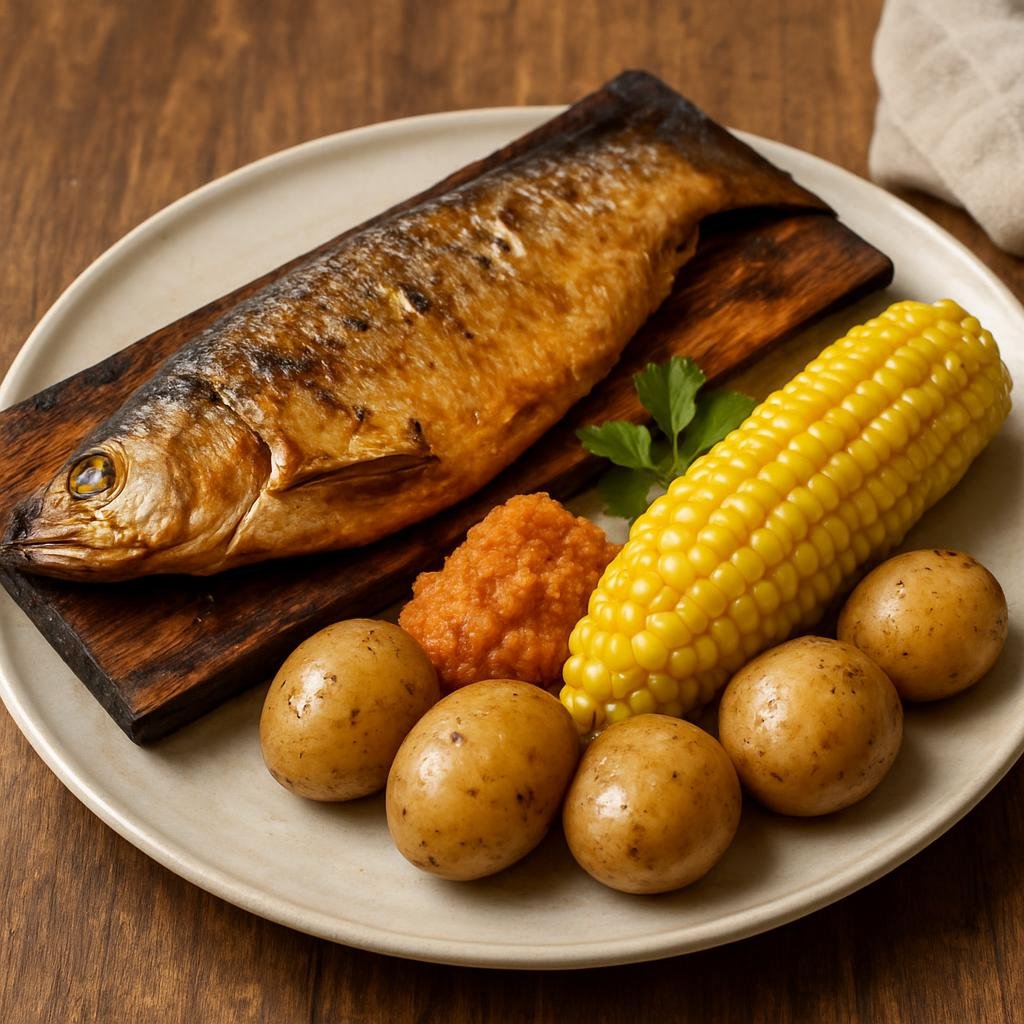
Serving Size: 6
Approximate Time
Prep
25 min
Cook
35 min
Additional
40 min
Total
1 hr 15 min
Ingredients
- 6 shad fillets, skin-on, approx. 8 oz (225 g) each, usable weight
- 2 shad roes, approx. 6 oz (170 g) total, cleaned
- 8 tbsp (113 g) unsalted butter, divided
- 2 tbsp (30 ml) olive oil
- 2 lemons, zested and juiced (about 4 tbsp / 60 ml juice)
- 1/4 cup (60 ml) chopped fresh parsley
- 2 tbsp (30 ml) chopped scallions (green onions)
- 1 tsp (5 g) coarse sea salt, plus more to taste
- 1/2 tsp (2 g) freshly ground black pepper, plus more to taste
- 2 lb (900 g) new potatoes, halved or quartered depending on size
- 4 ears corn on the cob, husked, approx. 2 lb (900 g)
- 6 untreated hardwood planks (about 8 x 10 in / 20 x 25 cm each), such as white oak or cedar
- 12 stainless steel nails or corrosion-resistant screws (or food-safe twine for securing)
- Heavy-duty aluminum foil for potatoes/corn (optional)
Instructions
Short Description:
A traditional Connecticut River shad bake of skin-on shad fillets nailed to hardwood planks and cooked over an open fire, served with shad roe, butter-herb sauce, new potatoes, and charred corn to make a complete main-course meal.

Regional Notes:
This New England version follows the Connecticut River tradition of fastening shad to wooden planks and cooking them near embers so smoke and radiant heat cook the fish; it includes shad roe served with the fillets and classic regional accoutrements (new potatoes and corn) to make a standalone entrée. Unlike generic baked fish, the plank-and-ember technique and presentation with roe are regionally distinctive.

1. Soak planks for 30–60 minutes in cold water to limit charring. Meanwhile build a hardwood fire and let it burn down to a bed of glowing coals with some steady embers; you want medium-high radiant heat rather than high open flames. (If using a gas grill, preheat to medium-high and set up an indirect-heat zone with one side of the burners low/off.)
2. Parboil the new potatoes in salted water for 8–10 minutes until just tender when pierced. Drain and toss with 1 tbsp (15 ml) olive oil, 1/2 tsp (2.5 g) coarse sea salt and 1/4 tsp (1 g) pepper. Wrap potatoes in a tight foil packet and set near the coals to finish roasting while the fish cooks (about 15–25 minutes depending on heat).
3. Prepare the corn: brush ears with 1 tbsp (15 ml) olive oil, sprinkle with a pinch of salt, and wrap individually in foil (or leave unwrapped to char). Place corn near the embers or on the grill grates to cook alongside the potatoes, turning occasionally, 12–20 minutes until tender and slightly charred.
4. Make the lemon-herb butter: melt 6 tbsp (85 g) butter in a small saucepan over low heat, remove from heat and stir in lemon zest, 2 tbsp (30 ml) lemon juice, chopped parsley, scallions, 1/2 tsp (2.5 g) coarse sea salt, and 1/4 tsp (1 g) black pepper. Reserve warm.
5. Pat shad fillets dry with paper towels and season both sides lightly with the remaining 1/2 tsp (2.5 g) salt and 1/4 tsp (1 g) pepper. Cut the shad roe into 6 portions (or leave whole if small) and pat dry.
6. Arrange each fillet skin-side down on a plank and secure by driving 2 stainless steel nails or screws through the thicker end of the fillet into the plank so each fillet lies flat and will not slide; place a portion of roe near the fillet on the plank so it cooks with the fish. Do not over-tighten; the nails should hold the skin to the plank without tearing it.
7. Position the planks upright or at a slight angle facing the embers (about 6–10 in / 15–25 cm from the hot coals), so radiant heat and smoke hit the flesh side. If using a grill, lean each plank against the grill edge over the indirect zone or lay flat on the cooler side near a pile of hot coals or a lit burner. Cook 10–18 minutes depending on heat and fillet thickness; the fish is done when the flesh turns opaque, flakes easily with a fork, and reaches an internal temperature of about 140–145°F (60–63°C). Baste once or twice with the lemon-herb butter during cooking.
8. In the last few minutes of cooking, dot each roe portion with the remaining 2 tbsp (28 g) butter so it melts and warms through; roe should be firm but not dried out. If potatoes or corn need finishing, move them directly into the coals for a few minutes of additional browning, watching carefully.
9. Remove planks from the fire by lifting the plank base away from the coals and set on a stable surface. Let fish rest on the plank 2–3 minutes. Using a spatula, gently lift each fillet from the skin and serve on warmed plates, spooning the melted lemon-herb butter over the fillets and roe. Serve with the roasted new potatoes and charred corn, lemon wedges, and extra chopped parsley.
10. To serve family-style, present the planks at the table and allow guests to cut portions from the fillets and spoon roe over their fish.