Dessert: Mexico – Bajio Mexico — Queretaro – Ate de Membrillo Queretano (Queretaro Quince Paste)
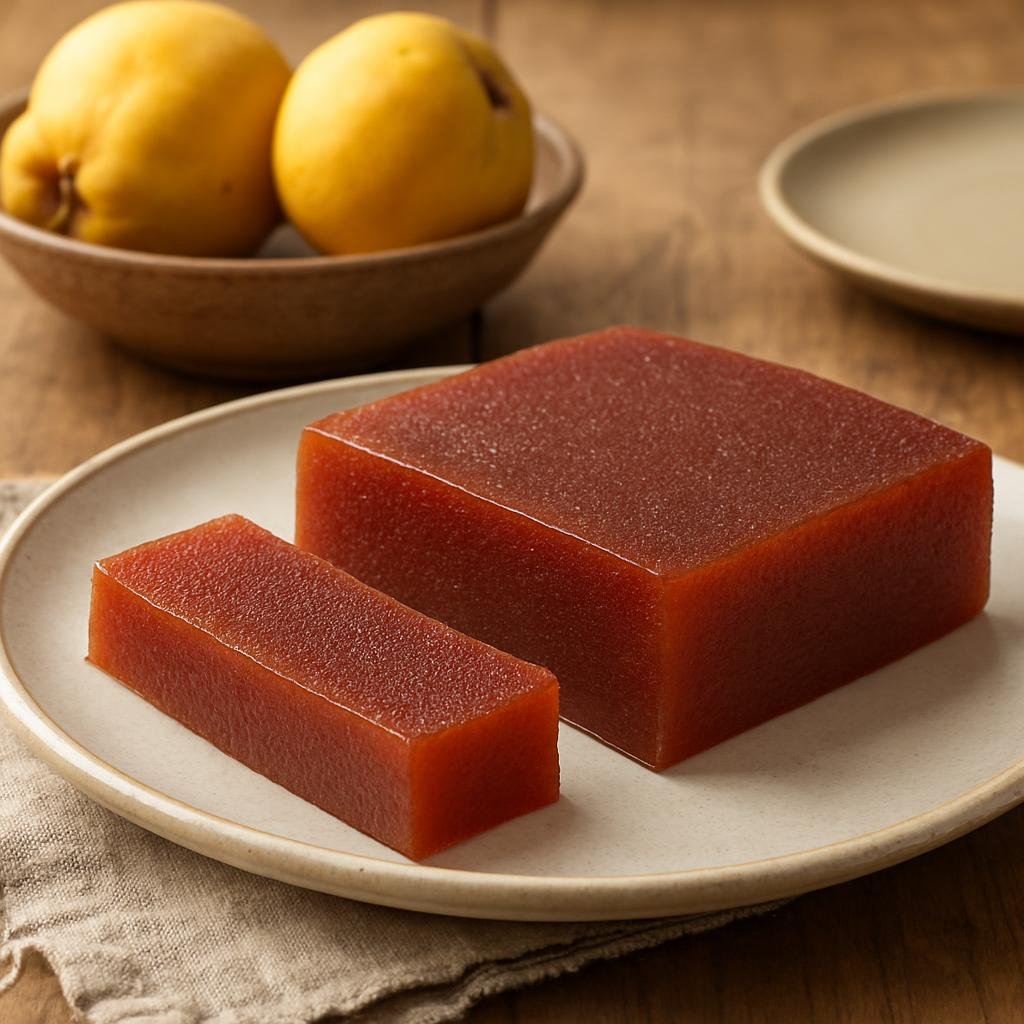
Serving Size: 12
Approximate Time
Prep
25 min
Cook
1 hr 30 min
Additional
36 hrs
Total
36 hrs 40 min
Ingredients
- 4 lb (1.8 kg) quinces (membrillo), trimmed and quartered (about 6–8 medium)
- 1 cup (240 ml) water
- About 2 lb (900 g) granulated sugar, or equal weight to cooked quince pulp (see instructions)
- 2 tbsp (30 ml) fresh lemon juice
- 1 tbsp (14 g) unsalted butter
- 1 cinnamon stick (optional)
- Pinch of salt
- 1/4 cup (50 g) extra granulated sugar for dusting (optional)
- Parchment paper or lightly oiled mold for setting (no measurement)
Instructions
Short Description:
A dense, jewel-toned quince paste made from locally grown membrillo, cooked slowly to concentrate natural pectin and sugar into a sliceable sweet. Traditionally served in blocks and eaten with cheese or on pan dulce (sweet bread).

Regional Notes:
This Queretaro version highlights quince from the Bajio region and relies on the fruit's natural pectin and a careful sugar-to-pulp balance to achieve a firm but tender texture. Unlike looser, syrupier variants, it is cooked to a higher concentration and allowed to set into a sliceable paste typical of central Mexico.

1. Rinse quinces to remove fuzz, then trim cores and tough ends. Cut into quarters (do not peel; skin adds color and pectin).
2. Place quince quarters, 1 cup (240 ml) water, and the cinnamon stick (if using) in a large heavy-bottomed pot. Bring to a simmer over medium heat, cover, and cook until very soft (25–40 minutes), stirring once or twice so they cook evenly.
3. Remove from heat. Discard the cinnamon stick. Purée the cooked quince in a blender or food processor until very smooth. Push the purée through a fine-mesh sieve or tamis into a bowl to remove any remaining fibrous bits and seeds; this yields the smooth quince pulp.
4. Weigh the strained quince pulp. For best texture use an amount of granulated sugar equal to the weight of the pulp; for the quantities above you will commonly need about 2 lb (900 g). Transfer the pulp back to the large pot and add the measured sugar, lemon juice, butter, and a pinch of salt.
5. Cook the quince-sugar mixture over low to medium-low heat, stirring constantly with a wooden spoon or heatproof spatula to prevent sticking and burning. The mixture will darken to a deep orange and thicken; this can take 30–60 minutes. Scrape the bottom frequently. The butter will reduce foaming and give a sheen.
6. Test for doneness: a spoonful placed on a cold plate should firm up and not run; when you draw the spoon across the bottom of the pot, the trail should stay open briefly before closing. The paste should be very thick and pull away cleanly from the sides of the pot.
7. Prepare an 8 x 8 inch (20 x 20 cm) square mold or loaf pan by lining it with parchment paper or lightly greasing. Spoon the hot paste into the mold and smooth the top with a spatula. Tap gently to remove air pockets.
8. Let the mold cool at room temperature until set, then cover loosely and allow to rest 24–48 hours at a cool, dry place to fully firm (longer rest yields a denser texture). Optionally, to dry the surface slightly, place uncovered in a low oven at 175°F (80°C) for 30–60 minutes before cooling.
9. Remove the quince paste from the mold and peel off the parchment. If desired, dust the exterior lightly with the reserved 1/4 cup (50 g) granulated sugar and press lightly to adhere. Cut into slices or blocks to serve.
10. Store wrapped in parchment and kept in an airtight container in the refrigerator for up to 3 weeks, or freeze portions for longer keeping. Serve slices with fresh cheese, bolillos, or as a sweet garnish on desserts.
Nutrition Information
To get nutritional information, press the Get Nutrition Info button below.