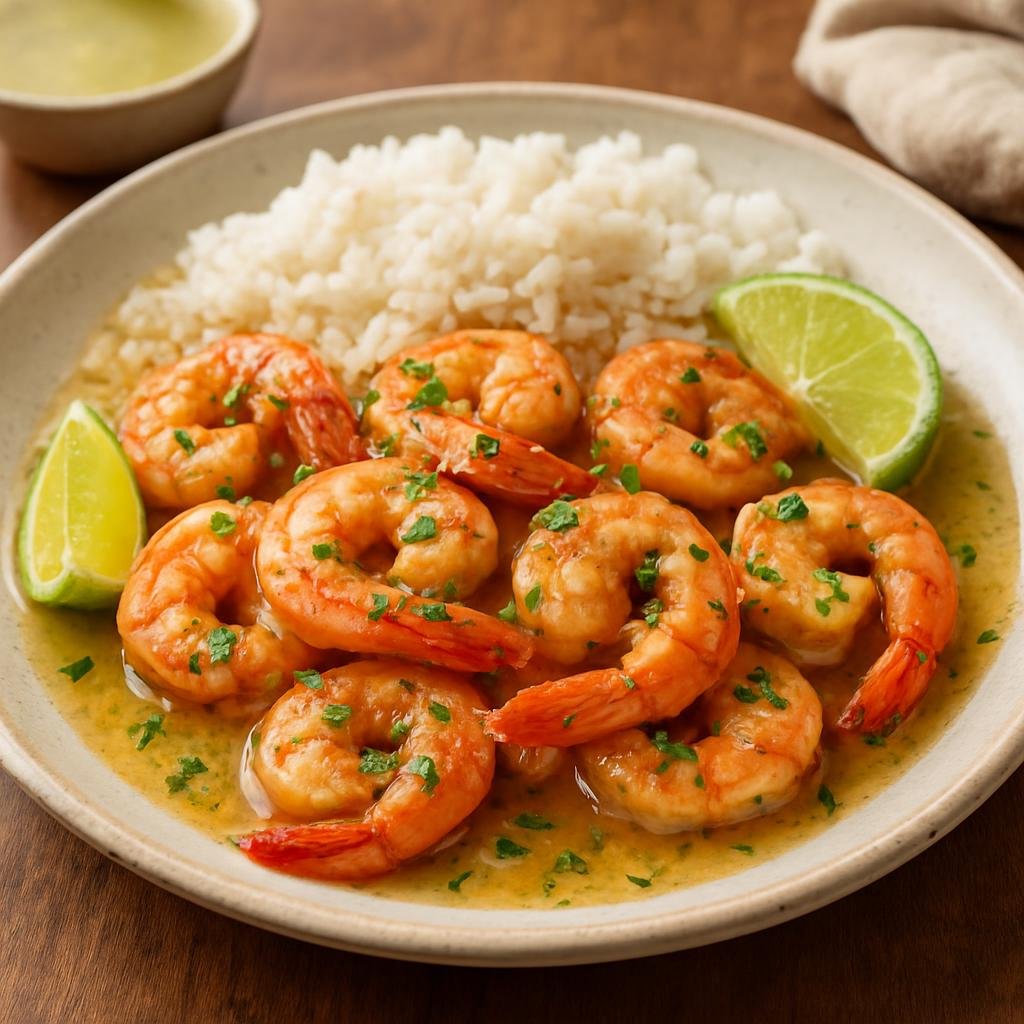
Entree: Mexico – Veracruz, Gulf Coast Mexico – Camarones al Mojo de Ajo (Garlic Butter Shrimp)
Serving Size: 4
Approximate Time
Prep
25 min
Cook
20 min
Additional
10 min
Total
55 min
Ingredients
- 1 1/2 lb (680 g) large shrimp, peeled and deveined, tails on or off as preferred (about 20–24 shrimp)
- 6 tbsp (85 g) unsalted butter, divided
- 2 tbsp (30 ml) olive oil
- 8 large garlic cloves, minced (about 2 tbsp / 20 g)
- 1 small serrano chile, thinly sliced (optional) (about 10 g)
- 1/4 cup (60 ml) dry white wine or low-sodium chicken/seafood broth
- 2 tbsp (30 ml) fresh lime juice (about 1 lime)
- 1/4 cup (15 g) fresh cilantro leaves, chopped (or flat-leaf parsley if preferred)
- 1/4 tsp (0.5 g) dried Mexican oregano (optional)
- 1 tsp (6 g) kosher salt, plus more to taste
- 1/2 tsp (1.5 g) freshly ground black pepper
- 1 1/2 cups (280 g) long-grain white rice, uncooked
- 3 cups (720 ml) water (for rice) or as rice package directs
- 1 tbsp (14 g) butter (for rice, optional)
- Lime wedges, for serving
- 8 corn tortillas (optional), warmed

Tomato-cucumber salad to accompany:
- 2 medium tomatoes, seeded and diced (about 8 oz / 225 g)
- 1 small cucumber, peeled and diced (about 6 oz / 170 g)
- 1/4 small red onion, finely diced (about 1.5 oz / 40 g)
- 2 tbsp (8 g) chopped cilantro
- 1 tbsp (15 ml) fresh lime juice
- 1 tbsp (15 ml) olive oil
- Pinch of salt and pepper
Instructions
Short Description:
Camarones al Mojo de Ajo is Gulf Coast-style shrimp sautéed in a generous garlic-butter sauce and finished with lime and fresh herbs, served with steamed rice and a bright tomato-cucumber salad or warmed corn tortillas.

Regional Notes:
This Veracruz variation emphasizes abundant garlic and butter with a splash of dry white wine (or local seafood stock) and fresh lime—simple, bright, and seafood-forward as typical on the Gulf Coast. It is served as a complete main course with rice or tortillas, rather than a small tapa-style portion.

1. Rinse the rice until the water runs clear. In a medium saucepan combine rice, 3 cups (720 ml) water, 1/2 tsp salt, and 1 tbsp (14 g) butter (optional). Bring to a boil, reduce heat to low, cover and simmer 15–18 minutes until water is absorbed. Remove from heat and let stand covered for 5 minutes, then fluff with a fork.
2. While the rice cooks, make the tomato-cucumber salad: in a bowl combine diced tomatoes, cucumber, red onion, 2 tbsp (8 g) chopped cilantro, 1 tbsp (15 ml) lime juice, 1 tbsp (15 ml) olive oil, and a pinch of salt and pepper. Toss and refrigerate until serving.
3. Pat the shrimp dry with paper towels and season with 1/2 tsp salt and 1/4 tsp black pepper. Set aside.
4. Heat a large skillet over medium heat. Add 2 tbsp (30 ml) olive oil and 3 tbsp (42 g) butter. When butter is melted and shimmering, add the minced garlic and the sliced serrano (if using). Sauté gently 30–60 seconds, stirring, until fragrant—do not let the garlic brown.
5. Increase heat to medium-high. Add the shrimp in a single layer and sear 1–2 minutes per side until pink and just opaque (shrimp cook quickly; total 3–4 minutes depending on size). Work in batches if necessary to avoid crowding.
6. Push the shrimp to the side of the pan. Pour in the 1/4 cup (60 ml) white wine or broth to deglaze, scraping any browned bits from the pan. Let the liquid reduce 1–2 minutes.
7. Stir in the remaining 3 tbsp (43 g) butter, 2 tbsp (30 ml) lime juice, 1/4 cup (15 g) chopped cilantro, and 1/4 tsp (0.5 g) dried Mexican oregano (if using). Taste and adjust salt and pepper. Toss shrimp in the sauce to coat and heat through, 30–60 seconds.
8. Warm corn tortillas if using: wrap stacked tortillas in foil and warm in a 300°F (150°C) oven 8–10 minutes or heat individually in a dry skillet 20–30 seconds per side.
9. To serve, spoon steamed rice onto plates, top with generous portions of camarones al mojo de ajo and the garlic-butter sauce. Serve with the tomato-cucumber salad on the side, warm corn tortillas or extra rice, and lime wedges for squeezing over the shrimp.
10. Leftovers: refrigerate shrimp and sauce up to 2 days; reheat gently over low heat to avoid overcooking.