Dessert: Mexico – Bajio Mexico, Zacatecas – Ate de Membrillo Zacatecano
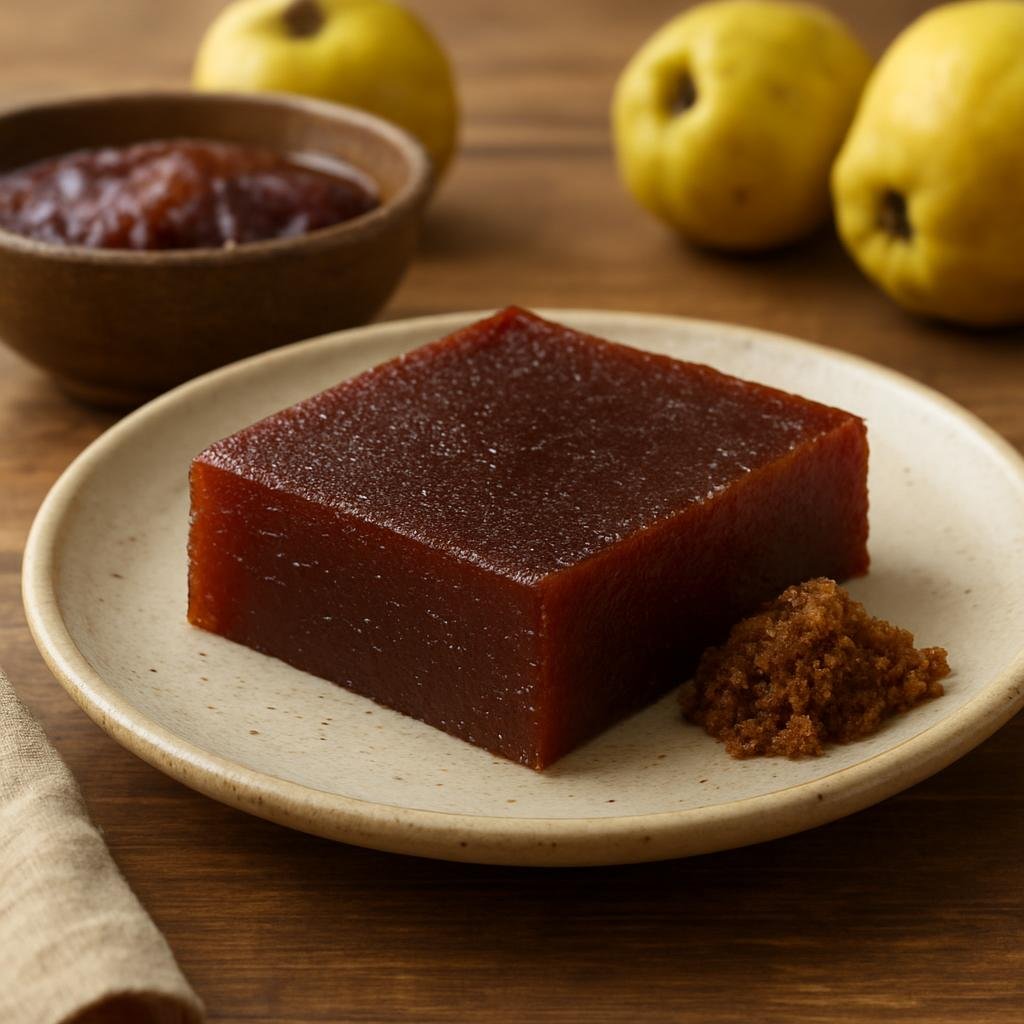
Serving Size: 8
Approximate Time
Prep
30 min
Cook
1 hr 30 min
Additional
7 hrs
Total
9 hrs
Ingredients
- 4 lb (1.8 kg) quince (membrillo), about 6–8 medium, trimmed and quartered
- Water, 4–6 cups (960–1,440 ml) for simmering (enough to cover the bottom of the pot and partially submerge fruit)
- Juice of 1 lemon, about 2 tbsp (30 ml)
- Granulated sugar, equal to the weight of the strained quince puree (see instructions) — estimate approx. 3 lb (1.4 kg)
- Piloncillo (unrefined cane sugar), grated, 2 oz (60 g) — optional for deeper color and flavor
- 1 cinnamon stick (canela)
- Zest of 1 orange, removed in broad strips (no pith), optional
- Pinch of fine salt
Instructions
Short Description:
A dense, glossy quince paste (ate) made by slowly cooking locally grown quince until the fruit concentrates into a richly flavored, sliceable confection. Served in wedges or cubes, it is traditionally paired with cheese or eaten plain as a sweet finish.

Regional Notes:
The Zacatecas version uses locally grown membrillo (quince) and a traditional slow-cooking method that deepens color and develops a firmer, almost gelatinous texture distinct from quicker commercial pastes. A small amount of piloncillo and long, patient reduction are used to enhance the quince's natural sweetness and impart a warm, caramelized finish characteristic of Zacatecano ate.

1. Rinse the quinces, then peel, core, and quarter them. Place quarters in a large heavy-bottomed pot and add just enough water to come about halfway up the fruit (about 4–6 cups / 960–1,440 ml). Add the cinnamon stick and orange zest if using.
2. Bring to a gentle simmer over medium heat, reduce to low, cover partially, and cook until the quince are very soft and deeply colored, about 40–60 minutes. Stir occasionally and add a little water if the pot begins to dry, keeping the fruit submerged but not swimming.
3. Remove from heat and fish out the cinnamon stick and orange zest. Puree the cooked quince in a blender or food mill until very smooth. For an extra fine texture (traditional in Zacatecas), pass the puree through a fine sieve or food mill.
4. Weigh the strained quince puree. Measure out an equal weight of granulated sugar; place both the puree and measured sugar nearby. Stir the lemon juice and the grated piloncillo (if using) into the puree so it is evenly blended.
5. Return the puree mixture to the cleaned heavy-bottomed pot. Cook over low–medium heat, stirring constantly with a wooden spoon or heatproof spatula to prevent sticking. The mixture will first be loose, then thicken; continue slow reduction for 45–90 minutes until the paste is very thick, glossy, and pulls away from the sides of the pot in long ribbons when stirred. The color should deepen to a rich orange–brick tone.
6. To test doneness, put a small spoonful on a chilled plate: when it cools it should be firm to the touch and not runny. If it is still soft, continue cooking and test again every 10–15 minutes.
7. Line a shallow baking dish or wooden mold with parchment paper. While the paste is still very hot but spreadable, spoon it into the prepared mold and smooth the surface with a wet spatula to compress and remove air pockets. Tap gently to settle.
8. Let cool at room temperature until firm, then refrigerate uncovered for at least 6–8 hours or overnight to fully set. Once set, invert onto a board, remove parchment, and cut into wedges or cubes.
9. Store wrapped in wax paper and kept in an airtight container in the refrigerator for up to 3 weeks, or freeze portions for longer storage. Serve sliced with aged cheeses, crackers, or simply by itself.