Side Dish: Canada – Northern Canada (Yukon) – Yukon Sourdough Bread
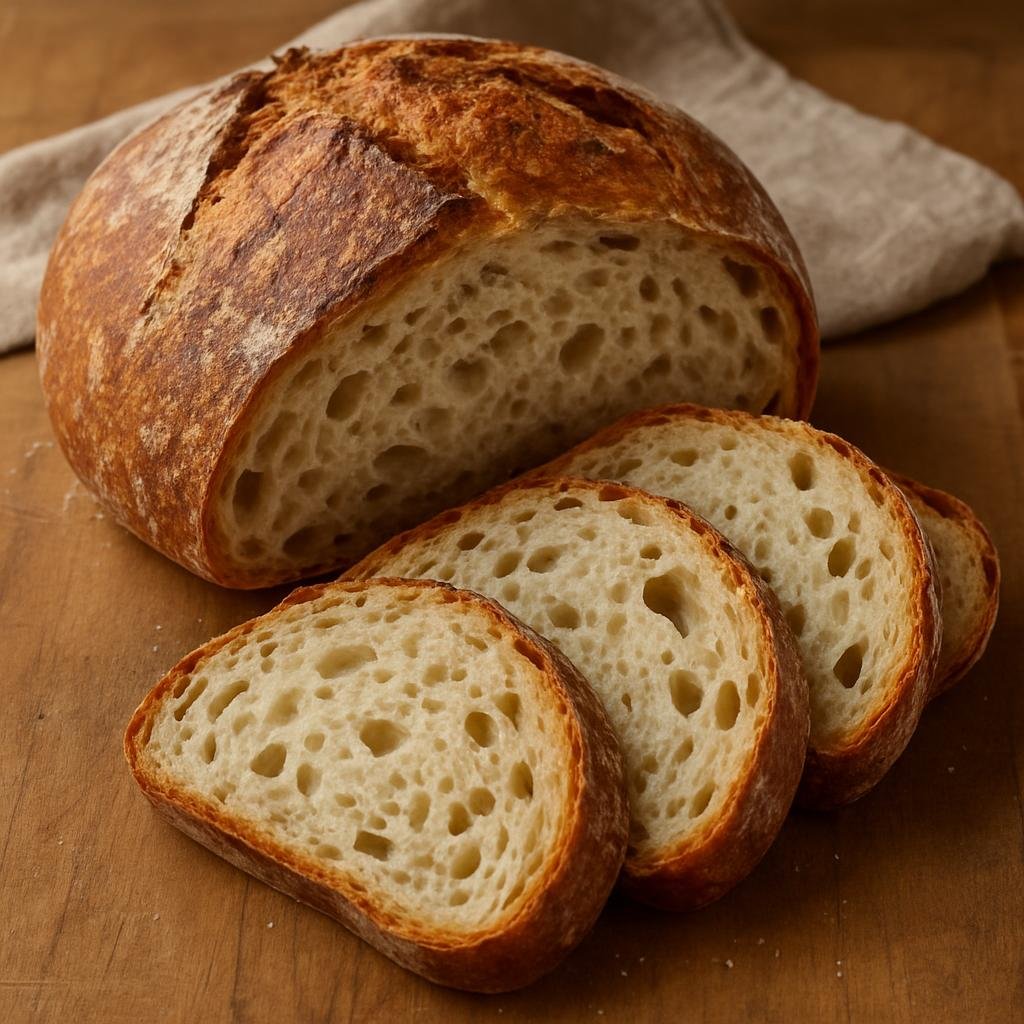
Serving Size: 8
Approximate Time
Prep
30 min
Cook
45 min
Additional
18 hrs
Total
19 hrs 20 min
Ingredients
- 3 1/2 cups (450 g) bread flour
- 1/2 cup (60 g) whole wheat flour
- 1 2/3 cups (380 ml) filtered water, lukewarm (about 75-80°F / 24-27°C)
- 1/2 cup (100 g) active Yukon wild-yeast sourdough starter (fed and bubbly)
- 2 tsp (10 g) fine sea salt
- 1 tbsp (15 ml) barley malt syrup or honey (optional, for crust color)
- 1 tbsp (8 g) cornmeal or semolina for dusting the proofing basket
- Additional water for misting (no measurement)
Instructions
Short Description:
A tangy, chewy sourdough loaf developed with a long, cool fermentation using a fed Yukon wild-yeast starter for deep flavor and an open crumb. Baked in a covered Dutch oven to produce a crisp, caramelized crust and moist interior.

Regional Notes:
This Yukon version highlights a fed Yukon wild-yeast starter (wild yeast indigenous to the region) and an extended cold retard to develop pronounced tang and chew suited to Northern conditions. The recipe favors hearty bread and long fermentation over commercial yeast shortcuts common in other regions.

1. In a large mixing bowl, whisk together bread flour and whole wheat flour until evenly combined.
2. Pour in the lukewarm water and stir until all flour is hydrated and a rough shaggy dough forms. Cover and let autolyse for 30–60 minutes.
3. Add the active Yukon starter and barley malt syrup (if using) to the dough. Mix by hand or with a dough scraper until starter is incorporated.
4. Sprinkle the salt over the dough, then fold and knead gently in the bowl for 2–3 minutes until the salt is evenly distributed. The dough should feel tacky and slightly sticky.
5. Begin bulk fermentation at room temperature (around 68–75°F / 20–24°C): perform a series of four stretch-and-folds spaced 30 minutes apart during the first 2 hours (reach under the dough, stretch up, fold over). After the last fold, cover the bowl tightly.
6. After the initial 2–3 hour room-temperature bulk, transfer the covered dough to the refrigerator for a long cold fermentation (retard) of 12–18 hours to develop tang and chew. The dough should rise slowly and show small bubbles on the surface.
7. Remove the dough from the fridge and lightly flour your work surface. Turn the dough out, pre-shape into a round and rest uncovered for 20–30 minutes.
8. Shape the dough into a tight boule (or bâtard) by folding edges toward the center, creating surface tension. Place seam-side up in a well-floured proofing basket or bowl lined with a floured kitchen towel dusted with cornmeal/semolina.
9. Cover and proof at room temperature until puffy and slightly jiggly—about 1.5–3 hours depending on ambient temperature. It should pass the finger indentation test (a slow spring-back).
10. At least 30 minutes before baking, preheat your oven to 500°F (260°C) with a Dutch oven inside (lid on) to heat through.
11. Carefully invert the proofed loaf onto parchment paper, score the top with a sharp blade, then transfer the loaf (on the parchment) into the hot Dutch oven. Reduce oven temperature to 450°F (230°C), cover, and bake for 20 minutes.
12. After 20 minutes, remove the lid and continue baking for 18–25 minutes until the crust is deep mahogany and the internal temperature reaches about 205–210°F (96–99°C).
13. Remove the loaf from the Dutch oven and cool completely on a wire rack for at least 1 hour before slicing to set the crumb and finish flavor development.
14. Slice and serve as a side with soups, stews, or local Yukon cheeses and preserves. Leftover slices keep well wrapped and benefit from gentle toasting.
Nutrition Information
To get nutritional information, press the Get Nutrition Info button below.