Side Dish: Mexico – Quintana Roo, Yucatan Peninsula – Frijoles con Puerco (Pork with Beans)
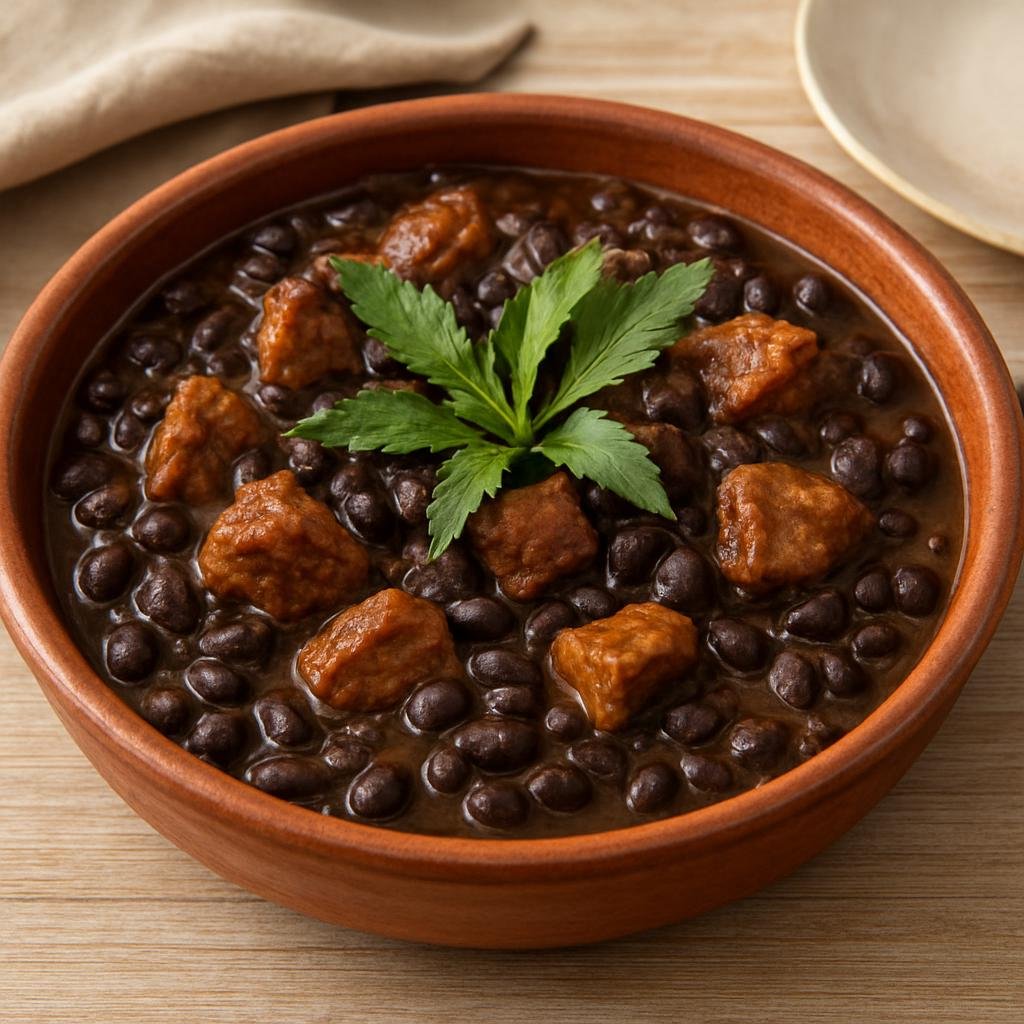
Serving Size: 6
Approximate Time
Prep
20 min
Cook
2 hrs 10 min
Additional
1 hr 30 min
Total
3 hrs 30 min
Ingredients
- 1 1/2 cups (300 g) dried black beans, rinsed and picked over
- 1.5 lb (700 g) pork shoulder, cut into 1-inch (2.5 cm) pieces
- 2 tbsp (30 ml) lard or vegetable oil
- 1 medium onion, coarsely chopped (about 150 g)
- 3 cloves garlic, minced (about 9 g)
- 6 sprigs fresh epazote (about 10 g), plus extra for garnish; if unavailable use 2 tsp (2 g) dried epazote
- 2 bay leaves
- 1 tsp (1 g) dried Mexican oregano
- 1/2 tsp (1 g) ground cumin (optional)
- 8 cups (1.9 L) water or low-sodium chicken stock (more as needed)
- 2 tsp (10 g) kosher salt, plus more to taste
- 1/2 tsp (1 g) freshly ground black pepper
- 1 small jalapeño, seeded and sliced (optional, for mild heat)
- Fresh cilantro leaves for garnish (optional)
- Lime wedges for serving (optional)
Instructions
Short Description:
Hearty black beans slow-cooked with pork shoulder and fresh epazote, yielding a rich, savory side typical of Quintana Roo. The beans cook in the same pot as the pork so the meat and broth meld into a deeply flavored accompaniment.

Regional Notes:
This Quintana Roo version uses local black beans and fresh epazote (a regional herb) added during cooking, giving a distinctive aroma and slightly medicinal, anise-like flavor. Unlike some other Mexican versions that cook beans and pork separately, here the pork is simmered with the beans to create a single rich, pork-infused pot.

1. Soak the beans: cover the rinsed black beans with cold water by 2 inches (5 cm) and soak overnight, or quick-soak by adding beans to a pot with water, bring to a boil 2 minutes, remove from heat and let sit 1 hour; drain and rinse.
2. Brown the pork: in a heavy Dutch oven or large saucepan, heat the lard or oil over medium-high heat. Add the pork pieces in a single layer (work in batches if needed) and brown on all sides, about 6–8 minutes total. Transfer browned pork to a plate and pour off excess fat if there is an excessive amount, leaving about 1 tbsp (15 ml) for flavor.
3. Sauté aromatics: reduce heat to medium, add the chopped onion and cook until softened, about 4–5 minutes. Add the garlic and jalapeño (if using) and cook 30–45 seconds until fragrant.
4. Combine beans and pork: return the browned pork to the pot with the drained beans. Add the water or stock, fresh epazote sprigs, bay leaves, oregano, cumin (if using), salt, and pepper. Increase heat to high and bring to a gentle boil, skimming any foam from the surface with a spoon.
5. Simmer slowly: reduce heat to low so the pot barely simmers, partially cover, and cook until the beans are tender and the pork is fork-tender, about 1 1/2 to 2 hours. Check every 20–30 minutes and add a little more hot water if needed to keep beans submerged.
6. Finish and thicken: when beans and pork are tender, remove and discard bay leaves and epazote stems (if used whole). For a creamier texture, use a spoon to mash 1–2 cups (240–480 ml) of the beans against the side of the pot, or remove 1 cup (240 ml) of beans, mash and return. Taste and adjust salt and pepper.
7. Serve: shred larger pork pieces with two forks and stir back into the beans, or leave in chunks per preference. Garnish with chopped fresh epazote or cilantro and serve hot as a side dish with lime wedges on the side.
Nutrition Information
To get nutritional information, press the Get Nutrition Info button below.