Entree: United States – Rocky Mountain United States (Montana) – Montana Elk Stew
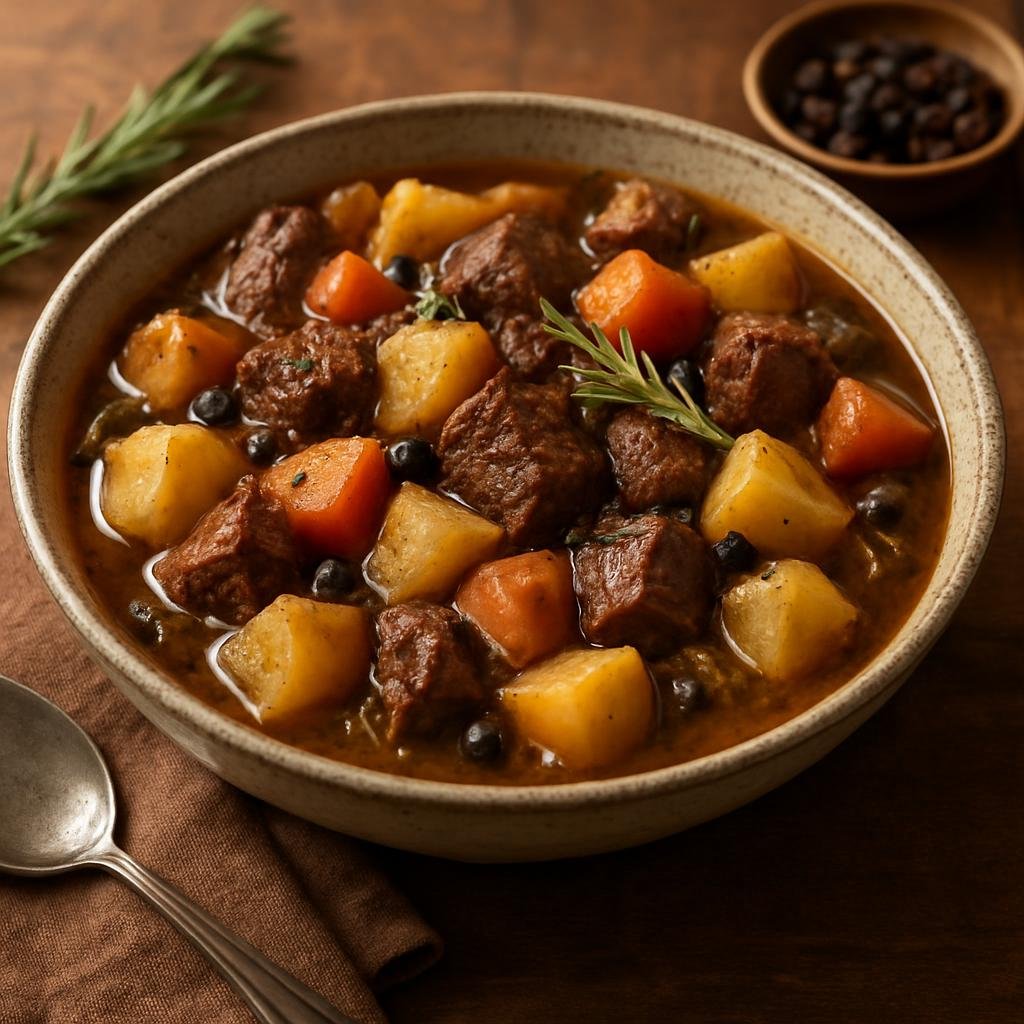
Serving Size: 6
Approximate Time
Prep
30 min
Cook
2 hrs
Total
2 hrs 30 min
Ingredients
- 2 lb (900 g) boneless elk shoulder or stew meat, trimmed and cut into 1-inch (2.5 cm) cubes
- 4 slices (about 2 oz / 60 g) smoked bacon, chopped
- 2 tbsp (30 ml) vegetable oil or rendered bacon fat
- 1/3 cup (40 g) all-purpose flour, for dredging
- 1 1/2 tsp (8 g) kosher salt, plus more to taste
- 1 tsp (2 g) freshly ground black pepper, plus more to taste
- 1 large yellow onion, about 8 oz (225 g), diced
- 4 medium carrots, about 10 oz (280 g), cut into 1-inch (2.5 cm) rounds
- 2 parsnips, about 8 oz (225 g), cut into 1-inch (2.5 cm) pieces
- 1 small rutabaga, about 1 lb (450 g), peeled and cut into 1-inch (2.5 cm) cubes
- 2 stalks celery, about 80 g, sliced
- 3 cloves garlic, minced (about 9 g)
- 3 medium Yukon Gold potatoes, about 1.5 lb (680 g), peeled and cut into 1-inch (2.5 cm) cubes
- 1 cup (240 ml) dry red wine (optional but recommended)
- 4 cups (950 ml) beef or game stock
- 2 tbsp (34 g) tomato paste
- 1 tbsp (15 ml) Worcestershire sauce
- 2 bay leaves
- 2 sprigs fresh rosemary (or 1 tsp / 1 g dried, crushed)
- 3 sprigs fresh thyme (or 3/4 tsp / 1 g dried thyme)
- 6 whole juniper berries, lightly crushed (optional; use fewer if unfamiliar with flavor)
- 1 tbsp (15 g) unsalted butter (optional, for finishing)
- 2 tbsp (8 g) fresh flat-leaf parsley, chopped, for garnish
Instructions
Short Description:
A hearty braised stew of locally hunted elk, browned with smoked bacon and slow-simmered with root vegetables, red wine, and woodland herbs for a rich, rustic main course.

Regional Notes:
This Montana version highlights wild elk as the primary protein and leans on plentiful root vegetables (potatoes, rutabaga, parsnips) and simple hunting-camp flavors like juniper and rosemary. Compared with generic beef stews, it uses game-forward seasonings and a longer, low-temperature braise to tame lean elk meat.

1. Pat the elk cubes dry with paper towels. Season with 1 tsp (5 g) of the salt and 1/2 tsp (1 g) pepper, then dredge lightly in the flour, shaking off excess.
2. In a large heavy Dutch oven or braiser over medium heat, cook the chopped bacon until it renders fat and begins to crisp, about 5 minutes. Use a slotted spoon to transfer the bacon to a bowl, leaving the fat in the pot. Add the vegetable oil if the pot looks dry.
3. Increase heat to medium-high. Brown the elk in batches (do not crowd the pot), about 2–3 minutes per side, until well-browned; transfer browned pieces to the bowl with the bacon. If necessary, add a little more oil between batches.
4. Reduce heat to medium. Add the diced onion, carrots, parsnips, rutabaga, and celery to the pot and cook, stirring occasionally, until the onions are softened and beginning to brown, about 6–8 minutes. Add the garlic and tomato paste and cook, stirring, 1–2 minutes more to bloom the flavors.
5. Pour in the red wine to deglaze the pot, scraping up browned bits from the bottom; let the wine reduce by about half, 3–5 minutes. Return the browned elk and bacon to the pot. Add the beef/game stock, Worcestershire sauce, bay leaves, rosemary, thyme, crushed juniper berries (if using), and the remaining 1/2 tsp (3 g) salt and 1/2 tsp (1 g) pepper. Stir to combine.
6. Bring to a gentle simmer, then reduce heat to low, cover, and braise on the stovetop for 1 1/2 to 2 hours, or until the elk is tender. Alternatively, place the covered pot in a 325°F (165°C) oven and braise 1 1/2 to 2 hours.
7. With about 30–40 minutes of cooking time remaining, add the cubed potatoes to the stew. If the stew seems too thin after the meat is tender, uncover and simmer to reduce, or thicken by stirring a tablespoon of flour or a butter-flour paste (beurre manié) into the stew and simmering until glossy and thickened.
8. Taste and adjust seasoning with additional salt and pepper if needed. Remove and discard bay leaves and woody herb stems. Stir in the butter (if using) for sheen, and sprinkle with chopped parsley before serving. Serve hot as a complete main course—excellent with crusty bread or sourdough to mop up the gravy.