Entree: United States – Hawaii – Saimin
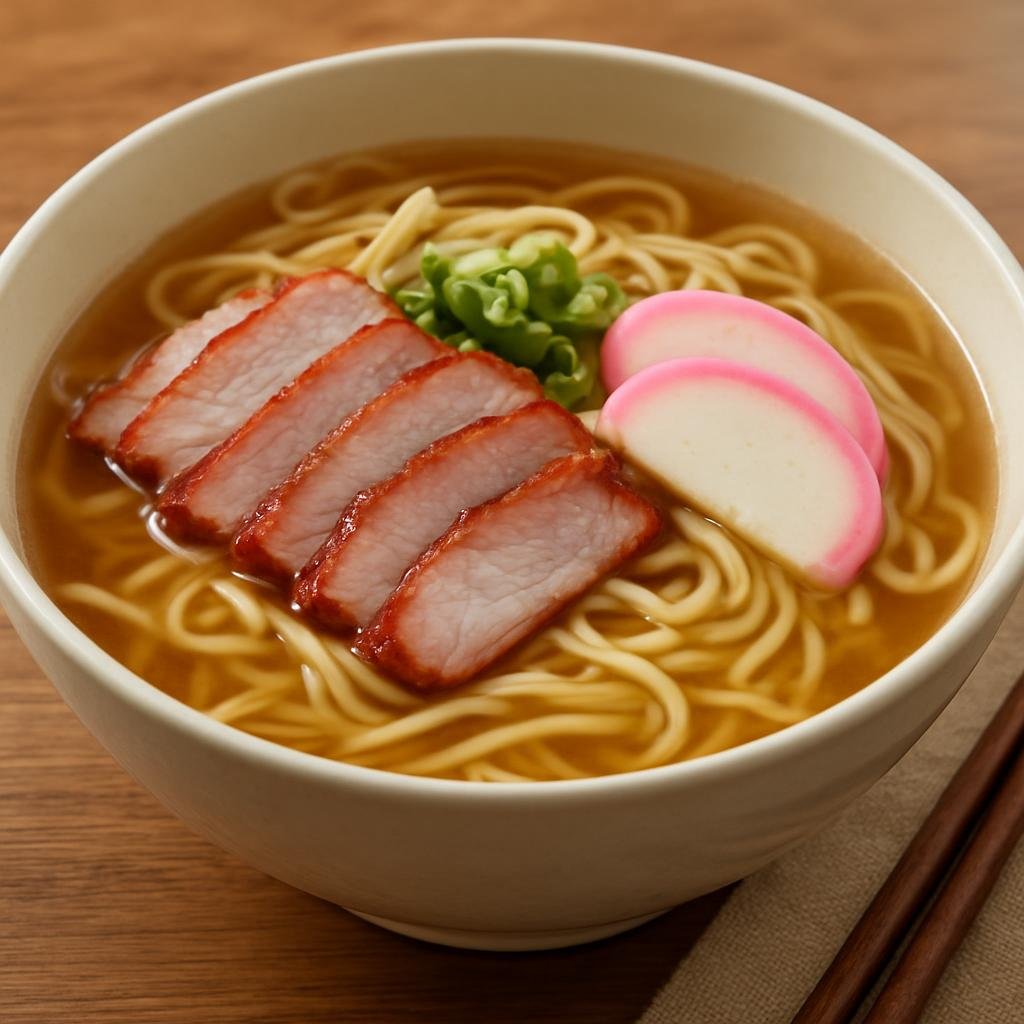
Serving Size: 4
Approximate Time
Prep
30 min
Cook
15 min
Additional
30 min
Total
1 hr 15 min
Ingredients
- 12 oz (340 g) fresh saimin noodles (soft wheat noodles)
- 6 cups (1.42 L) water
- 1 (4 x 4 in / 10 x 10 cm) piece kombu (dried kelp)
- 1 oz (28 g) katsuobushi (bonito flakes)
- 2 cups (480 ml) low-sodium chicken stock
- 2 tbsp (30 ml) soy sauce
- 1 tbsp (15 ml) mirin
- 1 tsp (5 ml) granulated sugar
- 8 oz (225 g) char siu (Chinese barbecue pork), thinly sliced
- 4 large eggs, approx. 200 g (for soft-boiled eggs)
- 4 oz (115 g) kamaboko (fish cake), sliced into semicircles
- 2 cups (100 g) bean sprouts, rinsed
- 3 stalks green onions (scallions), sliced thin (separate whites and greens)
- 1 tsp (5 ml) toasted sesame oil
- 1 sheet nori, cut into thin strips (optional)
- Salt to taste
- Freshly ground white or black pepper to taste
Instructions
Short Description:
Soft wheat saimin noodles served in a clear dashi-forward broth and topped with Chinese-style char siu, kamaboko (fish cake), green onions, and soft-boiled egg — a classic Hawaiian comfort meal reflecting the islands' multicultural influences.

Regional Notes:
This Hawaiian saimin uses a dashi-based broth (Japanese influence) tempered with a bit of chicken stock for body, and is topped with char siu (Chinese barbecue pork) and kamaboko (Japanese fish cake), which are signature elements of Hawaii's local saimin rather than a purely Japanese ramen or Chinese wonton soup. The balance of light dashi, soy seasoning, and island-style toppings is characteristic of Hawaii's multicultural saimin bowls.

1. Make soft-boiled eggs: bring a small pot of water to a gentle boil, add 4 large eggs and cook 7 minutes for jammy yolks. Transfer eggs to an ice bath for 5 minutes, peel and set aside.
2. Prepare dashi base: place 6 cups (1.42 L) cold water and the kombu in a medium pot and let soak 20–30 minutes. Slowly bring to just below a simmer over medium heat; remove kombu just before the water simmers. Add katsuobushi (bonito flakes), bring to a gentle simmer for 1–2 minutes, then remove from heat and let steep 2–3 minutes. Strain through a fine sieve or cheesecloth into a clean pot, discarding solids.
3. Build the broth: to the strained dashi add 2 cups (480 ml) low-sodium chicken stock, 2 tbsp (30 ml) soy sauce, 1 tbsp (15 ml) mirin, and 1 tsp (5 ml) sugar. Warm gently over medium-low heat and taste; adjust salt and soy for seasoning. Keep hot but not boiling.
4. Prepare toppings: while the broth warms, heat a small nonstick skillet over medium-high. If you prefer the char siu glazed, briefly sear slices 1–2 minutes per side to warm and caramelize edges; remove and keep warm. Lightly blanch bean sprouts in boiling water 20–30 seconds, then drain and set aside. Slice kamaboko and green onion; halve soft-boiled eggs.
5. Cook saimin noodles: bring a separate pot of water to a rolling boil. Add 12 oz (340 g) fresh saimin noodles and cook 1–2 minutes (follow package if fresh or adjust if dried) until tender. Drain well and divide noodles among 4 warm bowls.
6. Assemble bowls: arrange warm char siu slices, kamaboko, a small handful of blanched bean sprouts, and halved soft-boiled egg on top of the noodles. Ladle hot seasoned dashi-chicken broth over the noodles to cover.
7. Finish and serve: drizzle 1 tsp (5 ml) toasted sesame oil over each bowl, sprinkle the sliced green onion greens, add nori strips if using, and finish with a grind of white or black pepper. Serve immediately.