Side Dish: United States – Appalachian and Southern United States (Kentucky) – Kentucky Pickled Corn
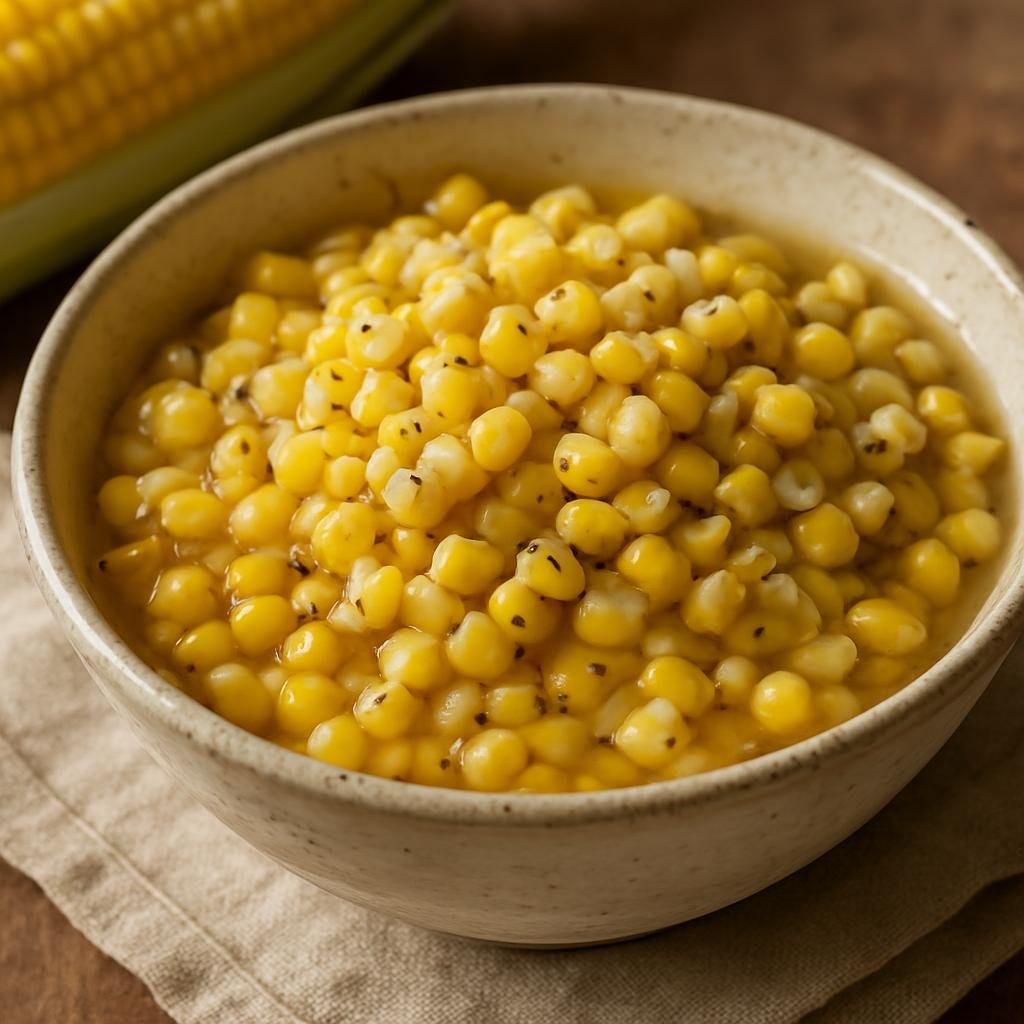
Serving Size: 6
Approximate Time
Prep
25 min
Cook
0 min
Additional
10 hrs
Total
10 hrs
Ingredients
- 8 ears fresh sweet corn, kernels removed, approx. 2 lb (900 g)
- 1 small yellow onion, thinly sliced, approx. 4 oz (115 g)
- 4 cloves garlic, lightly crushed (about 12 g)
- 1 small jalapeno, thinly sliced (optional), approx. 1 oz (30 g)
- 1 tbsp (9 g) yellow mustard seeds
- 1 tsp (2 g) whole black peppercorns
- 2 bay leaves (about 2 g)
- 1 tsp (2 g) crushed red pepper flakes (optional)
- 3 tbsp (45 g) non-iodized pickling/canning salt
- 4 cups (950 ml) filtered, non-chlorinated water
- 2–3 fresh dill sprigs or 1 tsp (1 g) dried dill (optional)
- 3 pint (475 ml) wide-mouth canning jars with lids (or equivalent fermentation vessel)
- Fermentation weight or small clean zip-top bag to keep corn submerged (no measurement)
Instructions
Short Description:
A tangy, lacto-fermented corn side made from fresh summer ears packed in a simple salt brine with garlic, onion, and pickling spices—an Appalachian Kentucky method for preserving corn with a bright, sour tang.

Regional Notes:
This Kentucky version uses a true brine fermentation (lacto-fermentation) rather than vinegar pickling, producing the characteristic tang associated with Appalachian preserved corn. It emphasizes fresh sweet corn kernels and simple pantry spices rather than heavy sweeteners or commercial pickling vinegar common in other regions.

1. Sterilize jars and lids by washing them in hot, soapy water and rinsing well, or run through a hot dishwasher cycle; let cool. Ensure the jars and any weights are clean and free of detergent residue.
2. Remove husks and silks from the corn. Stand each ear upright and cut kernels off the cob with a sharp knife; pack kernels into a large bowl as you go.
3. Make the brine: stir the pickling salt into the filtered water until fully dissolved (3 tbsp salt into 4 cups/950 ml water). Use warm water to help dissolve, then cool the brine to room temperature before using.
4. Layer the jars: divide the corn kernels evenly among the jars, leaving about 1 inch (2.5 cm) headspace at the top of each jar. Tuck the sliced onion, garlic, jalapeno (if using), mustard seeds, peppercorns, bay leaves, dill (if using), and red pepper flakes between the kernels as you pack.
5. Add brine to jars: pour the cooled brine over the packed corn, pressing down gently so the liquid rises and covers the corn. Leave approximately 1/2 to 1 inch (1.5–2.5 cm) headspace.
6. Weigh and seal for fermentation: place a fermentation weight directly on top of the kernels to keep them fully submerged. If using a zip-top bag as a weight, fill it with extra brine and seal before placing it in the jar. Seal jars loosely with lids (or use fermentation lids/airlocks) so gas can escape; do not tighten fully if using standard canning lids.
7. Ferment at room temperature (65–75°F / 18–24°C): place jars on a tray or plate to catch any overflow and keep out of direct sunlight. Check daily—press down if anything rises above the brine, skim any scum (a clear or white pellicle can form and is harmless; discard any colored or fuzzy mold).
8. Taste after 3–5 days: beginning around day 3 taste a small spoonful. Depending on temperature and your desired tang, ferment 5–10 days total. Warmer rooms will ferment faster; cooler rooms will take longer.
9. When the flavor is pleasantly tangy, tighten lids and move jars to the refrigerator. Refrigeration slows fermentation; the pickled corn will keep at peak quality for 2–3 months in the fridge. For longer storage, follow tested canning procedures (this recipe is for lacto-fermented refrigerated pickles, not shelf-stable canning).
10. Serve chilled or at cool room temperature as a bright, tangy side alongside fried chicken, smoked meats, biscuits, or as part of a Southern-style plate. Discard any jar that shows off-colored or fuzzy mold or an unpleasant rotten smell.
Nutrition Information
To get nutritional information, press the Get Nutrition Info button below.