Entree: United States – Indiana, Midwestern United States – Hoosier Pot Roast
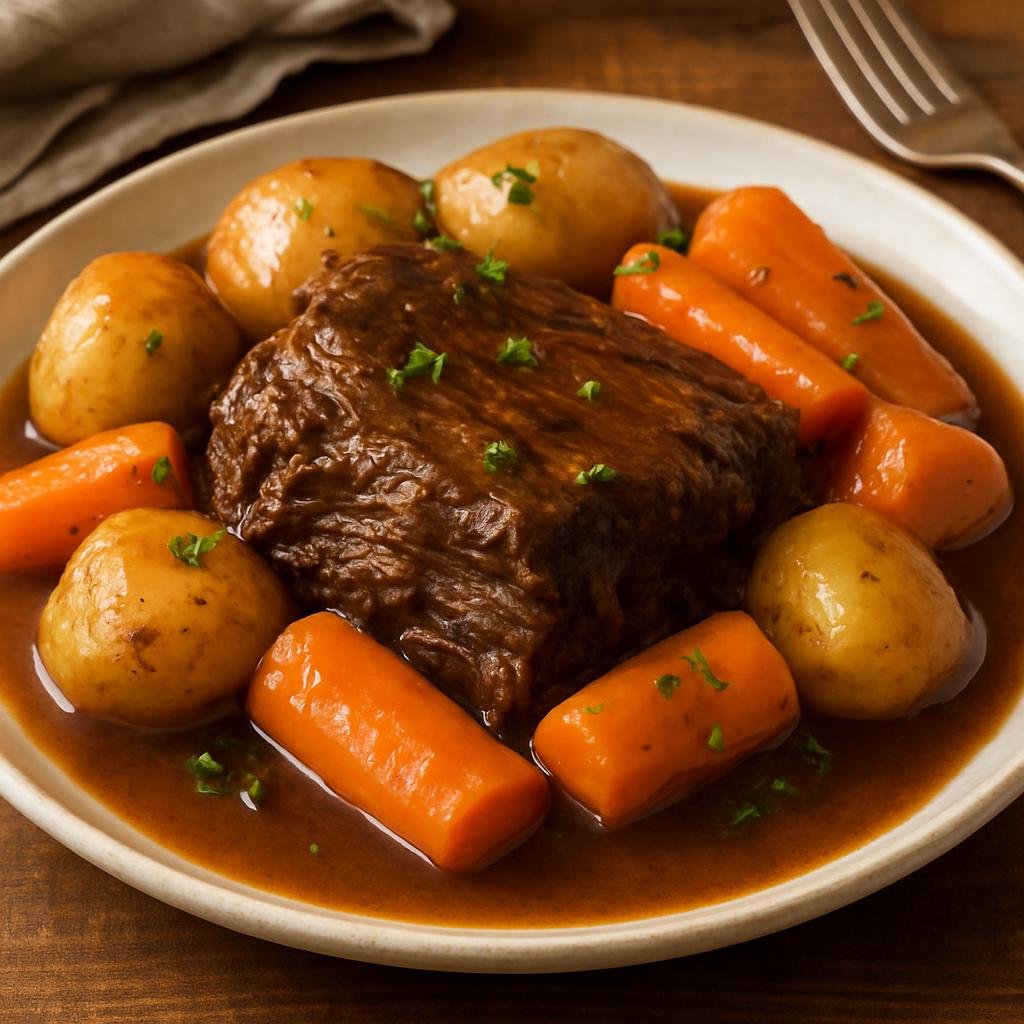
Serving Size: 6
Approximate Time
Prep
20 min
Cook
2 hrs 35 min
Additional
15 min
Total
3 hrs 10 min
Ingredients
- 3 to 3 1/2 lb (1.4–1.6 kg) beef chuck roast
- 2 tsp (10 g) kosher salt, plus more to taste
- 1 1/2 tsp (3 g) freshly ground black pepper, plus more to taste
- 2 tbsp (30 ml) vegetable oil or canola oil
- 2 tbsp (28 g) all-purpose flour, for dredging
- 2 tbsp (30 ml) unsalted butter
- 2 medium yellow onions, about 10 oz (280 g), cut into wedges
- 4 large carrots, about 16 oz (450 g), peeled and cut into 2-inch (5 cm) pieces
- 1 1/2 lb (680 g) Yukon Gold or red potatoes, halved or quartered to uniform size
- 2 stalks celery, about 4 oz (115 g), sliced into 1/2-inch (1 cm) pieces
- 4 cloves garlic, minced
- 2 tbsp (30 g) tomato paste
- 1 cup (240 ml) dry red wine (optional; can substitute additional beef broth)
- 2 1/2 cups (600 ml) low-sodium beef broth, divided
- 2 tbsp (30 ml) Worcestershire sauce
- 3 sprigs fresh thyme (or 1 tsp / 1 g dried thyme)
- 2 bay leaves
- 2 tbsp (16 g) all-purpose flour, for gravy
- 2 tbsp (30 g) unsalted butter, for gravy (can use reserved pan fat)
- Chopped fresh parsley for garnish (optional)
Instructions
Short Description:
A slow-braised beef chuck roast cooked with hearty Midwestern vegetables—carrots and potatoes—then finished with a rich, savory gravy. This comforting one‑pot meal is designed to serve as a complete main course for family-style dinners.

Regional Notes:
This Indiana (Hoosier) version emphasizes local root vegetables—plump carrots and Yukon/ red potatoes—braised slowly until meltingly tender and served with a thick, beefy gravy. Compared with quicker city-style roasts, the Hoosier Pot Roast is deliberately slow-cooked for deep, homestyle flavors typical of Midwestern comfort cooking.

1. Preheat the oven to 325°F (160°C). Pat the roast dry and season all over with 2 tsp (10 g) kosher salt and 1 1/2 tsp (3 g) black pepper. Lightly dredge the roast in 2 tbsp (28 g) flour, shaking off excess.
2. Heat 2 tbsp (30 ml) vegetable oil in a large Dutch oven over medium-high heat until shimmering. Add the roast and sear until a deep brown crust forms on all sides, about 4–5 minutes per side. Transfer the roast to a plate.
3. Reduce heat to medium; add 2 tbsp (30 ml) butter to the pot. Add onions, carrots, celery and a pinch of salt; cook, stirring occasionally, until beginnings of color appear, about 6 minutes. Add garlic and tomato paste and cook 1 minute more.
4. Pour in 1 cup (240 ml) red wine to deglaze the pot, scraping up browned bits with a wooden spoon; simmer 2–3 minutes to reduce slightly. If not using wine, pour 1 cup (240 ml) beef broth instead.
5. Return the roast to the Dutch oven. Add potatoes around the roast. Pour in remaining 1 1/2 cups (360 ml) beef broth and 2 tbsp (30 ml) Worcestershire sauce—liquid should come about halfway up the sides of the roast. Tuck 3 sprigs thyme and 2 bay leaves into the liquid.
6. Bring the liquid to a gentle simmer on the stovetop, then cover the Dutch oven with a tight-fitting lid and transfer to the preheated oven. Braise until the roast is fork-tender and vegetables are soft, about 2 1/2–3 hours. Check after 2 hours; if liquid is low, add up to 1/2 cup (120 ml) more broth.
7. Remove the Dutch oven from the oven. Transfer the roast to a cutting board and tent with foil to rest 15 minutes. Remove and discard thyme sprigs and bay leaves. Use a slotted spoon to transfer vegetables to a serving platter and cover to keep warm.
8. Skim excess fat from the pan juices. For a thick gravy, melt 2 tbsp (30 g) butter in the Dutch oven over medium heat, whisk in 2 tbsp (16 g) flour and cook 1–2 minutes to form a roux. Gradually whisk in the pan juices and any remaining broth (about 1/2–3/4 cup / 120–180 ml) until smooth. Simmer until thickened to desired consistency, 3–5 minutes. Taste and season with salt and pepper as needed.
9. Slice the roast against the grain into 1/2-inch (1 cm) thick slices. Arrange meat over the potatoes and carrots or serve sliced with vegetables on the side. Spoon the rich gravy over the meat and vegetables and garnish with chopped parsley if using.
10. Serve hot family-style with additional gravy passed at the table. Leftovers refrigerate up to 3 days; reheat gently with a splash of broth to keep meat moist.
Nutrition Information
To get nutritional information, press the Get Nutrition Info button below.