Dessert: Mexico – Guanajuato, Bajio Mexico – Charamuscas (Caramel Figures)
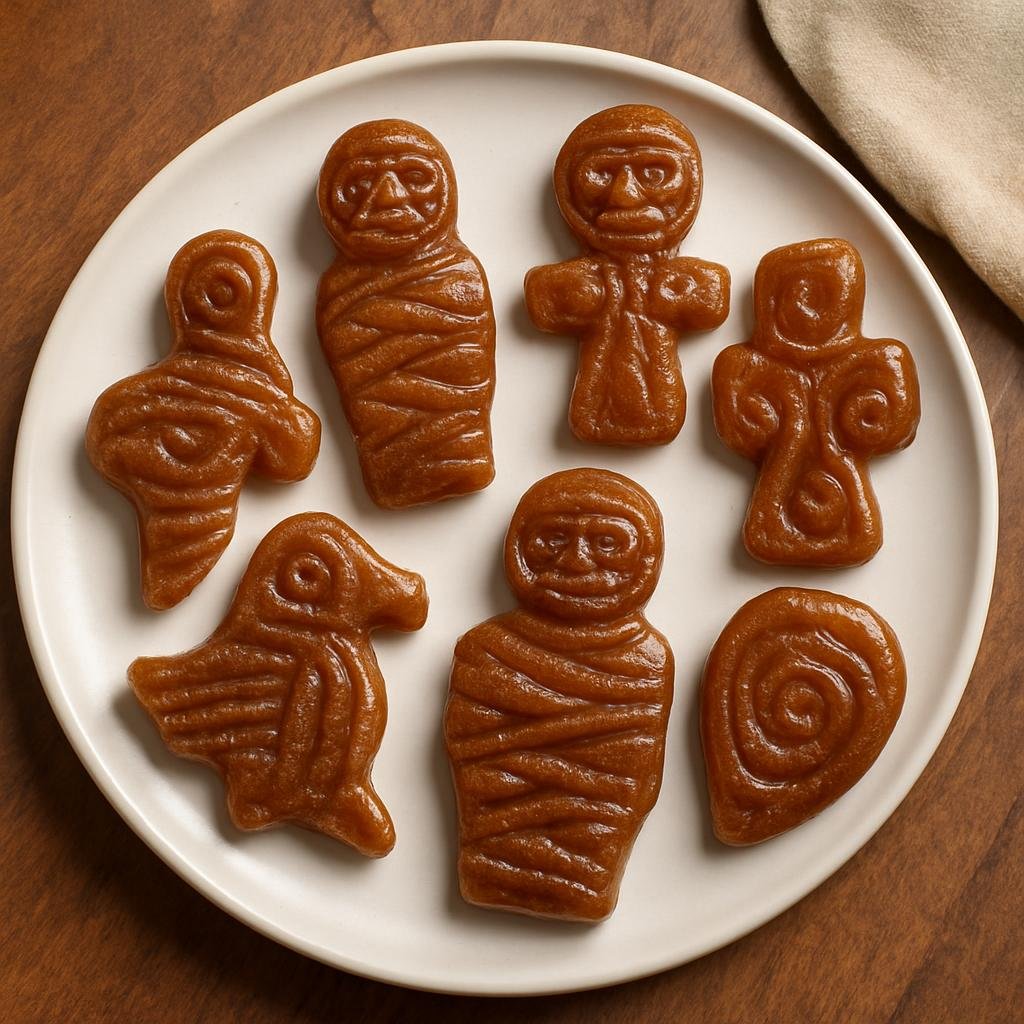
Serving Size: 12
Approximate Time
Prep
20 min
Cook
15 min
Total
35 min
Ingredients
- 12 oz (340 g) piloncillo, broken into pieces (about 2 medium cones)
- 1/4 cup (60 ml) water
- 1 small cinnamon stick
- 1 tbsp (15 ml) fresh lime juice
- 1 tbsp (14 g) unsalted butter (optional, for gloss)
- 1/4 tsp (1.5 g) fine salt
- 1/2 tsp (2.5 ml) vanilla extract (optional)
- 2 tbsp (30 ml) neutral vegetable oil, for greasing
- 12 wooden skewers or lollipop sticks
Instructions
Short Description:
Hard piloncillo caramel molded into decorative figures and lollipops, typical of street sweets in the Bajio. The caramel is flavored with cinnamon and a touch of lime for shine and balance.

Regional Notes:
This Guanajuato (Bajio) charamuscas version uses piloncillo as the sole sweetener and is worked hot into intricate figures—commonly mummies and local symbols—reflecting the region's artisanal street-sweet tradition. Unlike generic caramel lollipops made with refined sugar, these keep the deep, molasses-like flavor of piloncillo and a cinnamon accent typical of central Mexico.

1. Prepare a clean, heatproof work surface: lightly grease a marble slab, a sheet of heavy baking paper, or a silicone mat with the vegetable oil. Arrange the wooden sticks nearby. If you plan detailed figures, have a small metal spoon, a piping cone (or a small plastic squeeze bottle with a wide tip), and a damp cloth ready.
2. In a heavy-bottomed saucepan, combine the piloncillo pieces, water, and cinnamon stick. Heat over medium, stirring gently until the piloncillo dissolves and the liquid is uniform.
3. Increase heat to medium-high and bring the syrup to a boil without stirring. Attach a candy thermometer and cook to hard‑crack stage, about 300–310°F (149–154°C). If you do not have a thermometer, test by dropping a little syrup into very cold water—brittle threads should form.
4. As the syrup nears temperature, remove the pan from heat. Quickly fish out the cinnamon stick. Stir in the lime juice, butter, salt, and vanilla (if using) until incorporated and glossy. Be careful—mixture will bubble and is extremely hot.
5. Transfer the hot caramel into a heatproof pouring container or piping cone. Work quickly: on the oiled surface, spoon or pipe the caramel into desired figures. For lollipop-style charamuscas, place a stick and pour/pipe a rounded figure around it; for mummies or intricate shapes, use a fine stream to draw lines and loops—you can layer slightly while the sugar is fluid. If the caramel begins to thicken too much, rewarm the container briefly over low heat.
6. For three-dimensional or thicker figures, build up layers swiftly and press gently with an oiled spoon to smooth. If you need sharper edges, use lightly oiled kitchen shears to trim while warm.
7. Allow charamuscas to cool and harden completely at room temperature, about 15–30 minutes. Once set, store individually wrapped in wax paper or in an airtight container at cool room temperature; avoid humidity, which will soften them.
8. Safety note: molten piloncillo caramel is extremely hot—keep children away during cooking and shaping.
Nutrition Information
To get nutritional information, press the Get Nutrition Info button below.