Entree: Mexico – Yucatan Peninsula, Campeche – Pibipollo (Underground Chicken Tamal)
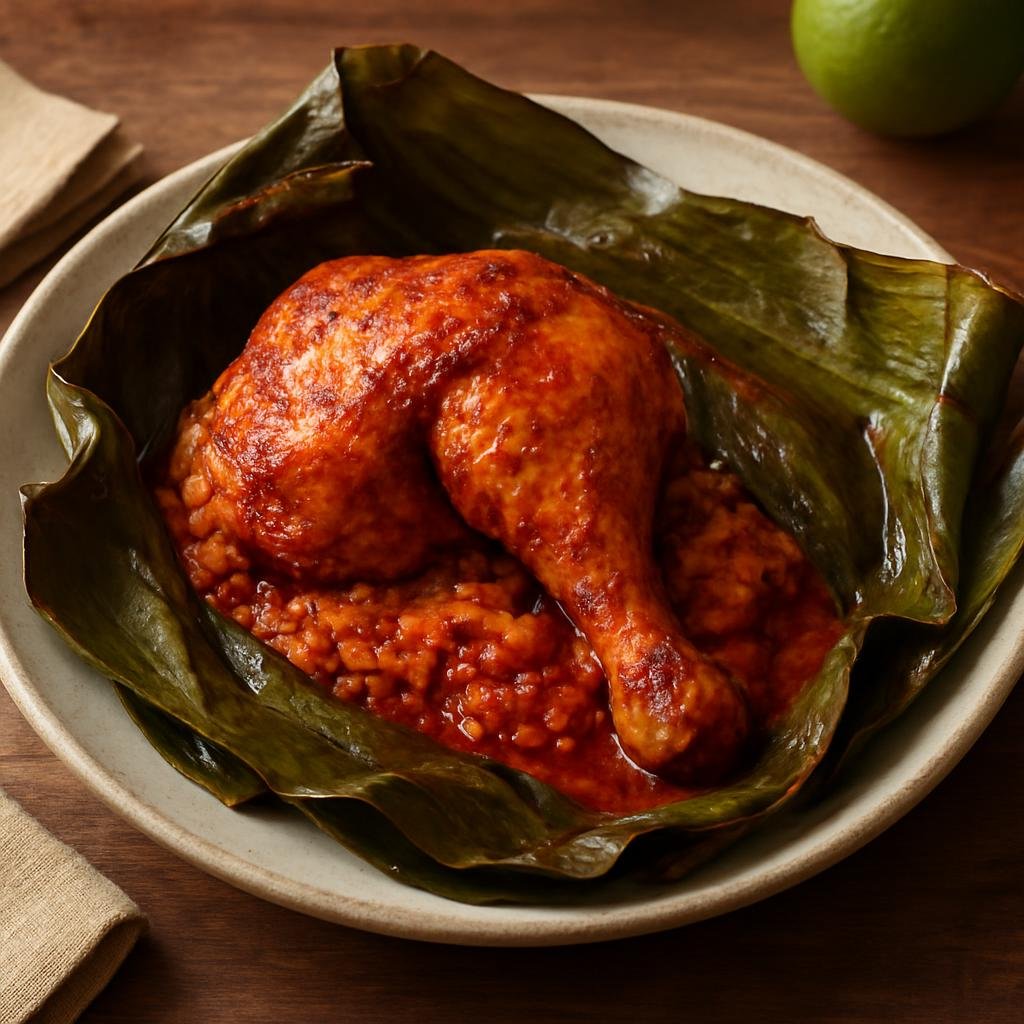
Serving Size: 6
Approximate Time
Prep
1 hr
Cook
4 hrs 40 min
Additional
1 hr 30 min
Total
5 hrs 30 min
Ingredients
- 1 whole chicken, cut into pieces, approx. 3.5 lb (1.6 kg)
- 6 tbsp (90 g) recado rojo (achiote paste)
- 1 cup (240 ml) naranja agria (sour orange) juice, or substitute 1/2 cup (120 ml) fresh orange juice + 1/2 cup (120 ml) fresh lime juice
- 6 garlic cloves, smashed
- 1 tsp (5 g) dried oregano
- 1 tsp (5 g) ground cumin
- 1 tsp (5 g) ground black pepper
- 2 tsp (10 g) fine salt, plus more to taste
- 6 cups (720 g) masa harina for tamales (or fresh masa de maiz if available)
- 1 1/2 cups (340 g) lard (manteca de cerdo), chilled
- 2–3 cups (480–720 ml) warm chicken broth (from cooking chicken or store-bought), more as needed
- 8–10 large banana leaves (hojas de platano), cleaned, charred briefly and softened
- Kitchen twine or butcher's string for tying
- Hot stones or coals and earth for building a traditional pib (see Instructions), or oven space for alternative method

Pickled red onion (cebolla morada en escabeche)
- 2 medium red onions, thinly sliced
- 1 cup (240 ml) white vinegar
- 1 cup (240 ml) water
- 1 tsp (5 g) sugar
- 1 1/2 tsp (8 g) salt
- 1–2 habanero chiles, sliced (optional; keep whole if you want less heat)
- 2 bay leaves

Warm black beans (side)
- 2 cups (480 ml) cooked black beans (or 1 can, drained, about 15 oz / 425 g)
- 1 tbsp (15 ml) lard or oil
- 1/2 small onion, finely chopped
- 1 garlic clove, minced
- 1/2 tsp (2.5 g) salt, to taste
Instructions
Short Description:
Pibipollo is a large Yucatecan tamal of masa stuffed with marinated chicken, wrapped in banana leaves and slow-cooked in a pib (earth oven), producing deep, smoky flavors. Served with pickled red onion and warm black beans, it is a complete main-course meal.

Regional Notes:
This Campeche/Yucatan version uses recado rojo (achiote paste) and naranja agria (sour orange) to marinate the chicken and is traditionally cooked underground in a pib, which gives the dish its characteristic earth-smoke aroma. The use of wide banana leaves (hojas de platano) and a very moist masa distinguishes it from steamed tamales elsewhere in Mexico.

1. Make the achiote marinade: In a blender or bowl, combine recado rojo (achiote paste), naranja agria (or orange+lime substitute), smashed garlic, oregano, cumin, black pepper and 1 tsp (5 g) salt. Blend to a smooth paste; add 1–2 tbsp (15–30 ml) water if needed.
2. Marinate the chicken: Rub the marinade thoroughly over the chicken pieces, massaging into joints and cavity. Cover and refrigerate at least 6 hours or overnight for best flavor.
3. Cook the chicken: Place marinated chicken in a large pot with enough water or chicken broth to cover halfway (about 2–3 cups / 480–720 ml plus additional to keep moist). Bring to a simmer, cover, and poach gently until just tender, about 30–40 minutes (internal temp 165°F / 74°C). Reserve 2–3 cups (480–720 ml) cooking liquid; cool slightly. Remove chicken pieces and reserve; shred meat from bones, keeping some pieces whole if desired for presentation.
4. Prepare masa for tamal: In a large bowl, mix masa harina with 2 tsp (10 g) salt. Beat chilled lard into the masa by hand or with a mixer until light and fluffy. Gradually add warm reserved chicken broth, mixing until dough holds together and is spreadable but moist — a good test is that a small ball floats in cold water (typical tamal floating test). Adjust with more broth as needed (total 2–3 cups / 480–720 ml).
5. Prepare banana leaves: Pass banana leaves briefly over a flame or hot surface to soften and make pliable; wipe clean and cut into 12–14 inch (30–35 cm) sheets. Overlap leaves when wrapping to prevent leaks.
6. Assemble the pibipollo: On a work surface, lay 2–3 overlapping banana leaf sheets. Spread a thick, even layer of masa (~1/2–3/4 inch / 1–2 cm) in a wide oval large enough to cover chicken (you want a top and bottom masa layer). Center a portion of the shredded and whole chicken pieces atop the masa, leaving space to fold. Cover the chicken with more masa to encase it. Fold the leaves snugly around the masa and chicken, then tie with kitchen twine. Repeat if making two medium tamales or one very large package; for a traditional single large pibipollo use enough masa to fully surround the whole chicken.
7. Build the pib (traditional earth oven) and cook: Dig a pit about 2–3 ft (60–90 cm) deep and wide enough to hold the wrapped tamal(s). Line the pit bottom with stones. Build a wood fire on top of the stones and burn for 1–2 hours until stones are red-hot. Remove most embers but keep hot coals. Place a layer of banana leaves or wet sacks on stones to create a bed, then set the wrapped tamal(s) on top. Cover with additional banana leaves, then with hot stones or embers and finally with a thick layer of earth to seal the oven. Cook for 4–6 hours, checking heat carefully if possible; the masa should be firm and chicken very tender. Carefully uncover, remove tamal, and unwrap.
8. Oven alternative (if no pit available): Preheat oven to 350°F (175°C). Place wrapped tamal(s) on a rimmed baking sheet and bake for 4–5 hours, checking after 3 hours to ensure leaves do not burn; add a pan of water in oven to maintain humidity. Finish when masa is firm and chicken tender.
9. While tamal cooks: Make pickled red onion—place sliced onions, vinegar, water, sugar, salt, bay leaves and habanero (if using) in a saucepan. Bring to a brief boil, then remove from heat and let cool to room temperature; refrigerate at least 30 minutes. Make warm black beans—heat lard or oil in a skillet, sweat onion and garlic, add cooked beans and 1/4 cup (60 ml) water or broth, simmer 5–10 minutes, season with salt and mash slightly for a rustic texture.
10. Rest and serve: Let the cooked pibipollo rest 15–20 minutes after removing from heat. Unwrap and transfer to a cutting board; slice into portions. Serve each portion with pickled red onions (cebolla morada en escabeche) and a scoop of warm black beans. Offer extra naranja agria (sour orange) or hot sauce at the table.

Note: Traditional pib cooking requires experience and safety precautions with open fires and earth ovens. The oven method is an acceptable home adaptation that preserves many flavors when banana leaves and recado rojo are used.