Dessert: Mexico – Coahuila (Northern Mexico) – Pan de Pulque (Pulque Bread)
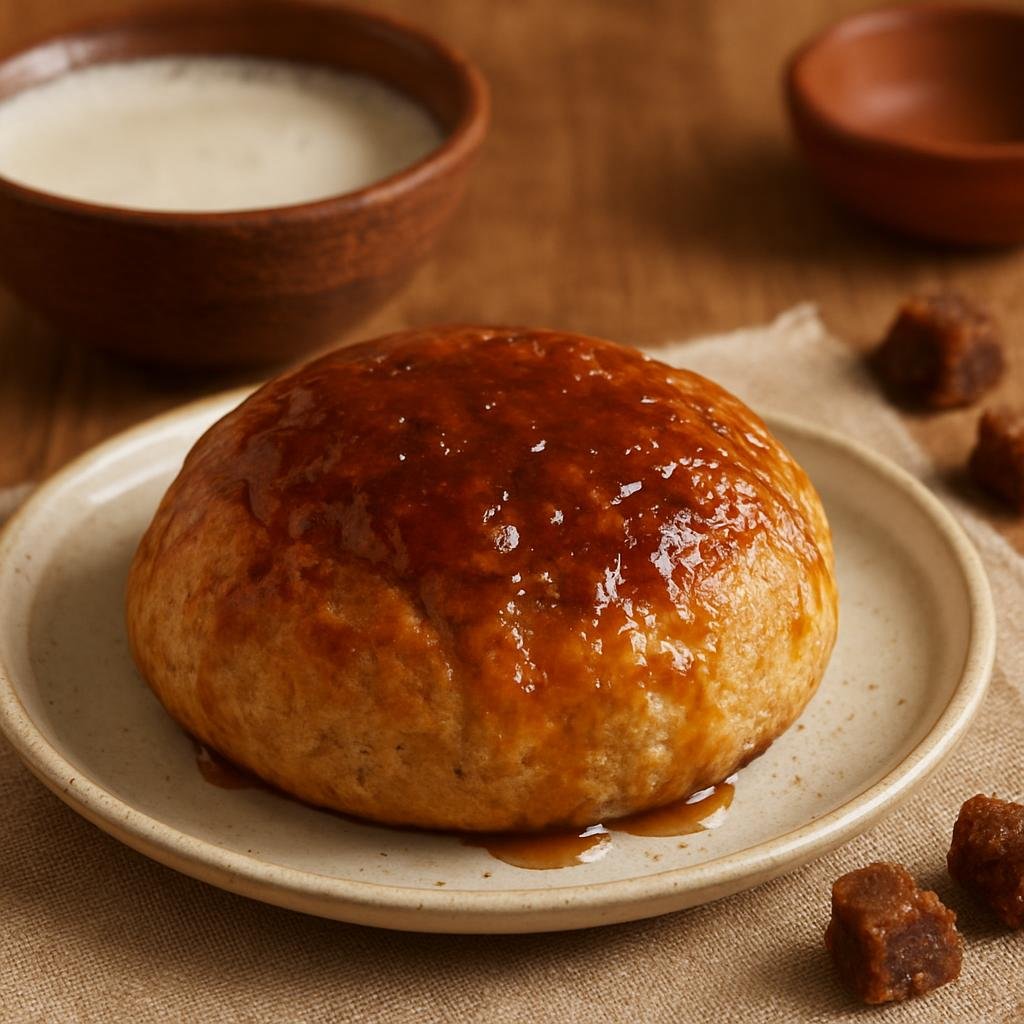
Serving Size: 8
Approximate Time
Prep
30 min
Cook
1 hr 10 min
Additional
2 hrs
Total
3 hrs 40 min
Ingredients
- 4 cups (500 g) all-purpose flour
- 1 cup (240 ml) fresh pulque, gently warmed to 95°F (35°C)
- 1/2 cup (120 ml) whole milk, warmed to 95°F (35°C)
- 1/3 cup (67 g) granulated sugar
- 2 1/4 tsp (7 g) active dry yeast (1 packet)
- 1 tsp (5 g) fine salt
- 3 tbsp (45 g) unsalted butter, softened, plus extra for pan
- 3 large eggs, approx. 150 g total, room temperature (one egg reserved for wash)
- 1 tsp (2 g) ground anise (or 1 tbsp/6 g anise seed, lightly crushed)
- Zest of 1 orange (about 1 tbsp / 6 g)
- 1/2 cup (75 g) raisins or chopped candied fruit (optional)
- For piloncillo syrup glaze:
  - 1/3 cup (75 g) piloncillo (or dark brown sugar if unavailable), grated or finely chopped
  - 1/4 cup (60 ml) water
- Optional: coarse sugar for sprinkling
Instructions
Short Description:
A soft, slightly tangy sweet bread made with pulque (fermented agave sap) that yields a moist crumb and distinctive flavor. Finished with a piloncillo (unrefined cane sugar) syrup glaze for a traditional Mexican sweetness.

Regional Notes:
This Coahuila version emphasizes fresh pulque as the primary liquid, lending a mild sourness and tender texture that distinguishes it from other Mexican sweet breads made with milk alone. Bakers in Northern Mexico often use longer fermentation and a piloncillo glaze, which are reflected here.

1. In a small bowl, stir the warmed pulque and warmed milk together and check temperature (95°F/35°C). Sprinkle the yeast and 1 tbsp (12 g) of the granulated sugar over the liquid and let sit 5–8 minutes until foamy.
2. In the bowl of a stand mixer fitted with a dough hook (or a large mixing bowl for hand mixing), combine the flour, remaining sugar, salt, ground anise, and orange zest. Mix briefly to distribute.
3. With mixer on low, add the pulque-yeast mixture, 2 eggs (reserve 1 egg for wash), and the softened butter. Knead for 8–10 minutes on medium speed until the dough is smooth, elastic, and only slightly tacky. By hand, knead 12–15 minutes.
4. If using raisins or candied fruit, fold them in during the last minute of kneading. The finished dough should be soft and slightly sticky but pull away from the bowl cleanly.
5. Lightly butter a bowl, place the dough inside, cover with plastic wrap or a damp towel, and let rise in a warm draft-free spot until doubled, about 1–1.5 hours (Coahuila pulque can speed fermentation; check sooner if dough rises quickly).
6. Punch down the dough gently to deflate, then shape into a single loaf to fit a 9 x 5-inch (23 x 13 cm) loaf pan or divide into 8 rolls. Place shaped dough in the prepared pan(s).
7. Cover again and let proof until puffy and nearly doubled, about 45–60 minutes.
8. Preheat the oven to 350°F (175°C). Beat the reserved egg and brush lightly over the loaf/rolls. If desired, sprinkle coarse sugar on top.
9. Bake in the preheated oven for 30–40 minutes for a loaf (20–25 minutes for rolls) until golden brown and the internal temperature reaches about 190°F (88°C). If the top browns too quickly, tent loosely with foil.
10. While the bread bakes, make the piloncillo syrup: combine the grated piloncillo and water in a small saucepan over medium heat. Stir until dissolved and simmer 2–3 minutes until slightly thickened. Remove from heat.
11. When the bread comes out of the oven, brush the hot loaf generously with the warm piloncillo syrup. Let cool in the pan 10 minutes, then transfer to a wire rack to cool completely.
12. Slice and serve at room temperature. Pan de pulque keeps well for 2–3 days at room temperature in an airtight container; reheat slices briefly before serving if desired.