Side Dish: United States – California Cuisine – Sourdough Bread
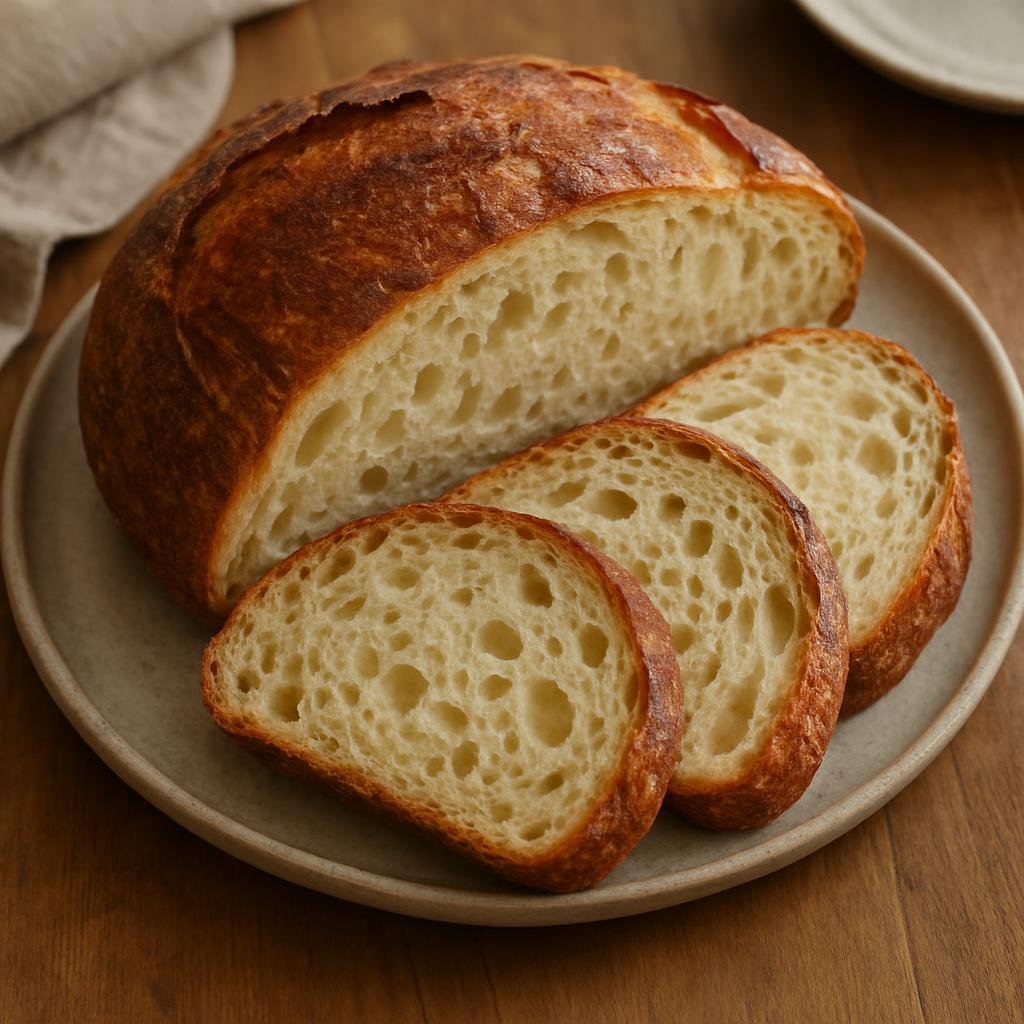
Serving Size: 8
Approximate Time
Prep
30 min
Cook
50 min
Additional
12 hrs
Total
13 hrs
Ingredients
- 4 cups (500 g) bread flour
- 1 2/3 cups (375 g) cool water, plus extra for dusting
- 1/2 cup (100 g) active sourdough starter (fed and bubbly; wild yeast/lacto culture)
- 2 tsp (10 g) fine sea salt
- 1 tsp (5 g) olive oil (optional, for greasing)
- Cornmeal or rice flour for dusting (optional)
Instructions
Short Description:
A classic California-style sourdough boule with a crisp, blistered crust and a tangy, open crumb produced by wild starter fermentation. Designed as a side to soups, salads, and grilled dishes.

Regional Notes:
This San Francisco–style sourdough emphasizes a mature wild starter and a long, cool fermentation to encourage the lactobacilli-driven tang found in Bay Area loaves. Compared with generic sourdoughs, this version uses a relatively slow, overnight cold proof and a moderate hydration to produce the distinctive tang and chewy crumb prized in California sourdough.

1. Feed your starter the night before or early the same day so it is active and bubbly when measured. For true California tang, use a mature wild starter that has been regularly maintained.
2. In a large bowl, combine 4 cups (500 g) bread flour and 1 2/3 cups (375 g) water. Mix until no dry flour remains (autolyse). Cover and rest 30–60 minutes.
3. Add 1/2 cup (100 g) active starter and 2 tsp (10 g) salt to the autolysed dough. Mix by hand or with a dough scraper until evenly incorporated; the dough will be sticky. Rest 10 minutes, then perform 4 sets of stretch-and-folds at 15–20 minute intervals (lift one side of the dough and fold over itself, rotating bowl each time) to develop strength.
4. Bulk ferment at room temperature (65–72°F / 18–22°C) for about 3–5 hours, performing gentle stretch-and-folds every 30–60 minutes during the first 2 hours as needed. The dough should rise ~20–40% and show some gas bubbles.
5. After bulk fermentation, turn the dough onto a lightly floured work surface. Pre-shape into a loose round and rest uncovered 20 minutes. Then tighten the shape into a boule (pulling the dough toward you on the work surface to create surface tension).
6. Place the shaped loaf seam-side up in a well-floured banneton or a bowl lined with a heavily floured towel. Cover and refrigerate for 12–18 hours (overnight) for a cool, slow proof that develops the characteristic tang.
7. Preheat the oven with a 4–6 quart Dutch oven inside to 500°F (260°C) for at least 45 minutes prior to baking. If you do not have a Dutch oven, preheat a baking stone and prepare a steam method.
8. When ready to bake, carefully remove the hot Dutch oven from the oven. Turn the loaf onto a piece of parchment (seam-side down), score the top with a lame or sharp knife, and transfer it into the Dutch oven. Reduce oven temperature to 450°F (232°C).
9. Cover and bake 20 minutes, then remove the lid and bake an additional 20–25 minutes until the crust is deep golden to mahogany and the internal temperature reaches about 205°F (96°C).
10. Remove the loaf and cool completely on a wire rack at least 1–2 hours before slicing to finish crumb setting. Serve as a side with butter, olive oil, or alongside soups and salads.
Nutrition Information
To get nutritional information, press the Get Nutrition Info button below.