Entree: Mexico – Oaxaca – Caldo de Piedra (Stone Soup)
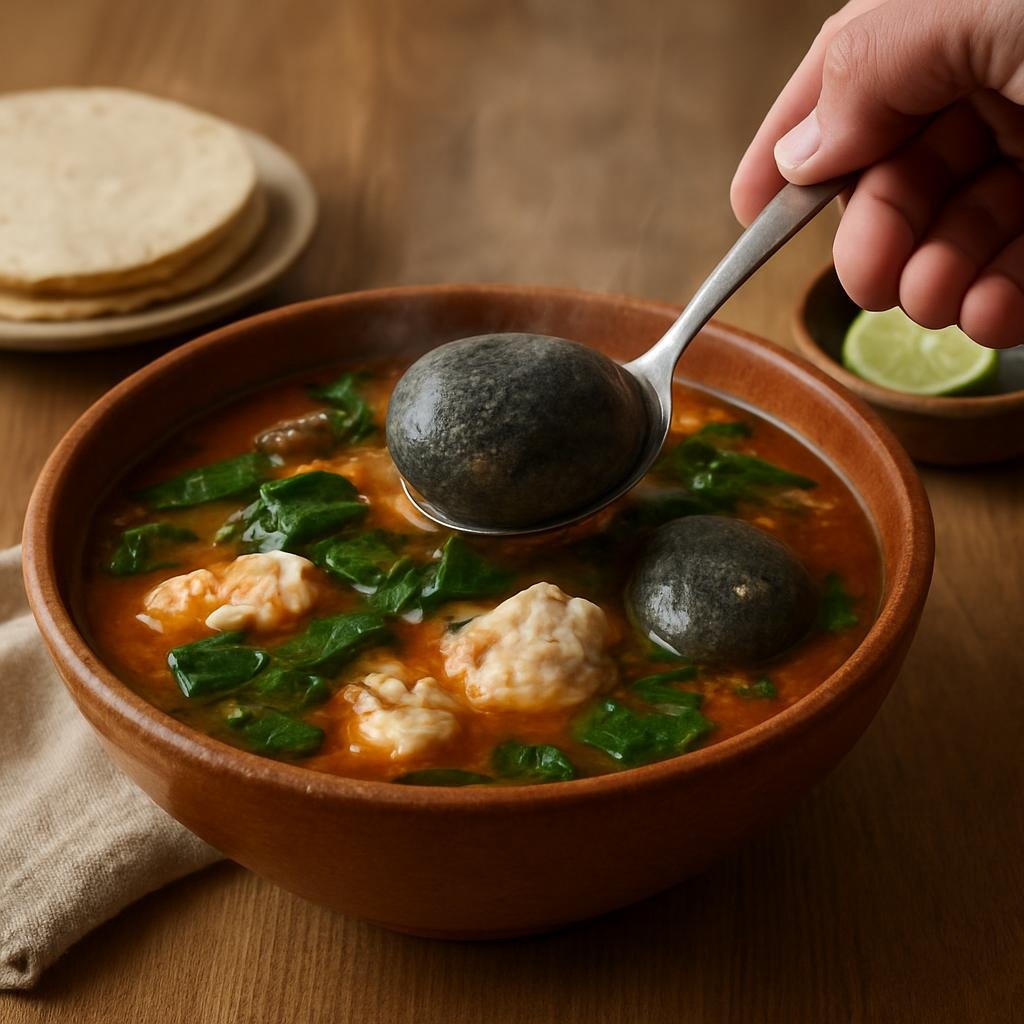
Serving Size: 6
Approximate Time
Prep
30 min
Cook
30 min
Additional
45 min
Total
1 hr 15 min
Ingredients
- 6–8 clean river stones, about 2–3 in (5–8 cm) each, well scrubbed
- 8 cups (1.9 L) fish stock or light seafood broth
- 3 tbsp (45 ml) vegetable oil
- 1 medium white onion, chopped — about 8 oz (225 g)
- 4 cloves garlic, smashed
- 4 large ripe tomatoes, cored and quartered — about 1 lb (450 g)
- 2 medium tomatillos, husked and rinsed (optional), about 6 oz (170 g)
- 2 serrano chiles or 1 tbsp (15 g) chiltepín, stemmed (adjust to taste)
- 1 large chayote, peeled and diced — about 10 oz (280 g)
- 2 carrots, peeled and sliced — about 8 oz (225 g)
- 1 cup (150 g) fresh corn kernels (from 2 ears) or canned drained
- 1 lb (450 g) firm white fish fillets (e.g., sierra, grouper, snapper), cut into 1-in (2.5 cm) pieces
- 12 large shrimp, approx. 1 lb (450 g), peeled and deveined
- 6–8 large hoja santa leaves (sacred leaf), whole or torn (or 1 cup / 15 g fresh cilantro if unavailable)
- 1/4 cup (15 g) fresh cilantro leaves, chopped
- 1 tbsp (15 ml) fresh lime juice, plus extra wedges for serving
- 2 tsp (10 g) kosher salt, or to taste
- 1/2 tsp (1 g) freshly ground black pepper
- 1 ripe avocado, sliced — about 8 oz (225 g)
- 6 warm corn tortillas
Instructions
Short Description:
A traditional Oaxacan seafood soup prepared by cooking fish, shrimp, and herbs instantly with red‑hot river stones poured into each serving bowl, yielding intensely flavored, aromatic broth and tender seafood. Served with warm corn tortillas and avocado for a complete meal.

Regional Notes:
This is the Oaxaca (Mixtec) method of caldo de piedra in which individually heated river stones are used to finish and cook the soup at the table — a technique unique to the region. Unlike generic Mexican seafood broths, this variation emphasizes immediate stone-cooking, hoja santa (sacred leaf), chiltepín (wild bird's‑eye chili) or serrano chiles, and the theatrical serving of steaming bowls at once.

1. Prepare stones: Scrub stones thoroughly and dry. Heat stones on a charcoal grill or in a heavy oven set to 500°F (260°C) for 30–45 minutes, or until they are glowing very hot. Use long tongs and heatproof gloves; set them aside on a metal tray until ready to serve.
2. Make base broth: In a large heavy pot over medium heat, warm the vegetable oil. Add chopped onion and sauté 4–5 minutes until translucent. Add smashed garlic and cook 1 minute.
3. Add tomatoes and tomatillos (if using) and Serrano or chiltepín; cook, stirring, 5–7 minutes until tomatoes begin to break down. Transfer mixture to a blender with 1 cup (240 ml) of the fish stock and puree until smooth, then return purée to the pot.
4. Add remaining fish stock to the pot and bring to a gentle simmer. Add chayote, carrots, and corn kernels; simmer 8–10 minutes until vegetables are just tender.
5. Season the broth with 1 1/2 tsp (7.5 g) of the salt, pepper, and lime juice. Taste and adjust seasoning; remember the hot stones will intensify flavors slightly.
6. Assemble bowls for serving: Place a few pieces of raw fish and 2 shrimp in each heatproof serving bowl (evenly divide the proteins for 6 bowls). Add a hoja santa leaf (or a little cilantro) and a couple slices of avocado to each bowl.
7. Bring the broth back to a rolling simmer. Using a ladle, pour hot broth over the fish and shrimp in each bowl until the proteins are mostly submerged, leaving room for the stones.
8. Final cook with stones: With long tongs, carefully pick up one hot stone per bowl and immediately drop it into the center of each bowl so the stone sits in the broth (use 6 stones for 6 bowls; reserve extras). The sizzling stone will raise the broth temperature and instantly finish cooking the seafood and release a light smoky aroma. Wait 30–60 seconds after stone insertion for proteins to finish cooking.
9. Garnish each bowl with chopped cilantro, a squeeze of lime, and additional hoja santa torn on top if desired. Serve immediately with warm corn tortillas on the side for dipping.
10. Safety note: Ensure hot stones are handled only with tongs and placed directly into bowls; inform guests that stones are very hot and to avoid touching them. Remove or set aside stones before eating large spoonfuls near the stone.
Nutrition Information
To get nutritional information, press the Get Nutrition Info button below.