Entree: United States – Eastern North Carolina, Southern United States – Eastern North Carolina BBQ
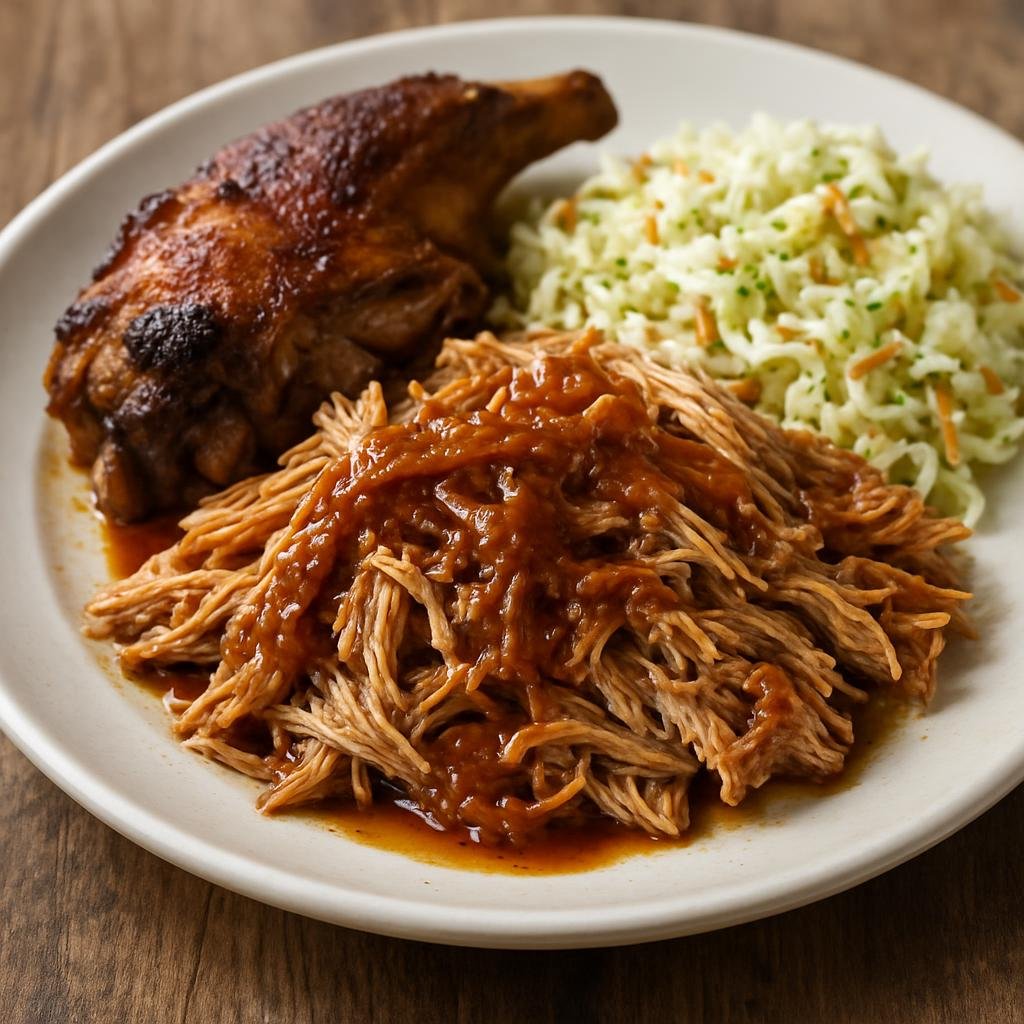
Serving Size: 6
Approximate Time
Prep
30 min
Cook
8 hrs
Additional
45 min
Total
8 hrs 45 min
Ingredients
- 1 bone-in pork shoulder (Boston butt), approx. 4–5 lb (1.8–2.3 kg)
- 2 tbsp (30 ml) kosher salt
- 2 tbsp (30 ml) coarse black pepper
- 1 tbsp (15 ml) packed light brown sugar
- 1 tsp (5 ml) cayenne pepper (optional: adjust to taste)
- 1 tbsp (15 ml) smoked paprika
- 1 cup (240 ml) apple cider vinegar
- 1/2 cup (120 ml) distilled white vinegar
- 2 tbsp (30 ml) light brown sugar (for sauce)
- 1 1/2 tsp (7 ml) Kosher salt (for sauce)
- 1 tbsp (15 ml) cracked black pepper (for sauce)
- 1/2 tsp (2.5 ml) crushed red pepper flakes (for sauce)
- 2 tbsp (30 ml) Worcestershire sauce (optional; traditional Eastern NC sometimes omits)
- 1/4 cup (60 ml) cold water (to temper sauce if desired)
- 6–8 slices sturdy white sandwich bread or 6–8 pieces of cornbread for serving
- For vinegar slaw:
  - 6 cups (about 540 g) shredded green cabbage
  - 1 small red onion, thinly sliced (about 4 oz / 115 g)
  - 3/4 cup (180 ml) apple cider vinegar
  - 2 tbsp (30 ml) granulated sugar
  - 1 tsp (5 ml) kosher salt
  - 1 tsp (5 ml) freshly ground black pepper
  - 1/2 tsp (2.5 ml) crushed red pepper flakes
  - 3 tbsp (45 ml) vegetable oil
- For skillet cornbread:
  - 1 cup (120 g) yellow cornmeal
  - 1 cup (120 g) all-purpose flour
  - 1 tbsp (12 g) baking powder
  - 1/2 tsp (3 g) baking soda
  - 1 tsp (6 g) salt
  - 1 tbsp (12 g) granulated sugar
  - 1 cup (240 ml) buttermilk
  - 1 large egg, beaten (approx. 50 g)
  - 1/4 cup (60 ml) vegetable oil or melted butter
  - 2 tbsp (30 g) butter for skillet
Instructions
Short Description:
A classic Eastern North Carolina whole-hog–style barbecue adapted for the home kitchen: slow-smoked, vinegar-forward pulled pork served with tangy vinegar slaw and skillet cornbread, highlighting the pork's natural flavor with a no-tomato sauce.

Regional Notes:
This is the Eastern North Carolina style that emphasizes whole-hog tradition and a thin, vinegar-based sauce with no tomato — sharp, peppery, and used to dress the pork, not mask it. The recipe uses a bone-in pork shoulder as a practical home-cook stand-in for whole-hog cooking while preserving the region's acid-forward sauce and simple seasoning.

1. The night before (or at least 4–6 hours ahead), trim any excessive loose fat from the pork shoulder but leave a good fat cap and the bone; pat dry. Mix 2 tbsp kosher salt, 2 tbsp coarse black pepper, 1 tbsp brown sugar, 1 tsp cayenne (if using), and 1 tbsp smoked paprika. Rub the mixture all over the pork, pressing it into crevices. Refrigerate uncovered overnight for a dry brine.
2. Make the vinegar sauce: in a bowl combine 1 cup apple cider vinegar, 1/2 cup white vinegar, 2 tbsp brown sugar, 1 1/2 tsp salt, 1 tbsp cracked black pepper, 1/2 tsp crushed red pepper flakes, and 2 tbsp Worcestershire sauce (optional). Taste and adjust — the sauce should be sharp and peppery. Add 1/4 cup cold water to mellow if desired. Reserve in the refrigerator.
3. Prepare smoker or oven: for authentic flavor, preheat a smoker to 225°F (107°C) and use hickory, oak, or pecan wood chips. If you don't have a smoker, preheat the oven to 300°F (150°C) and use a heavy roasting pan with a rack.
4. Smoke method: place the pork fat-side up on the smoker grates and smoke until the internal temperature reaches 160°F (71°C), about 4–6 hours depending on size. Spritz every hour with a mixture of half apple cider vinegar and half water to keep the exterior moist.
5. Continue smoking until the pork reaches an internal temperature of 195–203°F (90–95°C) and the meat is tender and a probe slides in with little resistance — total time approximately 8–10 hours for a 4–5 lb shoulder. Wrap in butcher paper or foil if the exterior is getting too dark (optional) and return to the smoker.
6. Oven method: place the pork on a rack over a roasting pan, cover tightly with foil, and roast at 300°F (150°C) until internal temp reaches 195–203°F (90–95°C), about 5–7 hours for 4–5 lb. You may finish uncovered for 30–60 minutes if you want a deeper crust.
7. While the pork cooks, make the vinegar slaw: toss the shredded cabbage and thinly sliced red onion in a large bowl. Whisk together 3/4 cup apple cider vinegar, 2 tbsp sugar, 1 tsp salt, 1 tsp black pepper, 1/2 tsp crushed red pepper flakes, and 3 tbsp vegetable oil. Pour over cabbage, toss well, and refrigerate to meld flavors for at least 30 minutes.
8. Make skillet cornbread: heat a 10-inch (25 cm) cast-iron skillet in the oven at 425°F (220°C) with 2 tbsp butter until melted and sizzling. In a bowl, whisk together 1 cup cornmeal, 1 cup flour, 1 tbsp baking powder, 1/2 tsp baking soda, 1 tsp salt, and 1 tbsp sugar. In another bowl mix 1 cup buttermilk, 1 beaten egg, and 1/4 cup vegetable oil. Combine wet and dry, pour into hot skillet, and bake 18–22 minutes until golden and a toothpick comes out clean. Cool slightly and cut into 6–8 wedges.
9. When the pork reaches target temperature, remove from heat and let rest, tented with foil, for 30–45 minutes to redistribute juices.
10. Using two forks or meat claws, pull the pork into shreds, discarding excess fat and bone. Transfer pulled pork to a large bowl and dress lightly with the prepared vinegar sauce — start with 1/2 cup sauce, toss, and add more to taste; Eastern NC style is lightly dressed so the pork's flavor remains primary.
11. To assemble each plate: place a slice of white bread or a wedge of skillet cornbread, heap 1 to 1 1/4 cups (about 6–8 oz / 170–225 g) pulled pork per serving over the bread/cornbread, spoon additional sauce at the table, and top with a generous scoop (~3/4 cup / 90 g) of vinegar slaw.
12. Serve with extra sauce on the side and offer plain bread or extra cornbread. Traditional accompaniments include pickles and collard greens if desired.
13. Leftovers: keep pulled pork and sauce refrigerated separately up to 4 days; reheat gently and add more fresh sauce or a splash of vinegar to refresh the flavor before serving.
Nutrition Information
To get nutritional information, press the Get Nutrition Info button below.