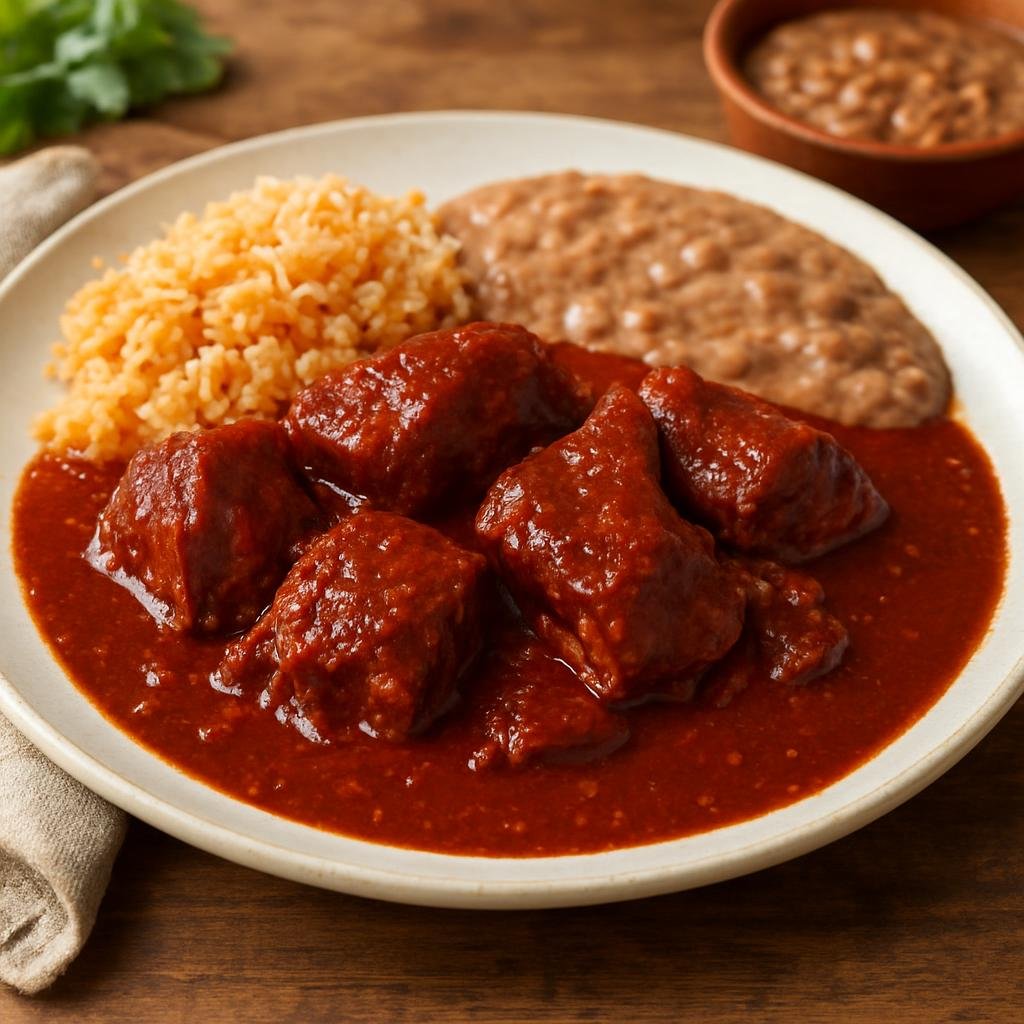
Entree: Mexico – Zacatecas, Bajio Mexico – Asado de Boda Zacatecano (Zacatecas Wedding Roast)
Serving Size: 6
Approximate Time
Prep
40 min
Cook
1 hr 30 min
Additional
1 hr
Total
3 hrs 10 min
Ingredients
- 3 lb (1.36 kg) pork shoulder, trimmed and cut into 2-inch (5 cm) cubes
- 1 1/2 tsp (7 g) kosher salt, plus more to taste
- 1/2 tsp (1.5 g) black pepper
- 2 tbsp (30 ml) vegetable oil or lard (for browning)
- 4 dried ancho chiles (about 20 g), stems removed, seeds shaken out
- 4 dried guajillo chiles (about 20 g), stems removed, seeds shaken out
- 3 medium Roma tomatoes, about 10 oz (300 g) total
- 1/2 medium white onion (about 75 g), divided
- 4 garlic cloves, divided
- 3 cups (720 ml) low-sodium chicken or pork broth, divided
- 2 bay leaves
- 1 small cinnamon stick (about 1 inch / 2.5 cm)
- 2 whole cloves
- 1 tsp (2 g) ground cumin
- 1 tsp (1 g) dried Mexican oregano
- 1 tbsp (15 ml) white vinegar or apple cider vinegar
- 1 tsp (4 g) granulated sugar (optional, to balance acidity)
- 2 tbsp (30 ml) vegetable oil (for finishing sauce if needed)
- Fresh cilantro leaves and thinly sliced white onion, for garnish (optional)

Rice (Arroz rojo)
- 2 cups (370 g) long-grain white rice, rinsed until water runs clear
- 2 tbsp (30 ml) vegetable oil
- 1/2 small white onion (about 75 g), finely chopped
- 2 garlic cloves, minced
- 2 medium Roma tomatoes, blended with 1/2 cup (120 ml) water (or 1 cup / 240 ml canned tomato puree)
- 3 cups (720 ml) chicken broth or water
- 1 tsp (6 g) kosher salt

Refried Pinto Beans (Frijoles refritos)
- 2 cups (400 g) dried pinto beans, rinsed and picked over (or 6 cups / 1.44 kg cooked beans)
- Water for soaking/cooking
- 1/2 medium white onion, halved
- 2 garlic cloves
- 1 tsp (6 g) kosher salt, or to taste
- 3 tbsp (45 ml) lard, bacon fat, or vegetable oil (for frying and mashing)
- Optional: 1/4 cup (60 ml) bean cooking liquid to loosen beans
Instructions
Short Description:
A rich, slow-simmered pork stew in a deep red sauce made from toasted ancho and guajillo chiles, tomatoes, and warm spices, served with Mexican-style rice and refried pinto beans to make a complete main-course meal.

Regional Notes:
This Zacatecas (Bajio) variation emphasizes a bright but deep red mole-like sauce built from ancho and guajillo chiles and simmered with pork shoulder; it is typically served with rice and frijoles (beans) at celebrations. Compared with coastal or Oaxacan wedding stews, this version is less smoky and more chile-forward, with regional spices like cinnamon and bay leaf.

1. Prepare beans (if using dried): place pinto beans in a large pot and cover with water by 2 inches (5 cm). Optional overnight soak: soak 8 hours, drain and rinse. Quick soak: bring to a boil 2 minutes, remove from heat, cover 1 hour, drain and rinse. Add fresh water to cover beans by 2 inches (5 cm), add half an onion and 2 garlic cloves, bring to a simmer and cook until very tender, 1 to 1 1/2 hours. Season with 1 tsp salt near the end. Reserve 1/2 to 1 cup (120–240 ml) cooking liquid, drain beans and set aside.
2. While beans simmer, toast and rehydrate chiles: heat a dry skillet over medium heat; toast ancho and guajillo chiles 10–20 seconds per side until fragrant but not burned. Remove stems and seeds if not already removed. Place toasted chiles in a bowl and pour 1 1/2 cups (360 ml) boiling water over them; cover and steep 15 minutes until softened. Drain, reserving 1/4 cup (60 ml) soaking liquid.
3. Brown the pork: pat pork pieces dry and season with 1 1/2 tsp kosher salt and 1/2 tsp black pepper. In a large heavy pot or Dutch oven, heat 2 tbsp (30 ml) vegetable oil over medium-high heat. Working in batches if needed, brown pork on all sides until well caramelized, 6–8 minutes per batch. Transfer browned pork to a plate.
4. Sauté aromatics: lower heat to medium, add 1/2 onion (sliced) and 2 smashed garlic cloves to the pot and sauté in remaining fond until softened, about 3 minutes.
5. Make chile-tomato purée: in a blender, add softened chiles, drained tomatoes, remaining 1/2 onion (roughly chopped), remaining 2 garlic cloves, cinnamon stick, 2 whole cloves, 1 tsp ground cumin, 1 tsp Mexican oregano, 1 tbsp vinegar, 1 tsp sugar (if using), 1/4 cup (60 ml) chile soaking liquid and 1/2 cup (120 ml) of the broth. Blend to a smooth purée. If needed, pass the purée through a fine-mesh strainer into a bowl to remove fibers for a smooth sauce.
6. Combine and simmer: return the browned pork to the pot, add the strained chile-tomato purée, the remaining 2 cups (480 ml) broth, and 2 bay leaves. Bring to a gentle simmer, cover partially, and cook on low until pork is tender, about 1 to 1 1/4 hours. Stir occasionally; add up to 1/2 cup (120 ml) more broth or water if sauce reduces too much.
7. Adjust seasoning and finish sauce: when pork is tender, taste and adjust salt and acidity. If sauce needs smoothing or extra sheen, stir in 2 tbsp (30 ml) vegetable oil and simmer 5 more minutes. Remove cinnamon stick, bay leaves, and whole cloves if still present.
8. Make the rice: while pork simmers last 25 minutes, heat 2 tbsp (30 ml) oil in a medium saucepan over medium heat. Add rinsed rice and sauté, stirring, until grains start to turn opaque and lightly toasted, 3–4 minutes. Add chopped onion and minced garlic and cook 1 minute. Stir in blended tomatoes (or tomato puree) and cook until liquid reduces slightly, 2–3 minutes. Add 3 cups (720 ml) broth and 1 tsp salt, bring to a boil, reduce to low, cover and simmer 15–18 minutes until liquid is absorbed. Remove from heat and let stand 5 minutes, then fluff with a fork.
9. Finish refried beans: in a skillet, heat 3 tbsp (45 ml) lard or oil over medium heat. Add drained cooked beans and mash with a potato masher or the back of a spoon, adding reserved bean cooking liquid as needed to reach a creamy consistency. Fry, stirring, 4–6 minutes until creamy and slightly thickened. Adjust salt to taste.
10. Serve: transfer pork and sauce to a warm serving dish. Garnish with chopped cilantro and thinly sliced white onion if desired. Plate with generous scoops of arroz rojo and a portion of frijoles refritos. Provide warm corn tortillas or toasted bolillo slices at the table.
11. Leftovers and storage: cool and refrigerate pork and sauce in a sealed container up to 3 days, or freeze up to 3 months. Reheat gently on low, adding splash of broth if needed.
Nutrition Information
To get nutritional information, press the Get Nutrition Info button below.