Dessert: United States – North Carolina – Moravian Sugar Cake
Serving Size: 8
Approximate Time
Prep
40 min
Cook
30 min
Additional
2 hrs
Total
2 hrs 30 min
Ingredients
- 1 cup (240 ml) whole milk, warmed to 105–115°F (40–46°C)
- 2 1/4 tsp (7 g) active dry yeast
- 1/4 cup (50 g) granulated sugar
- 4 cups (480 g) all-purpose flour, plus extra for dusting
- 1 tsp (5 g) fine salt
- 1/4 cup (56 g) unsalted butter, softened
- 2 large eggs (approx. 100 g)
- 1 tsp (5 ml) vanilla extract
- For the topping:
  - 1 1/2 cups (330 g) packed light brown sugar
  - 6 tbsp (85 g) unsalted butter, melted
  - 2 tsp (4 g) ground cinnamon
  - 1/4 tsp (1 g) fine salt
- For the pan:
  - 1 tbsp (15 ml) unsalted butter or oil for greasing
Instructions
Short Description:
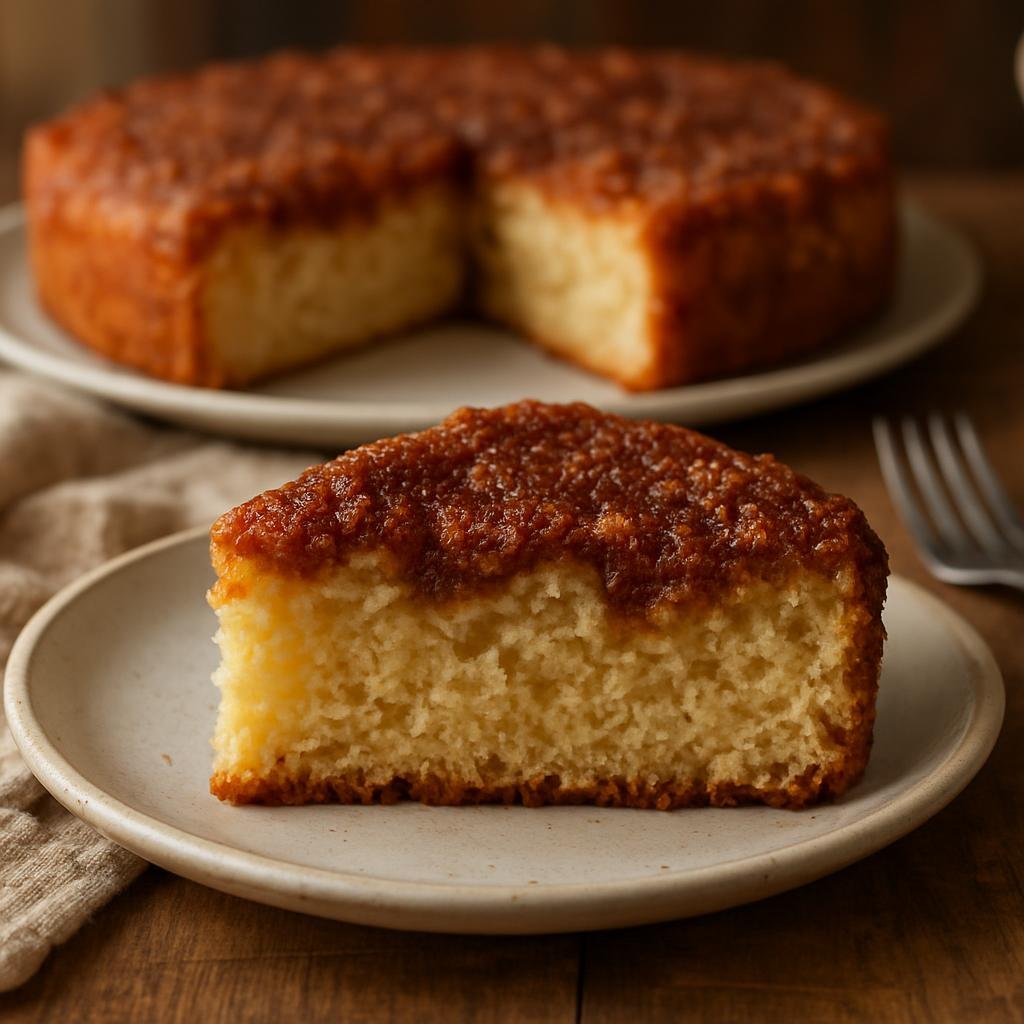
A soft, enriched yeast coffee cake topped with a butter–brown sugar–cinnamon mixture that caramelizes into a glossy, crunchy crust. Traditionally served in Moravian communities of North Carolina as a sweet breakfast or dessert.

Regional Notes:
This is the North Carolina Moravian version: a yeast-raised coffee cake reflecting Moravian baking traditions brought to the region, distinguished by a generous brown sugar–butter topping that caramelizes into a crisp, caramel crust. Unlike non-Moravian coffee cakes that use streusel or crumb toppings, this version produces a glossy, slightly chewy caramel layer typical of Moravian kitchens in the state.

1. In a small bowl, stir the warmed milk and 1 tsp (4 g) of the granulated sugar until dissolved. Sprinkle the active dry yeast over the milk, let sit 5–10 minutes until foamy.
2. In the bowl of a stand mixer fitted with the paddle (or a large mixing bowl by hand), combine 3 3/4 cups (450 g) of the flour, remaining 1/4 cup (50 g) sugar, and 1 tsp (5 g) salt. Add the softened butter, eggs (approx. 100 g), and vanilla; mix briefly to combine.
3. Add the foamy yeast–milk to the mixer and mix on low until the dough comes together. If using a stand mixer, switch to the dough hook and knead 5–7 minutes until smooth and slightly tacky; if kneading by hand, turn dough onto a floured surface and knead 8–10 minutes, adding up to the remaining 1/4 cup (30 g) flour only if dough is excessively sticky.
4. Place the dough in a lightly oiled bowl, cover with plastic wrap or a clean towel, and let rise in a warm draft-free spot until doubled, about 1 to 1 1/4 hours.
5. While the dough rises, mix the topping: in a medium bowl combine the packed light brown sugar (330 g), melted butter (85 g), ground cinnamon (2 tsp / 4 g), and 1/4 tsp (1 g) salt; stir until uniform. Set aside.
6. When the dough has doubled, gently deflate and turn onto a lightly floured surface. Roll the dough into a rectangle about 12 x 9 inches (30 x 23 cm) and about 1/4 inch (6 mm) thick.
7. Brush the dough surface evenly with 2–3 tbsp (30–45 ml) of the melted butter from the topping mixture (reserve the rest). Sprinkle two-thirds of the brown sugar–cinnamon mixture evenly over the buttered dough, pressing lightly so it adheres.
8. Starting at a long edge, roll the dough tightly into a log (jelly-roll style). Using a sharp knife, cut the log into 8 equal slices (about 1 1/2 inches / 4 cm thick).
9. Grease an 9-inch (23 cm) round cake pan or springform pan with 1 tbsp (15 ml) butter or oil. Arrange the slices cut-side up in the pan in a single layer, leaving a little space; the rolls will expand. Sprinkle the remaining third of the topping over and between the rolls and drizzle any remaining melted butter over the top.
10. Cover the pan loosely with plastic wrap or a towel and let the assembled cake rise in a warm place until puffy, about 30–45 minutes.
11. Preheat the oven to 350°F (175°C). Bake the Moravian Sugar Cake on the middle rack for 25–30 minutes, or until the tops are golden and the brown sugar topping is bubbling and caramelized. If the top browns too quickly, tent loosely with foil for the last 5–10 minutes.
12. Remove from oven and let cool in the pan on a wire rack 10–15 minutes to allow the caramel to set slightly. Run a thin knife around the edge, invert onto a serving plate if desired, or serve directly from the pan. Serve warm or at room temperature.