Side Dish: Canada – Atlantic Canada (New Brunswick) – New Brunswick Dulse Bread
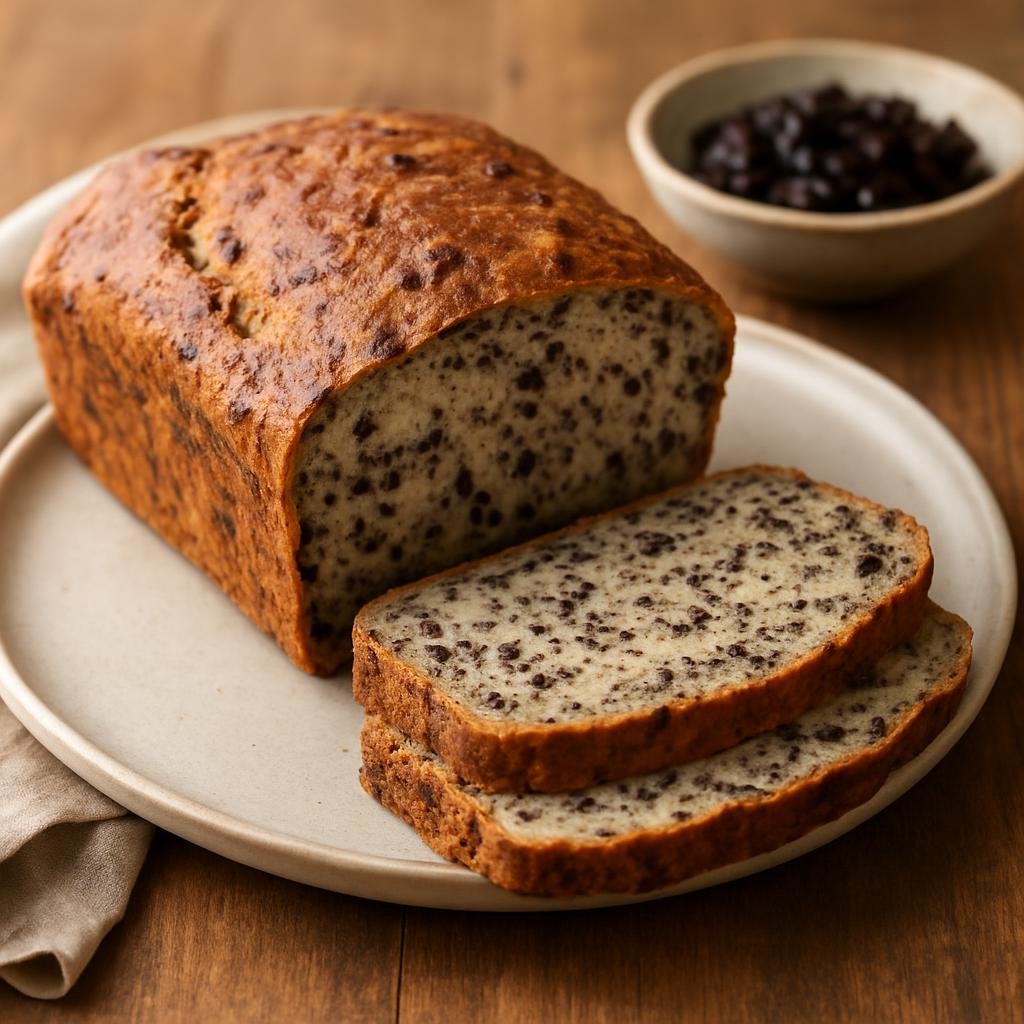
Serving Size: 8
Approximate Time
Prep
40 min
Cook
35 min
Additional
2 hrs 45 min
Total
4 hrs
Ingredients
- 3 cups (360 g) all-purpose flour, plus extra for dusting
- 2 1/4 tsp (7 g) active dry yeast (one standard packet)
- 1/2 cup (120 ml) whole milk, warmed to about 100-110°F (38-43°C)
- 1/2 cup (120 ml) warm water, about 100-110°F (38-43°C)
- 2 tbsp (25 g) granulated sugar
- 1/2 tsp (3 g) fine sea salt (reduced because dulse is salty)
- 1 oz (30 g) dried Bay of Fundy dulse, rehydrated in warm water and chopped, approx. 3/4 cup (90 g) after draining
- 2 tbsp (28 g) unsalted butter, melted (plus 1 tbsp / 14 g for brushing)
- 1 large egg (approx. 50 g), beaten (for dough enrichment and optional egg wash)
- 1 tbsp (15 ml) olive oil or neutral oil for greasing the bowl
- Optional finishing: extra small flakes of dulse for the top, or a light sprinkle of flaky sea salt
Instructions
Short Description:
A soft, savory loaf that folds Bay of Fundy dulse (edible seaweed) into a classic yeast bread, lending a briny, umami note that complements fish and coastally inspired meals. The dulse is rehydrated and chopped into the dough so its flavor is distributed throughout the crumb.

Regional Notes:
This New Brunswick version uses locally harvested Bay of Fundy dulse, which is saltier and more umami-rich than many grocery dried seaweeds; the recipe reduces added salt and relies on rehydrated dulse for maritime flavor. Unlike inland or generic seaweed breads, this loaf highlights the distinctive taste of Fundy dulse rather than masking it with heavy spices.

1. Rehydrate the dulse: place dried dulse in a small bowl and cover with about 3/4 cup (180 ml) warm water. Let soak 8–10 minutes until softened, then drain in a sieve and gently squeeze out excess water. Chop coarsely and set aside (you should have about 3/4 cup / 90 g).
2. Bloom the yeast: in a measuring cup or small bowl combine the warm milk, warm water, sugar, and active dry yeast. Stir gently and let stand 5–8 minutes until foamy. If it does not foam, the yeast may be inactive; start over with fresh yeast.
3. Combine dry ingredients: in a large mixing bowl (or the bowl of a stand mixer fitted with a dough hook) whisk together 3 cups (360 g) flour and 1/2 tsp (3 g) fine sea salt.
4. Make the dough: add the foamy yeast mixture, melted butter, beaten egg (reserve a little if you want an egg wash), and the chopped, rehydrated dulse to the flour. Stir until a shaggy dough forms.
5. Knead: turn the dough onto a lightly floured surface and knead by hand 8–10 minutes until smooth and elastic, adding up to 2–4 tbsp (15–30 g) additional flour if the dough is excessively sticky. If using a stand mixer, knead on medium-low 6–8 minutes.
6. First rise: lightly oil a clean bowl with 1 tbsp (15 ml) olive oil, place the dough in the bowl and turn to coat. Cover with plastic wrap or a clean towel and let rise in a warm draft-free spot until doubled, about 1 to 1 1/2 hours.
7. Shape the loaf: punch down the dough and turn it out onto a lightly floured surface. Shape into a loaf about the size to fit a greased 9x5 inch (23x13 cm) loaf pan. Place seam-side down in the pan.
8. Second rise: cover the pan loosely with a towel or greased plastic wrap and let rise until the dough crests 1/2–3/4 inch above the rim of the pan, about 45–60 minutes.
9. Preheat oven: heat oven to 375°F (190°C) while the loaf is finishing its second rise.
10. Finish and bake: if desired, brush the top lightly with the reserved beaten egg or 1 tbsp (14 g) melted butter for a softer crust. Sprinkle with a few small flakes of dulse or a pinch of flaky sea salt if you like. Bake in the preheated oven 28–35 minutes, until the crust is golden and the loaf sounds hollow when tapped; an instant-read thermometer inserted in the center should read about 190°F (88°C).
11. Cool: remove the loaf from the pan and brush with the remaining 1 tbsp (14 g) melted butter for a softer crust. Cool on a wire rack at least 20–30 minutes before slicing.
12. Serve: slice warm or at room temperature as a salty, umami-rich side to seafood, chowders, or coastal meals. Store wrapped at room temperature 2 days or freeze slices for longer storage.
Nutrition Information
To get nutritional information, press the Get Nutrition Info button below.