Entree: Canada – Prince Edward Island – PEI Potato Seafood Chowder
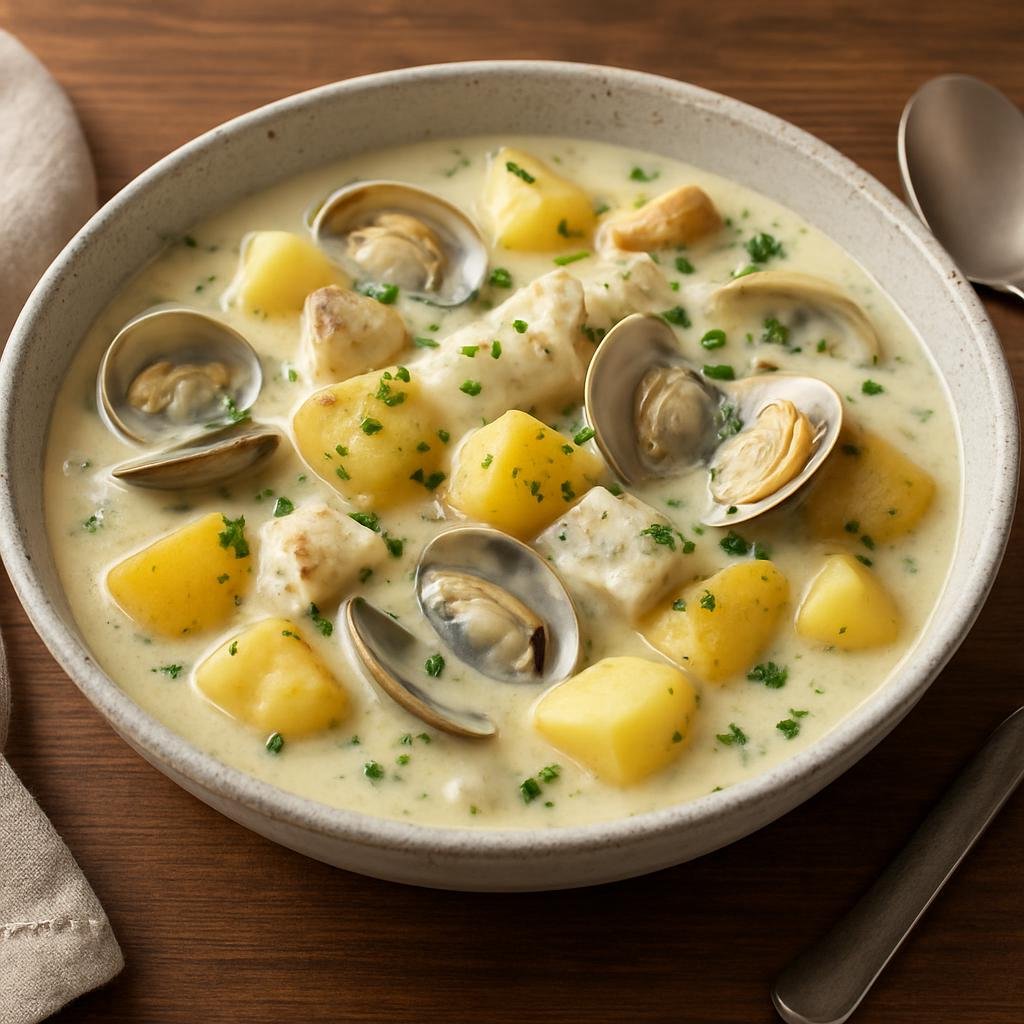
Serving Size: 6
Approximate Time
Prep
25 min
Cook
30 min
Total
55 min
Ingredients
- 4 slices salt pork or thick-cut bacon, approx. 4 oz (115 g), diced
- 2 tbsp (30 ml) unsalted butter
- 1 medium yellow onion, about 8 oz (225 g), finely chopped
- 2 stalks celery, about 4 oz (115 g), diced
- 1 large carrot, about 4 oz (115 g), diced
- 2 cloves garlic, minced (about 6 g)
- 1/4 cup (30 g) all-purpose flour
- 4 cups (960 ml) seafood or fish stock (or a mixture of fish stock and clam juice)
- 1 cup (240 ml) bottled clam juice (optional; can be included in the stock total)
- 1.5 lb (680 g) PEI red potatoes or other waxy potatoes, peeled and diced 1/2 inch (1.25 cm)
- 1 lb (450 g) cod or haddock fillets, skinless and boneless, cut into 1-inch (2.5 cm) pieces
- 1 lb (450 g) littleneck clams in shell, scrubbed
- 1 cup (240 ml) whole milk
- 1 cup (240 ml) heavy cream
- 2 bay leaves
- 1 tsp (5 g) fresh thyme leaves (or 1/2 tsp / 1 g dried thyme)
- 1/4 cup (15 g) fresh parsley, chopped
- 2 tbsp (8 g) fresh chives, chopped (optional)
- 1 tsp (5 g) kosher salt, plus more to taste
- 1/2 tsp (2.5 g) freshly ground black pepper
- 1 tbsp (15 ml) fresh lemon juice (optional)
- Crusty bread, for serving
Instructions
Short Description:
A creamy, hearty chowder combining Prince Edward Island potatoes with local clams and firm white fish, finished with cream and fresh herbs for a balanced island main course.

Regional Notes:
This Prince Edward Island version highlights locally grown potatoes and island shellfish—littleneck clams and Atlantic cod or haddock—enriched with cream and simple herbs rather than heavy spice. It differs from mainland chowders by leaning on fresh clam liquor and the island potatoes' waxy texture to create a rich, island-forward chowder.

1. Prepare clams: place clams in a large pot with 1/2 cup (120 ml) water and bring to a simmer over medium-high heat. Cover and steam until clams open, about 5–7 minutes. Transfer opened clams to a bowl; discard any that do not open. Reserve the clam cooking liquid, strain through a fine mesh sieve into a bowl and set aside (about 1/2–3/4 cup / 120–180 ml).
2. Render salt pork/bacon: in a large heavy pot or Dutch oven over medium heat, add the diced salt pork or bacon and cook until fat renders and pieces are crisp, about 5–7 minutes. Remove most of the crisped pieces onto a paper towel (leave them for garnish if desired).
3. Sauté aromatics: reduce heat to medium, add butter to the rendered fat, then add onion, celery, and carrot. Cook until softened and translucent, about 6–8 minutes. Add garlic and cook 30–45 seconds until fragrant.
4. Make roux and add stock: sprinkle the flour over the vegetables and stir to coat; cook 1–2 minutes to remove raw flour taste. Gradually whisk in the seafood/fish stock and the reserved strained clam liquor (if using), ensuring there are no lumps.
5. Add potatoes and herbs: add the diced potatoes, bay leaves, and thyme. Bring to a gentle simmer and cook until potatoes are just tender, about 12–15 minutes.
6. Add milk and simmer gently: stir in the milk, lower heat to maintain a gentle simmer, and cook 3–4 minutes to meld flavors. Taste and adjust seasoning with salt and pepper (remember clam liquor adds saltiness).
7. Add fish and clams: gently add the fish pieces and the opened clams (in their shells or removed from shells, as you prefer). Simmer very gently until the fish is opaque and flakes easily, 5–7 minutes. If using clam meat removed from shells earlier, add it now.
8. Finish with cream and herbs: stir in the heavy cream and warm through for 1–2 minutes without boiling. Remove bay leaves. Stir in chopped parsley, chives (if using), and lemon juice to brighten the flavor. Adjust salt and pepper to taste.
9. Serve: ladle chowder into bowls, sprinkle with reserved crisped salt pork/bacon pieces and additional parsley. Serve with crusty bread for a complete entree.
10. Leftover storage: cool quickly, refrigerate in an airtight container up to 2 days (cream reduces best when reheated gently over low heat).
Nutrition Information
To get nutritional information, press the Get Nutrition Info button below.