Entree: United States – U.S. Virgin Islands, Caribbean United States Territories – Callaloo
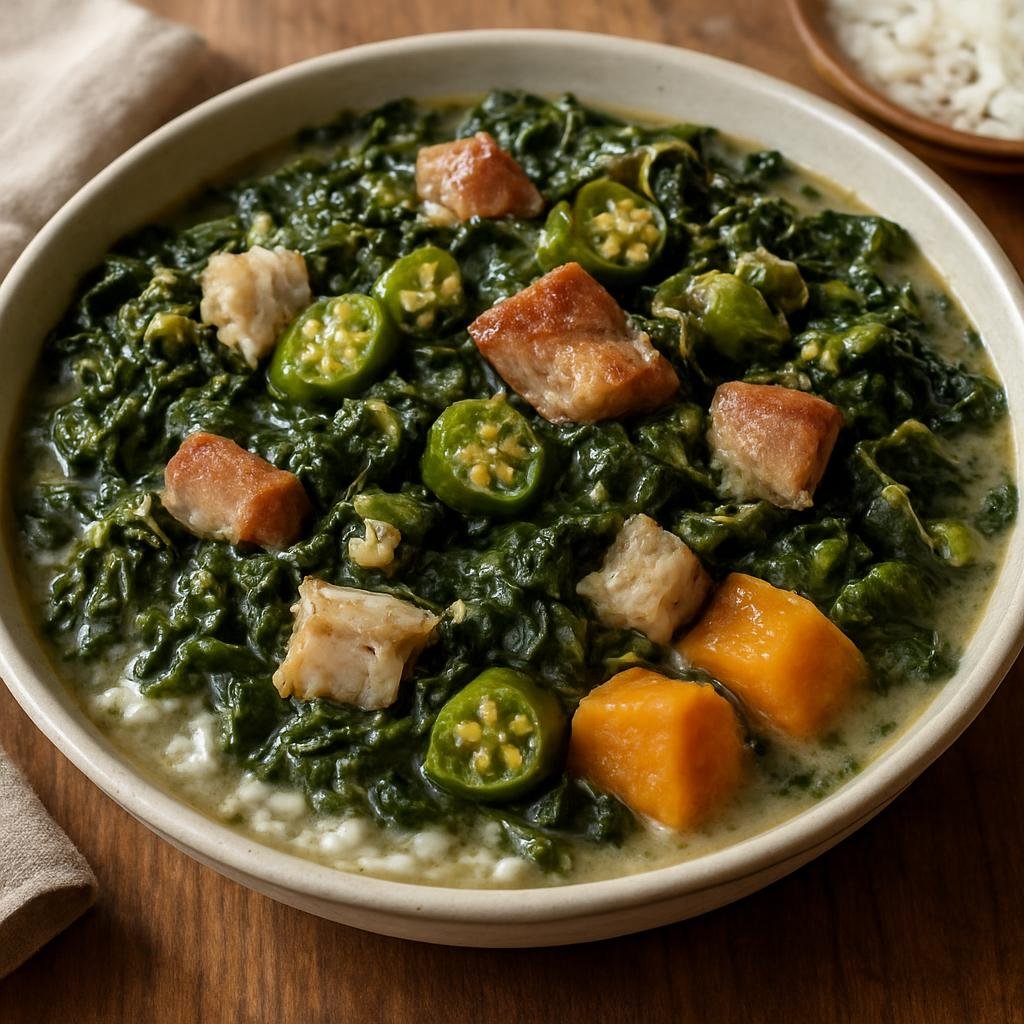
Serving Size: 6
Approximate Time
Prep
35 min
Cook
55 min
Total
1 hr 30 min
Ingredients
- 2 tbsp (30 ml) vegetable oil
- 6 oz (170 g) salt pork, diced
- 8 oz (225 g) salted cod, soaked (see note) and flaked
- 1 medium yellow onion, chopped, about 8 oz (225 g)
- 3 cloves garlic, minced, about 0.5 oz (15 g)
- 3 scallions (green onions), sliced, about 1.5 oz (45 g)
- 1 small Scotch bonnet or habanero pepper, whole (leave whole for flavor or slit/seeds removed for less heat)
- 1 tsp (1 g) dried thyme or 2 sprigs fresh thyme
- 1 lb (450 g) fresh dasheen (taro) leaves, stems removed and coarsely chopped (see note on preparation)
- 8 oz (225 g) okra, sliced
- 1 lb (450 g) sweet potato, peeled and diced into 1/2-inch (1 cm) cubes
- 1 cup (240 ml) coconut milk
- 2 cups (480 ml) low-sodium fish or chicken stock (or water)
- 1 bay leaf
- Salt and freshly ground black pepper, to taste (use sparingly at first because of salted cod and salt pork)
- 1 tbsp (15 ml) fresh lime juice
- 2 tbsp (10 g) chopped fresh cilantro or parsley (optional)
- 1 1/2 cups (300 g) long-grain white rice, uncooked (to serve with stew)
Instructions
Short Description:
A hearty Virgin Islands callaloo stew of chopped dasheen (taro) leaves simmered with okra, salted meats and coconut milk, served with rice and sweet potato for a complete main-course meal. It is thick, savory, and brightened with scallion and lime.

Regional Notes:
This U.S. Virgin Islands version emphasizes dasheen (taro) leaves and sliced okra for body and texture, and uses salted meats/seafood—here salted cod and salt pork—to build traditional Caribbean savory depth. Coconut milk and provision (sweet potato and rice) make it a filling island entree distinct from other Caribbean or West African callaloo variants.

1. If using salted cod, rinse and soak it in cold water for 2–4 hours, changing the water once or twice to remove excess salt; drain, remove skin and bones, and flake into bite-size pieces. Pat dry.
2. Rinse dasheen (taro) leaves thoroughly. Remove thick veins and stems, then stack and roll leaves and slice or chop coarsely. (Wear gloves or oil hands if you are sensitive to irritation from raw taro leaves.)
3. In a large Dutch oven or heavy pot over medium heat, warm the vegetable oil. Add the diced salt pork and cook until the fat renders and edges are golden, about 6–8 minutes.
4. Add the chopped onion, scallions, and minced garlic to the pot and sauté until translucent, about 4 minutes. Stir in the thyme and bay leaf.
5. Add the diced sweet potato and sliced okra; sauté briefly, 2–3 minutes, to coat with fat and aromatics.
6. Pour in the coconut milk and stock (or water), scraping any browned bits from the bottom of the pot. Bring to a gentle simmer.
7. Stir in the chopped dasheen leaves and the whole Scotch bonnet pepper. Add the flaked, soaked salted cod. Submerge the leaves in the liquid, cover partially, and simmer gently for 25–30 minutes, or until the sweet potatoes are tender and the dasheen is fully cooked and tender.
8. Remove the whole Scotch bonnet pepper (or leave if you want more heat). If you prefer a thicker stew, mash a few pieces of sweet potato and dasheen against the side of the pot with a spoon to thicken the broth; alternatively simmer uncovered a few extra minutes to reduce.
9. Taste for seasoning and add salt and pepper sparingly as needed. Stir in the lime juice and chopped cilantro or parsley if using.
10. Meanwhile, cook the rice: rinse the uncooked rice until the water runs clear. In a medium saucepan, combine the rice with 2 1/4 cups (540 ml) water and a pinch of salt; bring to a boil, reduce to low, cover and simmer 15–18 minutes until tender. Fluff with a fork.
11. To serve, ladle generous portions of callaloo over a bed of warm rice, making sure each plate has plenty of dasheen, okra, sweet potato, and pieces of salted cod and salt pork. Garnish with extra sliced scallion if desired.
12. Leftovers keep refrigerated for up to 3 days and often taste better reheated slowly on the stove; add a splash of water if it becomes too thick.