Entree: Mexico – Colima (Western Mexico) – Tamal de Chaya
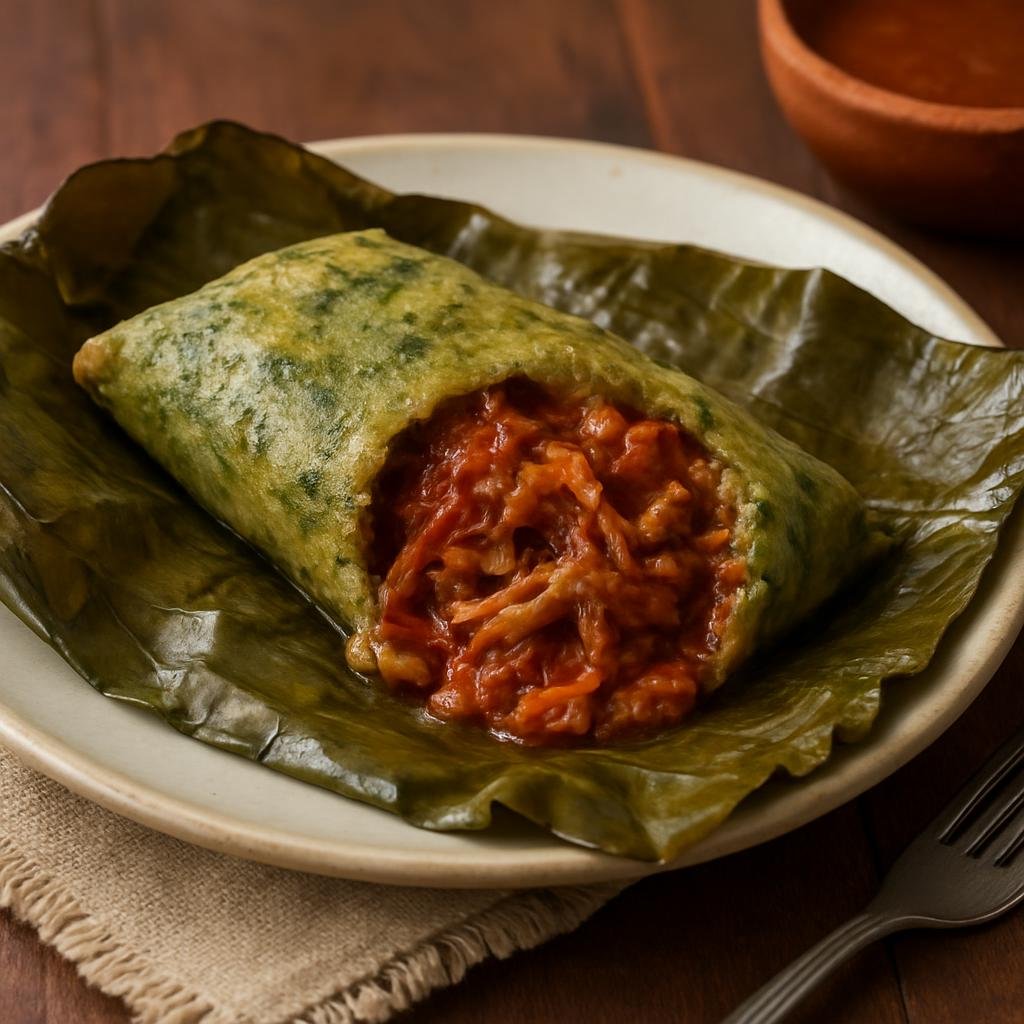
Serving Size: 6
Approximate Time
Prep
50 min
Cook
1 hr 15 min
Additional
5 min
Total
2 hrs 10 min
Ingredients
- 1.5 lb (700 g) pork shoulder, boneless, trimmed, cut into large chunks (or 1.5 lb / 700 g boneless chicken thighs as alternative)
- 1 medium white onion, halved (about 8 oz / 225 g)
- 4 cloves garlic (about 12 g)
- 4 dried guajillo chiles, stems and seeds removed (about 20 g)
- 2 medium tomatoes (roma), halved (about 10 oz / 300 g)
- 1 tsp (5 g) dried oregano
- 1/2 tsp (2 g) ground cumin
- 1 tsp (5 g) kosher salt for braise, plus more to taste
- 1 cup (240 ml) water or low-sodium chicken broth for braise, plus 1 1/4 cups (300 ml) warm broth for masa (adjust as needed)
- 6 cups (about 200 g) fresh chaya leaves, packed, stems removed and rinsed
- 3 1/2 cups (840 g) prepared masa (fresh nixtamal dough), or 2 1/2 cups (300 g) masa harina reconstituted per package directions
- 1/2 cup (120 g) lard (manteca de cerdo) or vegetable shortening
- 2 tsp (8 g) baking powder
- 2 tsp (10 g) fine salt (for masa)
- 1 tsp (4 g) sugar
- 12–16 banana leaf pieces, roughly 10 x 12 in (cut to size), warmed and pliable
- Kitchen twine or thin strips of banana leaf for tying
- Fresh epazote, chopped, 1 tbsp (approx. 2 g) (optional; traditional pairing)
- Freshly ground black pepper, to taste
Instructions
Short Description:
Tamal de Chaya are banana-leaf–wrapped tamales from Colima made by mixing blanched chaya leaves into the masa and filling them with spiced shredded pork or chicken, then steaming until tender. The result is a hearty, green-suffused tamal suitable as a complete main course.

Regional Notes:
This Colima version uses fresh chaya (a local leafy green) folded into the masa and banana leaves for wrapping, rather than corn husks; the filling is typically pork braised and shredded in a guajillo-tomato salsa, reflecting Western Mexico flavors. Chaya must be thoroughly cooked before use to remove its natural toxins — a regional safety practice.

1. Prepare the meat: In a medium pot combine pork shoulder chunks, half the onion, 2 garlic cloves, 1 tsp salt, and 1 cup (240 ml) water or broth. Bring to a simmer, cover, and cook until meat is very tender and shreds easily, about 1.5–2 hours (or pressure cook 30–40 minutes). Remove meat, reserve 1 cup (240 ml) cooking liquid, and shred meat with two forks. Set aside.
2. Make the guajillo-tomato sauce: Meanwhile, toast the guajillo chiles briefly in a dry skillet until aromatic, then soak in hot water for 15 minutes until softened. In a blender combine rehydrated chiles, tomatoes, remaining half onion, remaining 2 garlic cloves, oregano, cumin, and 1/2 cup (120 ml) of the reserved cooking liquid (or water). Blend to a smooth sauce. Season with 1/2 tsp salt and black pepper.
3. Finish the filling: Heat 1 tbsp (15 ml) oil or a little reserved lard in a skillet over medium heat. Pour in the blended sauce and simmer 5–8 minutes to concentrate flavors. Add shredded meat and simmer together 8–10 minutes so meat absorbs the sauce; adjust salt. Stir in chopped epazote if using. Remove from heat and keep warm.
4. Cook and prepare the chaya: In a pot of boiling salted water, blanch chaya leaves for 8–10 minutes (this is essential to neutralize natural toxins). Drain and immediately rinse with cool water. Chop the cooked leaves finely. Reserve about 1 cup (approx. 35 g) chopped chaya to fold into the filling if desired, and puree the remaining cooked chaya with 1/4 cup (60 ml) warm broth until smooth to add into the masa.
5. Prepare the masa: In a large bowl beat together lard (1/2 cup / 120 g) until slightly fluffy. In a separate bowl combine prepared masa (3 1/2 cups / 840 g fresh nixtamal dough or reconstituted masa harina) with baking powder, 2 tsp fine salt, and sugar. Add the pureed chaya and 1 1/4 cups (300 ml) warm broth gradually, mixing until masa has a soft, spreadable consistency (it should hold together but not be runny). Fold the chopped chaya into the masa so it is evenly green-speckled. Adjust with a little more warm broth if too stiff.
6. Test the masa: Drop a small piece of masa into simmering water; it should float when ready. If it sinks, beat in a little more lard or a touch more broth until it floats.
7. Prepare banana leaves: Wipe banana leaf pieces with a damp cloth, pass each briefly over a low flame or steam to make pliable, then cut into workable rectangles and pat dry.
8. Assemble tamales: Lay a warmed banana leaf piece shiny-side down. Spread about 1/3 cup (75 g) masa in a 4 x 4 inch (10 x 10 cm) rectangle in the center. Place 1–2 tbsp (15–30 g) chopped chaya (optional) and 2–3 tbsp (30–45 g) of the meat filling in the center of the masa. Fold the banana leaf over the filling to enclose (fold sides or roll), then fold ends. Tie with kitchen twine or banana-leaf strip. Repeat until masa and filling are used; yields about 12–16 tamales depending on size.
9. Steam the tamales: Stand tamales upright in a steamer basket over simmering water (covering any gaps with extra banana leaves). Cover and steam gently for 1 hour to 1 hour 15 minutes, checking water level occasionally and adding more boiling water as needed. Tamales are done when masa separates easily from the banana leaf and is firm throughout.
10. Rest and serve: Let tamales rest 10 minutes off the heat. Serve 2–3 tamales per person as a main course with extra salsa, pickled onions, or warmed crema if desired. Store leftovers refrigerated up to 3 days; reheat by steaming until warmed through.
Nutrition Information
To get nutritional information, press the Get Nutrition Info button below.