Dessert: Mexico – Hidalgo – Muéganos Hidalguenses (Hidalgo Honeyed Twists)
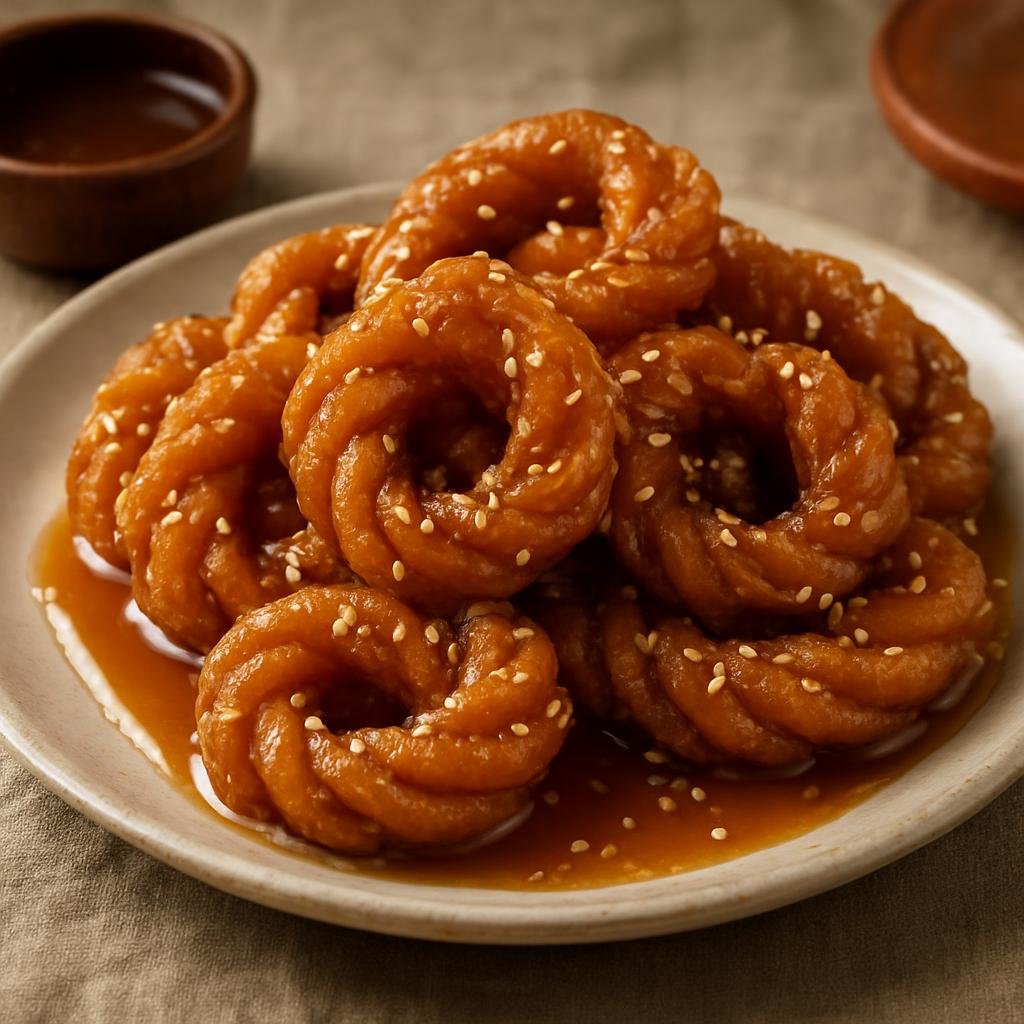
Serving Size: 8
Approximate Time
Prep
30 min
Cook
5 min
Additional
30 min
Total
1 hr 5 min
Ingredients
- 3 cups (360 g) all-purpose flour
- 1 tsp (4 g) baking powder
- 1/2 tsp (3 g) salt
- 2 tbsp (25 g) granulated sugar
- 1/2 cup (115 g) lard (or vegetable shortening)
- 2 large eggs, approx. 3.5 oz (100 g) total
- 1 tbsp (6 g) finely grated orange zest
- 4–6 tbsp (60–90 ml) warm water, as needed
- For frying: 4 cups (1 L) vegetable oil (or enough for deep frying)
- 12 oz (340 g) piloncillo (raw cane sugar cones), grated or chopped
- 3/4 cup (180 ml) water
- 1 tbsp (7 g) anise seeds
- 1 small cinnamon stick (about 3 g)
- 1 tbsp (14 g) unsalted butter
- 1/4 cup (40 g) toasted sesame seeds
Instructions
Short Description:
Crisp, twisted fried dough pieces coated in a piloncillo-anise syrup and finished with toasted sesame—an iconic sweet from Hidalgo. The exterior is crunchy while the syrup gives a glossy, fragrant sweetness.

Regional Notes:
This Hidalgo version highlights piloncillo (unrefined cane sugar) and a pronounced anise note in the syrup, distinguishing it from other muéganos that may use honey or plain sugar syrups. Toasted sesame is used as a finishing touch common in central Mexico.

1. In a large bowl whisk together the flour, baking powder, salt, and granulated sugar until evenly combined.
2. Cut the lard into the dry mix with a pastry cutter or your fingers until the mixture resembles coarse crumbs.
3. Stir in the eggs (3.5 oz / 100 g total) and orange zest. Add 4 tbsp (60 ml) warm water and mix until a soft dough forms, adding up to 2 tbsp (30 ml) more water if needed. The dough should be pliable and not sticky.
4. Turn the dough onto a lightly floured surface and knead 1–2 minutes until smooth. Cover and let rest 20–30 minutes at room temperature.
5. While dough rests, make the piloncillo-anise syrup: in a medium saucepan combine the grated piloncillo, 3/4 cup (180 ml) water, anise seeds, and cinnamon stick. Bring to a gentle boil, then reduce heat and simmer for 10–15 minutes, stirring occasionally, until the piloncillo fully dissolves and the syrup thickens slightly.
6. Remove the syrup from heat; discard the cinnamon stick, and if you prefer a smoother syrup strain out the anise seeds (leave some if you want visible anise). Stir in 1 tbsp (14 g) butter until melted. Keep the syrup warm on the lowest heat setting.
7. Divide the rested dough into 3 portions. Working with one portion at a time, roll dough on a lightly floured surface to about 1/8 inch (3 mm) thickness.
8. Using a sharp knife or pizza cutter, cut the dough into strips about 1/2 inch (1.2 cm) wide and 3–4 inches (7–10 cm) long. Take each strip and twist 2–3 times, then form a small loose knot or coil—traditional muéganos are irregularly twisted or knotted.
9. Heat oil in a deep pot to 350°F (175°C). Fry the muéganos in small batches, careful not to overcrowd, until golden and crisp, about 2–3 minutes per side. Use a slotted spoon to transfer to paper towels to drain briefly.
10. Working in batches, dip the hot fried muéganos into the warm piloncillo-anise syrup, turning to coat well, then transfer to a wire rack set over a tray so excess syrup can drip off.
11. Immediately sprinkle or press toasted sesame seeds onto the syrup-coated muéganos so seeds adhere. Let the muéganos cool and the syrup set slightly—piloncillo will crystallize a little, leaving a glossy, textured coating.
12. Serve at room temperature. Store in an airtight container for 2–3 days; texture is best the first day.
Nutrition Information
To get nutritional information, press the Get Nutrition Info button below.