Entree: United States – Washington — Pacific Northwest – Cedar Plank Salmon
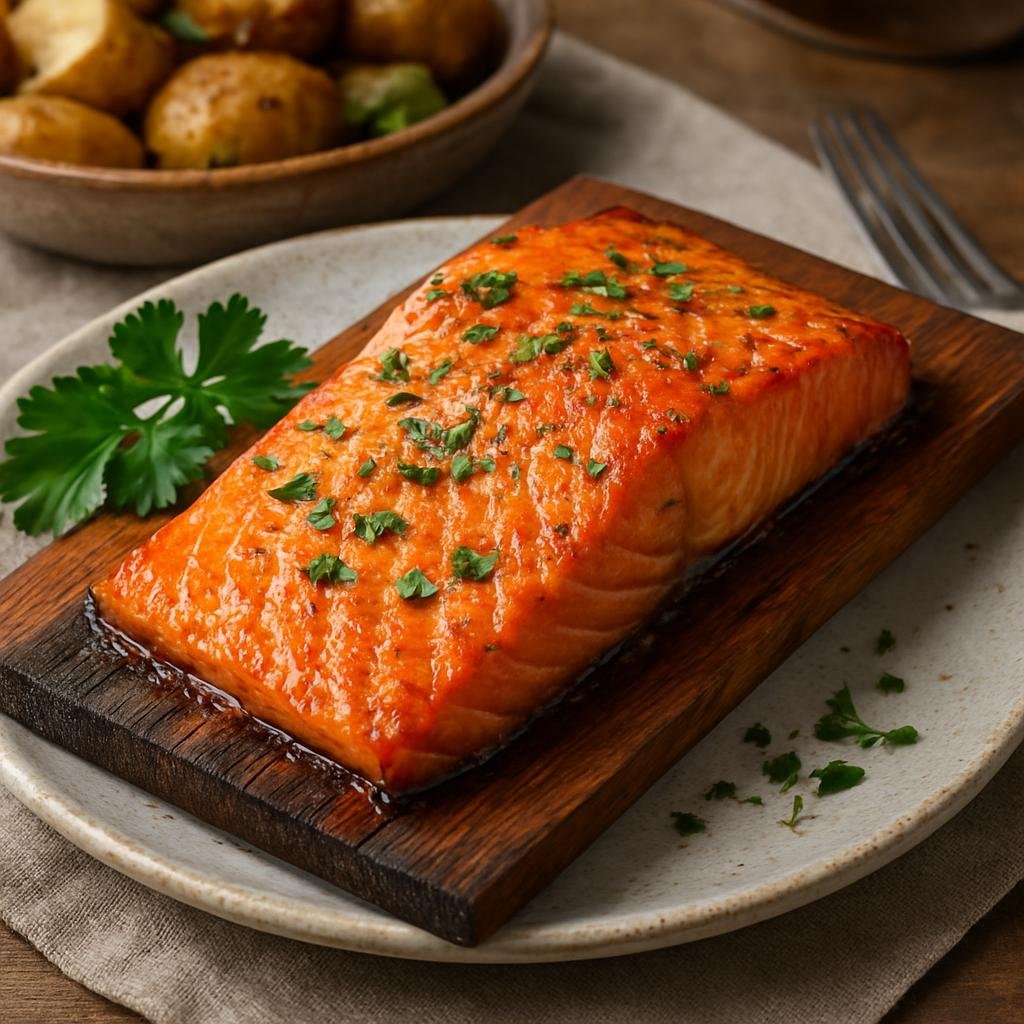
Serving Size: 4
Approximate Time
Prep
35 min
Cook
30 min
Additional
1 hr
Total
1 hr 30 min
Ingredients
- 1 whole wild-caught Pacific salmon fillet, skin-on, pin bones removed, approx. 2 lb (900 g)
- 1 Western red cedar plank, approx. 7 x 13 in (18 x 33 cm)
- 3 tbsp (45 ml) olive oil
- 2 tbsp (30 ml) pure maple syrup
- 1 tbsp (15 g) light brown sugar, packed
- 2 tbsp (30 ml) fresh lemon juice
- 2 tsp (10 ml) Dijon mustard
- 2 cloves garlic, minced
- 2 tbsp (8 g) fresh dill, chopped
- 1 tsp (5 g) lemon zest
- 1 tsp (5 g) kosher salt, plus more to taste
- 1/2 tsp (2 g) freshly ground black pepper
- 2 tbsp (30 g) unsalted butter, cut into small pats
- 1.5 lb (680 g) baby Yukon Gold potatoes, halved
- 2 tbsp (30 ml) olive oil (for potatoes)
- 1 lb (450 g) asparagus, trimmed
- 1 tbsp (15 ml) olive oil (for asparagus)
- Optional: 4 lemon wedges for serving
- Optional: chopped chives or additional dill for garnish
- Optional: instant-read thermometer
Instructions
Short Description:
Wild-caught Pacific salmon cooked on a soaked Western red cedar plank for a subtle smoky, resinous aroma, served with grilled baby potatoes and charred asparagus to make a complete Pacific Northwest main course.

Regional Notes:
This Washington Pacific Northwest version uses locally sourced wild-caught Pacific salmon (sockeye or coho recommended) and a Western red cedar plank from regional timber; the plank imparts the characteristic smoky-woody flavor that distinguishes it from other salmon preparations. Simple maple and lemon accents reflect local sweet-savoury preferences without masking the salmon's flavor.

1. Soak the cedar plank: submerge the cedar plank in cold water and weight it down so it stays fully submerged for at least 1 hour (up to 3 hours). This prevents the plank from catching fire and helps produce steam-smoke flavor.
2. Parboil the potatoes: place potatoes in a pot, cover with cold water, add 1/2 tsp salt, bring to a boil and cook until just tender, about 8–10 minutes. Drain and set aside.
3. Make the glaze: whisk together olive oil, maple syrup, brown sugar, lemon juice, Dijon, minced garlic, chopped dill, lemon zest, 1 tsp kosher salt, and 1/2 tsp black pepper in a small bowl.
4. Prep the salmon: pat the salmon dry with paper towels. Place skin-side down on a sheet of parchment. Brush or spoon two-thirds of the glaze over the flesh, reserving the rest for serving. Let sit at room temperature 15–20 minutes while you heat the grill.
5. Preheat the grill: set up a gas or charcoal grill for medium indirect heat (target surface temp about 375°F / 190°C). If using a gas grill, light one side and leave the other unlit for indirect cooking.
6. Heat the plank: remove the cedar plank from the soak and pat the top dry. Place the plank over direct heat for 2–4 minutes until it begins to smoke and crackle, then move it to the cooler (indirect) side of the grill.
7. Start cooking the potatoes: toss parboiled potatoes with 2 tbsp olive oil, salt and pepper. Place in a heavy grill-safe skillet or cast-iron pan and set on the grill over indirect heat. Cook, turning occasionally, until golden and slightly crisp, about 12–15 minutes.
8. Place salmon on plank: put the salmon, skin-side down, on the preheated cedar plank. Dot the top with the small pats of butter and arrange lemon wedges or thin lemon slices on top if using.
9. Grill on plank: close the grill lid and cook the salmon until it reaches desired doneness — about 12–18 minutes for a 2 lb fillet. Check internal temperature with an instant-read thermometer: 125–130°F (51–54°C) for medium-rare (moist), or 145°F (63°C) for fully cooked. Cooking time varies with thickness; the plank may char and smoke at the edges (this is normal).
10. Grill the asparagus: while the salmon cooks, toss asparagus with 1 tbsp olive oil, salt and pepper and place directly on the grate or in a grill pan. Grill 6–8 minutes, turning once, until bright green with charred marks and tender-crisp.
11. Finish and rest: when salmon reaches target temperature, carefully transfer the plank to a heatproof surface. Let salmon rest 5 minutes (carryover cooking will raise the temp slightly).
12. Serve: transfer salmon to a platter or slice on the plank into four portions, serving each portion with roasted baby potatoes and grilled asparagus. Drizzle reserved glaze or a little extra maple-lemon glaze over the salmon, garnish with chopped dill or chives, and offer lemon wedges.