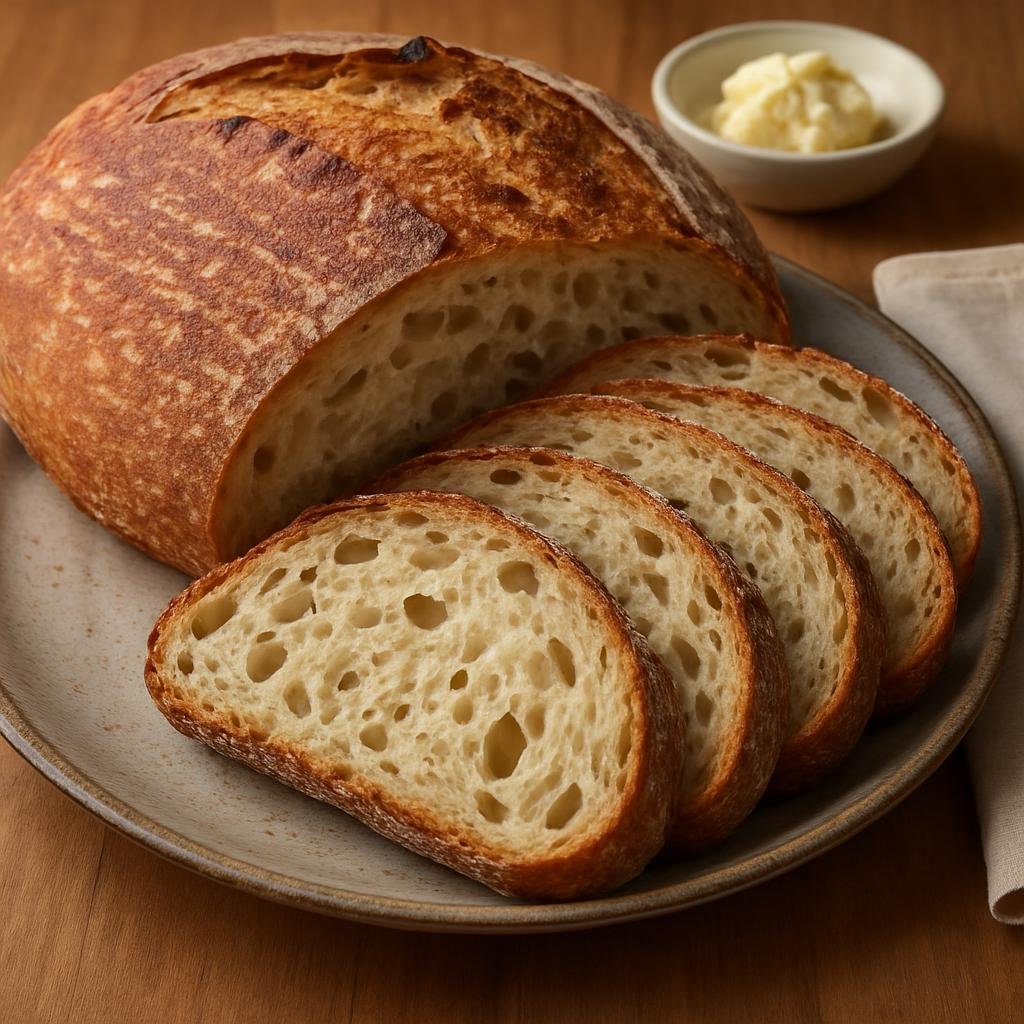
Side Dish: United States – Alaska – Alaskan Sourdough Bread
Serving Size: 8
Approximate Time
Prep
40 min
Cook
45 min
Additional
19 hrs
Total
20 hrs 30 min
Ingredients
- 4 cups (480 g) bread flour
- 1 1/2 cups (360 ml) water, lukewarm (about 75-80°F / 24-27°C)
- 1 cup (240 g) active sourdough starter, fed and bubbly (wild yeast)
- 2 tsp (12 g) fine sea salt
- 1 tbsp (15 g) dark brown sugar or barley malt syrup (optional; boosts crust color and flavor)
- 1 tbsp (15 g) cornmeal or extra flour for dusting
- Additional flour for surface and handling as needed
Instructions
Short Description:
A tangy, crusty sourdough loaf grown from a wild Alaskan starter and long, cool fermentation. It makes a classic side for seafood, soups, and stews.

Regional Notes:
This Alaskan version emphasizes a long fermentation using wild, locally maintained sourdough starter for pronounced tang and depth of flavor. The method favors an overnight cold retard to develop acidity and aroma reminiscent of traditional Alaskan sourdough kept by prospectors and coastal households, rather than a quick commercial-style loaf.

1. Feed your sourdough starter 4-8 hours before baking so it is active and bubbly when measured. Measure 1 cup (240 g) active starter.
2. In a large bowl, combine 4 cups (480 g) bread flour and 1 1/2 cups (360 ml) lukewarm water. Mix until no dry streaks remain to form a shaggy dough. Cover and let rest (autolyse) 30–60 minutes.
3. Add 1 cup (240 g) active starter and 1 tbsp (15 g) dark brown sugar or barley malt syrup (if using) to the dough. Mix until incorporated, then add 2 tsp (12 g) salt and knead briefly until salt is distributed. Dough will be somewhat sticky.
4. Perform a series of stretch-and-folds: every 30 minutes for the next 2 hours, reach under one side of the dough, stretch it up, and fold it over the top. Turn the bowl and repeat 4–6 times per session. This builds gluten without intensive kneading.
5. After the final fold, cover the bowl and allow bulk fermentation at room temperature (about 68–75°F / 20–24°C) until the dough has risen noticeably and shows small bubbles — typically 3–5 hours depending on starter strength and temperature.
6. Gently turn the dough onto a lightly floured surface. Shape into a tight round boule by folding edges into the center, then cupping and rotating on the work surface to build tension. Place seam-side up in a well-floured proofing basket or a bowl lined with a floured towel.
7. For characteristic Alaskan tang, cold retard the shaped dough by covering and placing it in the refrigerator for 12–24 hours. This slow fermentation deepens flavor; dough may expand further during this time.
8. About 45 minutes before baking, place a Dutch oven with its lid in the oven and preheat to 500°F (260°C). Remove chilled dough from the fridge while the oven heats so it loses chill slightly (15–30 minutes).
9. Turn the dough seam-side down onto a piece of parchment paper dusted with 1 tbsp (15 g) cornmeal or flour. Score the top with a sharp blade to control expansion. Carefully transfer the dough (on parchment) into the preheated Dutch oven. Cover and immediately place in oven.
10. Reduce oven temperature to 450°F (230°C). Bake covered for 20 minutes to trap steam, then remove the lid and bake an additional 20–25 minutes until deep golden-brown crust and internal temperature reaches about 200–205°F (93–96°C).
11. Remove the loaf from the Dutch oven and cool on a wire rack at least 1 hour before slicing. Cooling completes the crumb set and flavor development.
12. Serve warm or at room temperature as a side to seafood, chowders, smoked fish, or butter and jam. Store at room temperature in a paper bag for 2–3 days or freeze sliced for longer storage.
Nutrition Information
To get nutritional information, press the Get Nutrition Info button below.