Side Dish: United States – North Dakota, Great Plains United States – Lefse
Serving Size: 12
Approximate Time
Prep
40 min
Cook
30 min
Additional
2 hrs
Total
3 hrs 10 min
Ingredients
- 2 1/2 lb (1.13 kg) russet potatoes, peeled
- 4 tbsp (56 g) unsalted butter, softened (for the dough)
- 1/2 cup (120 ml) heavy cream (or half-and-half)
- 1 tsp (6 g) fine salt
- 1 1/4 cups (160 g) all-purpose flour, plus more for dusting
- Additional unsalted butter, softened, for serving: 6 tbsp (85 g)
- Granulated sugar, for serving: 1/4 cup (50 g)
- Optional: ground cinnamon, for serving: 1/2 tsp (1 g)
Instructions
Short Description:
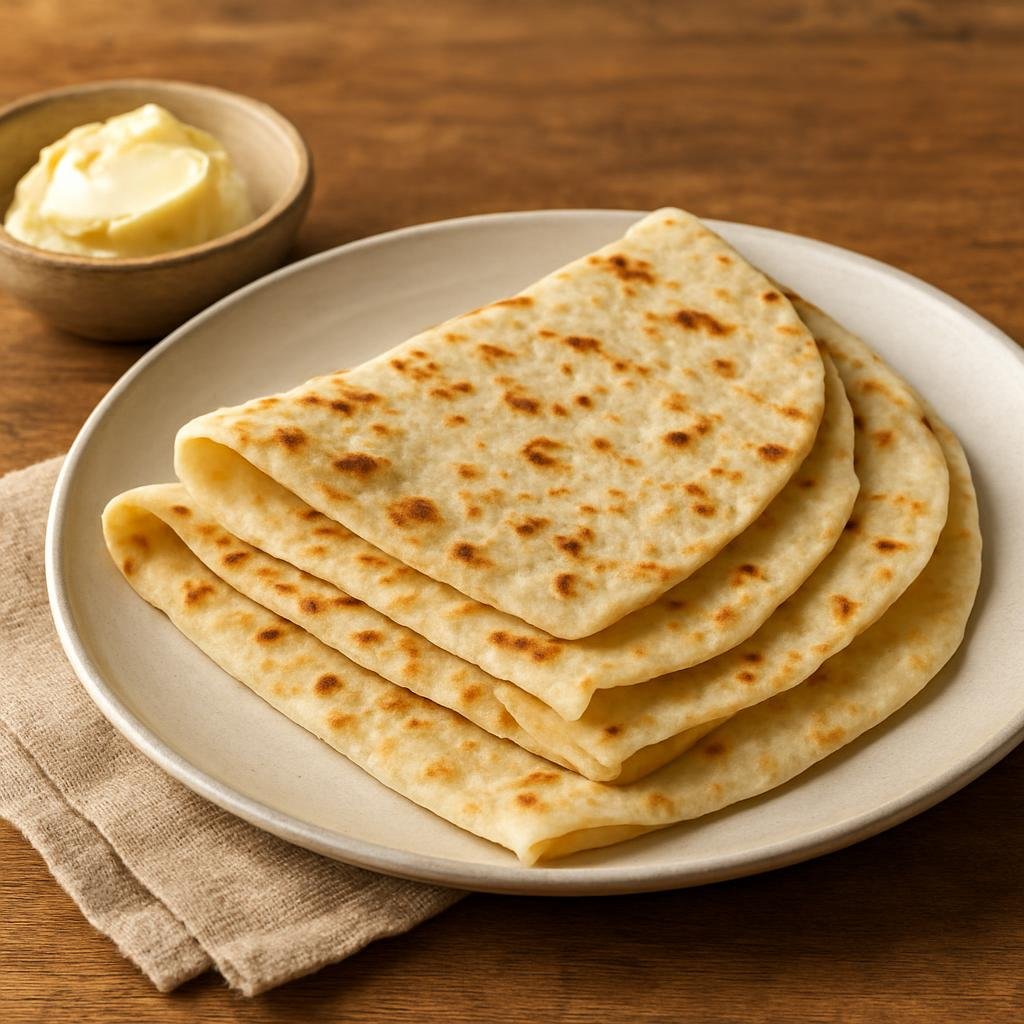
Thin, soft Norwegian-style potato flatbreads made with mashed potatoes, cream, and flour, cooked on a hot griddle and traditionally served with butter and sugar. This North Dakota version emphasizes a creamy potato dough rolled very thin and lightly browned on a griddle.

Regional Notes:
North Dakota lefse follows the Scandinavian-American tradition of using cooked russet potatoes, cream, and flour, rolled paper-thin and griddled. Unlike some Norwegian island variations that use riced potatoes and more flour, the Great Plains/North Dakota style keeps the dough rich with cream and serves lefse simply with butter and granulated sugar, reflecting local home-kitchen practice.

1. Place peeled potatoes in a large pot and cover with cold water. Add a pinch of salt, bring to a boil, and cook until potatoes are tender when pierced, about 20–25 minutes.
2. Drain potatoes well and return to the hot pot for 1–2 minutes to evaporate surface moisture, stirring gently; this helps keep the dough from becoming watery.
3. While still hot, pass potatoes through a potato ricer or mash very fine. Transfer to a bowl and allow to cool slightly (but still warm).
4. Stir the softened butter, heavy cream, and 1 tsp salt into the warm riced potatoes until smooth and well combined. Let the mixture cool to room temperature, then cover and chill in the refrigerator at least 2 hours or overnight—chilling firms the dough and makes it easier to roll.
5. When chilled, place the potato mixture in a large bowl. Sprinkle 1 cup (128 g) of the flour over the potatoes and gently fold in; add additional flour as needed (up to the full 1 1/4 cups /160 g) until the dough holds together and is soft but not sticky. Do not overwork.
6. Divide the dough into 12 equal portions (roughly golf-ball size). Shape each portion into a smooth ball and keep covered with a damp towel while you work to prevent drying.
7. Preheat a flat griddle or cast-iron skillet to medium-high, about 375–400°F (190–200°C). Lightly flour a pastry cloth or clean counter and a rolling pin.
8. Working with one dough ball at a time, dust it lightly with flour, flatten slightly, and roll into a very thin circle about 9–11 inches (23–28 cm) in diameter. Use additional flour as needed to prevent sticking, but keep flour minimal to preserve tenderness.
9. Transfer the rolled lefse carefully to the hot griddle using a lefse stick or large spatula. Cook until pale brown spots appear and the surface firms, 30–60 seconds; flip and cook the other side a similar time. Rotate if needed for even color. Neither side should char—aim for light gold spots.
10. Remove cooked lefse to a clean kitchen towel and stack, covering the stack with the towel to keep them soft and pliable while you finish the rest.
11. To serve, spread each lefse with a little softened butter and sprinkle with granulated sugar (and a pinch of cinnamon if desired). Roll or fold and serve warm or at room temperature as a sweet-savory side.
12. To store, cool completely, wrap stacks tightly in plastic, and refrigerate up to 3 days or freeze layered between parchment for up to 2 months. Reheat briefly on a warm griddle or in a skillet before serving.
Nutrition Information
To get nutritional information, press the Get Nutrition Info button below.